
25L vs 30L Power Sprayer: Which Size Fits Your Local Market?
Compare 25L and 30L power sprayers for dealer inventory, farm applications, shipping, spare parts, and wholesale market fit before a bulk order.
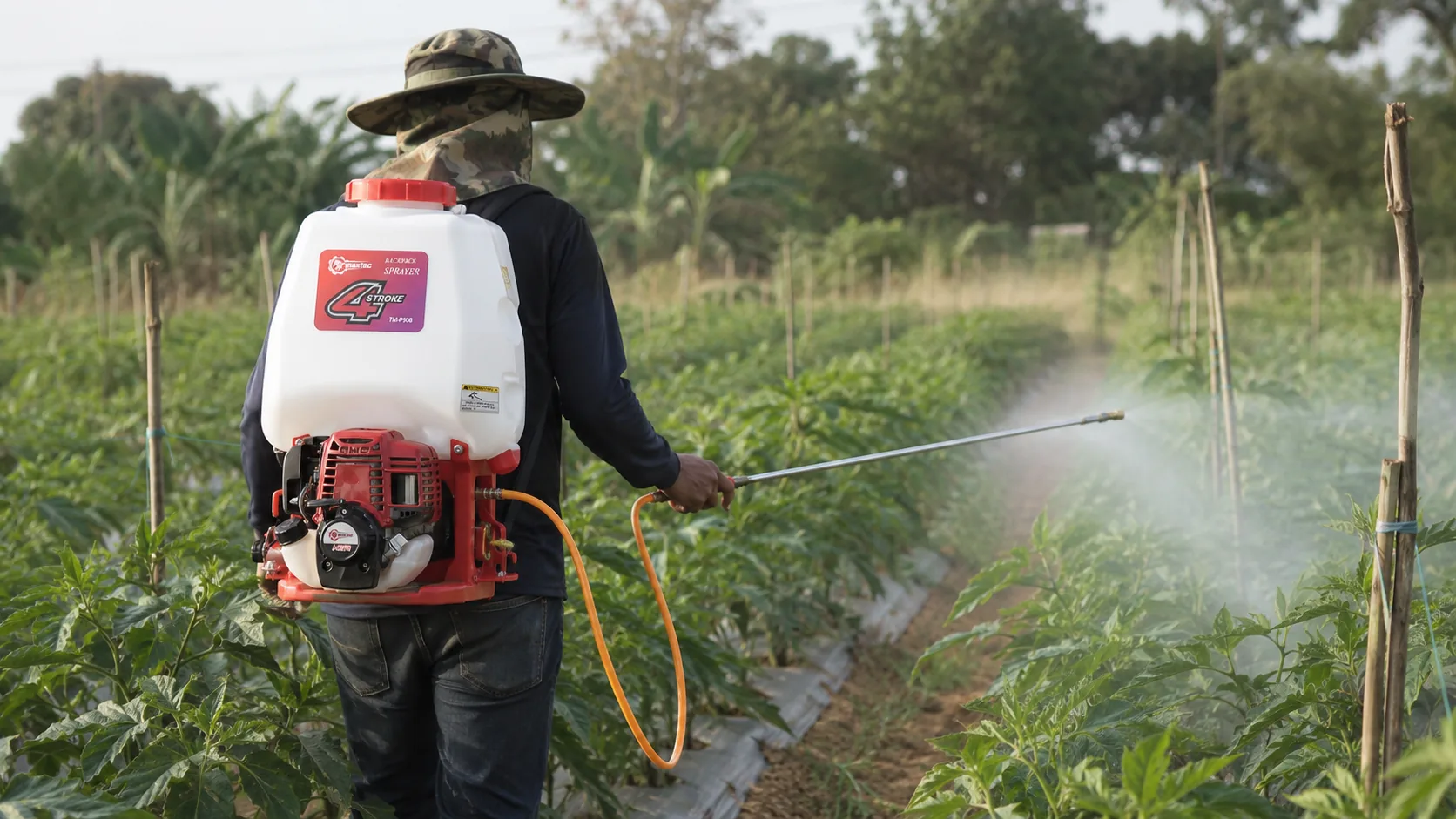
A practical comparison for agricultural machinery importers, wholesalers and dealers evaluating customer demand, operator comfort, retail positioning, spare-parts planning and repeat-order potential.
A 25L power sprayer is generally easier to position for buyers who prioritize mobility, manageable carrying weight and a lower entry-level purchase cost. A 30L power sprayer is more suitable for customers who spray larger areas and prefer fewer interruptions for refilling.
For importers and agricultural machinery dealers, however, the commercial decision should not be based on tank capacity alone. Local farm size, crop type, terrain, operator habits, preferred retail price, service capability and competing models all influence which size will sell more consistently.
|
25L
Mobility-led demand
Better suited to smaller farms, narrow crop rows, sloped land and price-sensitive retail customers.
|
30L
Capacity-led demand
More appropriate for larger farms, plantations, contractors and users working far from refill points.
|
The main buying principle
Choose according to the customer’s working pattern, not the assumption that a larger tank automatically provides more pressure or higher spraying output.
|
Two Models for Different Buyer Groups
The two Teamax models below use similar engine and spraying specifications, allowing dealers to focus their comparison on tank capacity, carrying weight, application habits and local market positioning.
|
Model
01
|
TM-P4035 25L Power SprayerA GX35 four-stroke power sprayer designed for crop protection, garden care, orchard work and general agricultural spraying. Its 25L tank is easier to position for customers who value movement and carrying control. Listed performance: 1.1kW at 7,500 rpm, 1.5–2.5 MPa working pressure and 8L/min working flow.
|
|
Model
02
|
TM-P908 30L Power SprayerA 30L agricultural power sprayer for buyers who want longer spraying periods between refills. It can be positioned for commercial farms, larger orchards, plantations and professional spraying services. Listed performance: GX35 four-stroke engine, 1.1kW at 7,500 rpm, 1.5–2.5 MPa working pressure and 8L/min working flow.
|
25L vs 30L Power Sprayer Comparison
| Buying Factor | 25L Power Sprayer | 30L Power Sprayer | Dealer Interpretation |
|---|---|---|---|
| Primary advantage | Mobility and carrying control | Longer work between refills | Match the sales message to actual customer priorities. |
| Typical customers | Small farmers, gardeners and greenhouse users | Commercial growers, plantations and contractors | Review the customer mix of each sales region. |
| Suitable terrain | Narrow rows, uneven ground and sloped fields | Larger flat fields and extended spraying routes | Terrain may influence demand more than farm size alone. |
| Refilling frequency | More frequent | Less frequent | Ask whether water and chemical mixing points are nearby. |
| Retail positioning | Flexible general-purpose option | Higher-capacity professional option | Avoid presenting capacity as engine power. |
| Main sales risk | May require more refill stops on large farms | May feel too heavy when fully loaded | Train sales staff to identify the buyer’s normal workload. |
Which Buyers Usually Prefer a 25L Power Sprayer?
A 25L model is often easier to sell in markets where farms are divided into smaller plots or where operators move frequently between vegetable rows, fruit trees, greenhouses, gardens and uneven field areas.
The smaller tank can also appeal to users who do not want to carry a fully loaded 30L sprayer for long periods. Total machine weight still depends on the engine, pump, frame, hose and accessories, but the reduced liquid capacity allows the operator to control the carried load more easily.
|
Customer Type A
Small-plot growers Vegetable farmers, nursery operators and greenhouse users working near refill points. |
Customer Type B
Mobile operators Users moving between trees, crop rows, gardens, terraces or sloped areas. |
Customer Type C
Retail replacements Buyers upgrading from manual backpack sprayers without moving directly to the largest capacity. |
For distributors entering a new market, the 25L option can be a practical starting model because its potential end-user group is relatively broad. It may also be easier for retail salespeople to demonstrate when customers are concerned about carrying comfort.
When Does a 30L Model Make More Commercial Sense?
A 30L power sprayer is more suitable for operators who want longer spraying periods between refills. This matters on commercial farms, plantations and larger orchards where the water source or chemical preparation area is far from the spraying zone.
A 30L model can be positioned for commercial vegetable farms, fruit plantations, spraying contractors and customers who place working continuity above minimum carrying weight. It may also create useful product differentiation in markets dominated by 20L or 25L models.
However, introducing a 30L model may require more customer education when local users are not accustomed to larger backpack tanks. Dealers should explain both the operational benefit and the additional filled weight rather than promoting capacity without context.
Does Spraying Performance Change Between the Two Sizes?
Tank capacity should be evaluated separately from engine and pump performance. The two Teamax models discussed here list the same GX35 four-stroke engine, rated engine output, working pressure and working flow.
When importers compare other power sprayer models, they should request confirmation of the following specifications:
|
|
Which Size Is Easier for Dealers to Sell?
The easier model to sell is usually the one that matches an existing customer habit. When local buyers commonly request 25L sprayers, introducing a 30L unit as the only option may slow sales because customers may view the extra capacity as unnecessary weight.
In contrast, when farmers frequently complain about refill interruptions, a 30L model has a clear operating benefit. Dealers should review actual inquiries rather than selecting models based only on catalogue appearance.
Questions Sales Teams Should Review
- Do customers ask about machine weight or tank capacity first?
- Are most buyers small farmers, commercial growers or spraying contractors?
- Which tank sizes are already offered by competing dealers?
- Do users normally work close to a refill point?
- Are sprayers sold mainly through machinery shops or agricultural chemical stores?
- Do buyers select by price, engine type, capacity or after-sales reputation?
- Are four-stroke engines familiar to local users and repair technicians?
Should Importers Stock Both 25L and 30L Models?
Stocking both sizes can reduce market risk when demand is uncertain. The 25L model can serve customers who prioritize mobility, while the 30L model can target larger farms and professional spraying work.
The first order should not automatically be divided equally. The product mix should reflect the distributor’s customer base, sales channels and regional farming conditions.
Importers should also compare carton dimensions, container loading quantity, warehouse space and spare-parts requirements before finalizing the model ratio.
What Buyers Should Compare Beyond Tank Capacity
|
01 / ENGINE ACCEPTANCE
Confirm whether local users understand four-stroke maintenance and whether technicians can service GX35-type engines. |
02 / CARRYING SYSTEM
Review the frame, shoulder straps, back cushion and machine balance when the tank is filled. |
|
03 / PUMP CONFIGURATION
Check whether the pump, hose, nozzle and pressure adjustment suit the intended crop and spraying distance. |
04 / ACCESSORY PACKAGE
Confirm the included hose, spray gun, nozzles, filters, seals, tools and other standard accessories. |
|
05 / EXPORT PACKAGING
Review carton strength, gross weight, dimensions, loading quantity and customized packaging MOQ. |
06 / PARTS COMPATIBILITY
Ask whether pumps, hoses, guns, seals and engine parts are shared with models already supported by the dealer. |
Importer and Dealer Purchase Checklist
|
|
Frequently Asked Questions
Is a 30L power sprayer more powerful than a 25L model?
Not necessarily. Tank capacity describes how much liquid the machine can carry. Power, pressure and spraying flow depend on the engine and pump specifications. The TM-P4035 and TM-P908 list the same engine output, working pressure and flow.
Which power sprayer size is better for small farms?
A 25L model is often more practical for smaller plots, narrow rows, gardens, greenhouses and areas where operators refill close to the field. The reduced liquid capacity can also make the carrying load easier to manage.
When should a dealer recommend a 30L agricultural sprayer?
A 30L model is appropriate when the customer sprays larger areas, works far from a refill point or considers fewer refill interruptions more important than minimum filled weight.
Should an importer order equal quantities of 25L and 30L sprayers?
Usually not. The order ratio should reflect local farm size, customer type, terrain, competing capacities and dealer sales records. When demand is uncertain, use one main model and a smaller test quantity of the second size.
What spare parts should power sprayer dealers keep in stock?
Common inventory may include hoses, spray guns, nozzles, filters, seals, pump parts, engine service parts, recoil-starter parts and frequently replaced fittings. The exact list should be confirmed according to the final machine configuration.
What should buyers confirm before approving bulk production?
Confirm the tank size, engine, pump, pressure, flow, machine weight, accessories, hose, spray gun, carton, branding, spare-parts package, production time and loading quantity. Any configuration differences between the sample and bulk order should be documented.
Compare 25L and 30L Power Sprayers for Your Market
For importers and dealers looking for stable agricultural machinery supply, Teamax Power offers different power sprayer capacities for small farms, orchards, plantations and professional spraying work. Compare both models according to your customer structure and local application habits.