
Why Does a Brush Cutter Gearbox Get Too Hot During Use?
Why does a brush cutter gearbox get too hot? Check grease, bearings, shaft alignment, blade setup, workload, and maintenance before damage occurs.
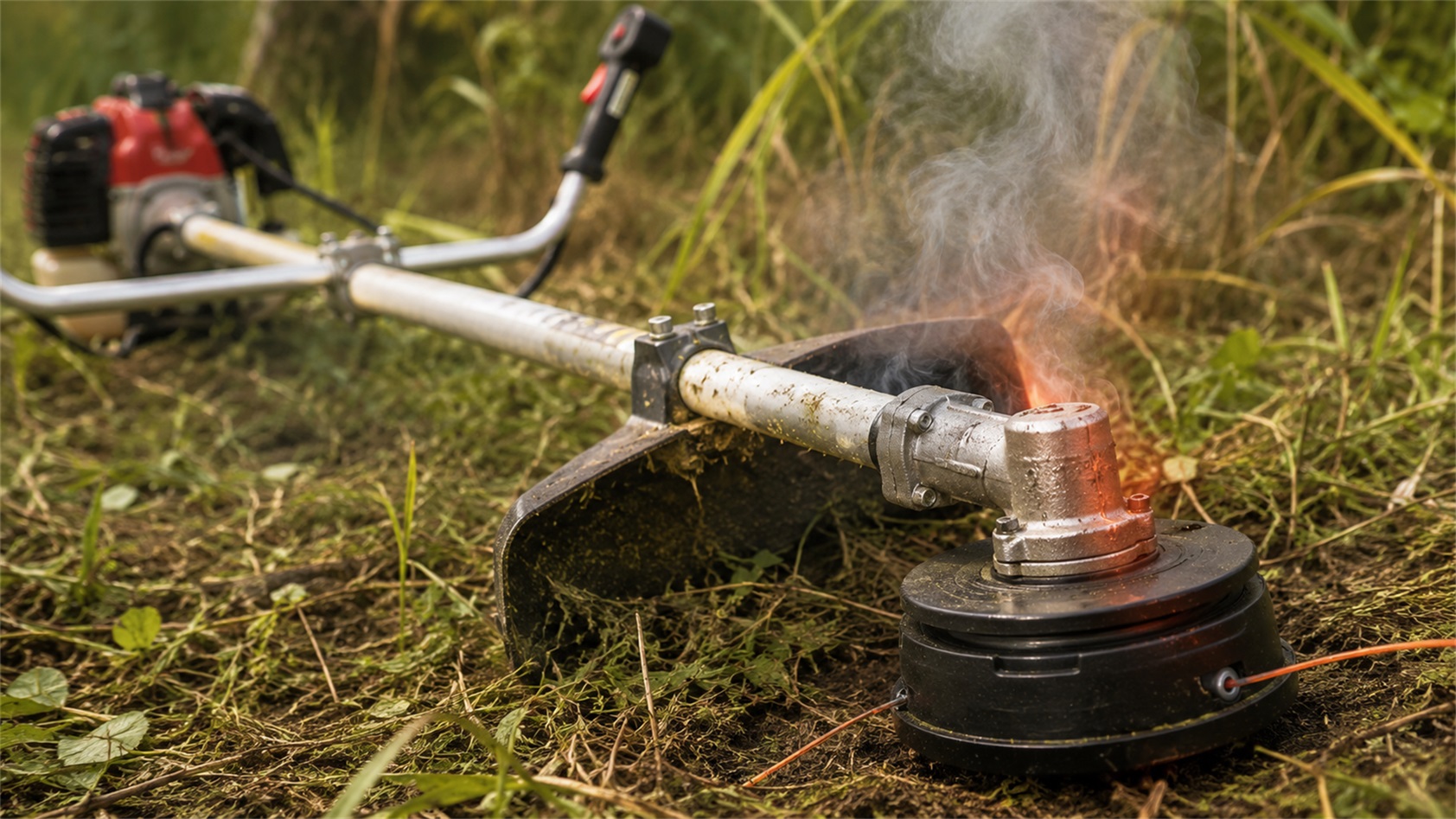
A practical troubleshooting guide covering gearbox grease, worn bearings, blade installation, drive-shaft alignment, cutting resistance, spare parts and importer inspection points.
A brush cutter gearbox becomes hot when friction inside the gear set, bearings, cutting attachment or drive shaft rises above the normal operating level. Mild warmth after continuous cutting can be expected, especially when a metal blade is used in dense vegetation. However, a gearbox that becomes extremely hot within a short time should not be ignored.
For operators, the immediate concern is preventing seizure or damage to the cutting system. For dealers and importers, repeated gearbox overheating may lead to warranty claims, replacement-part demand and customer complaints. A structured inspection is therefore more useful than replacing the gearbox without confirming the cause.
| Quick Answer | A brush cutter gearbox usually overheats because of insufficient or contaminated grease, a bent or incorrectly installed blade, grass wrapped around the output shaft, damaged bearings, shaft misalignment or excessive cutting resistance. Stop the machine if the gearbox becomes too hot to touch quickly, makes grinding noises, leaks grease or develops output-shaft movement. |
How Hot Is Too Hot for a Brush Cutter Gearbox?
Internal gears and bearings rotate at high speed, so some heat is created during normal operation. Temperature may rise further during long working sessions, when a heavy blade is installed or when the machine is cutting thick weeds continuously.
The temperature should be treated as a warning when the gearbox:
|
Heat Warning
Rapid temperature rise The housing becomes extremely hot after only a short operating period. |
Mechanical Warning
Noise or rough rotation Grinding, whining, rumbling or clicking is heard from the gearbox. |
Damage Warning
Leakage or shaft play Grease leaks from the seals or the output shaft moves from side to side. |
Other warning signs include a cutting attachment that slows under light load, a burnt grease smell, visible blade wobble or a gearbox that feels rough when the attachment is rotated by hand.
Gearbox Heat Diagnostic Table
The location and timing of the heat can help a technician identify the likely source before dismantling the machine.
| Observed Condition | Likely Cause | First Inspection | Dealer Advice |
|---|---|---|---|
| Gearbox heats rapidly with abnormal noise | Low grease, damaged gear teeth or worn bearing | Check grease condition and rotate the output shaft manually | Keep complete gearbox assemblies and bearing kits available |
| Heat appears after entering long grass | Vegetation wrapped around the output shaft | Inspect behind the blade flange or cutting head | Educate users to clean the shaft area during long cutting sessions |
| Gearbox heats and blade visibly wobbles | Bent blade, wrong flange or incorrect installation | Remove and reinstall the attachment with correct hardware | Supply compatible flanges, nuts and locating washers |
| Heat is concentrated on one side | Bearing wear or shaft misalignment | Check shaft play, tube straightness and bearing movement | Confirm tube diameter and spline compatibility before selling replacements |
| Grease leaks after servicing | Overfilling, damaged seal or output-shaft movement | Verify fill quantity and inspect seals | Provide grease instructions instead of advising users to fill the housing completely |
Is Insufficient Grease the Main Cause?
Insufficient lubrication is one of the first conditions to check. Brush cutter gearboxes depend on grease to form a protective layer between the gear teeth, bearings and rotating shafts. When grease quantity is too low, direct metal contact increases, causing rapid heat buildup and accelerated wear.
The grease level may become low because the machine has operated for a long period without maintenance, grease has escaped through a damaged seal or lubrication was not added during routine servicing. The grease plug should be removed according to the model’s maintenance procedure, and the lubricant should be inspected before additional grease is added.
More grease is not always better. An overfilled housing can develop pressure as the lubricant heats and expands. This may push grease through the seals, increase internal resistance and hide the original reason for overheating.
Can Old or Contaminated Grease Cause Overheating?
Gearbox grease gradually deteriorates after repeated heating and cooling. It may separate, harden or collect dust, moisture and metal particles. Hardened grease can remain in one area of the housing instead of spreading evenly across the moving gear teeth.
Grease should be treated as suspicious when it has any of the following conditions:
- Dry, thick or hardened material near the filling port
- Dark lubricant containing visible metal particles
- A burnt smell after only limited operating time
- A milky appearance caused by possible water contamination
- Repeated leakage around the shaft or gearbox seal
- Continued overheating soon after fresh grease is added
If metal particles are found, simply adding more lubricant is not a complete repair. The gears, bearings and shafts should be inspected for chipped teeth, pitted surfaces, excessive clearance or incorrect engagement.
Why an Incorrectly Installed Blade Creates Heat
A blade that is off-center, bent or installed with incorrect mounting hardware places uneven pressure on the gearbox output shaft. At operating speed, even a small imbalance can increase bearing load, vibration and friction.
|
Common installation errors
|
Attachment-related damage
|
Before starting the engine, rotate the blade manually and check whether it remains centered. A bent blade may continue to rotate, but imbalance becomes much greater at full speed. Replacing the blade is normally safer than attempting to straighten it.
Importers should confirm that the blade, upper flange, lower flange, retaining nut, output shaft and guard supplied with the machine are compatible. Mixing mounting parts from different gearbox systems can create both safety and after-sales problems.
Can Grass Wrapped Around the Gearbox Cause Overheating?
Long grass, vines, plastic string and fibrous weeds can wrap around the output shaft between the cutting attachment and gearbox housing. The trapped material creates drag, presses against the seal and increases the force needed to keep the attachment rotating.
Operators may notice that the engine continues sounding normal while:
- Cutting speed gradually decreases
- Vegetation becomes packed behind the blade flange
- The cutting head becomes difficult to rotate after stopping
- The gearbox heats rapidly in long or wet grass
- Grease begins appearing near the output-shaft seal
The engine must be stopped before wrapped vegetation is removed. In markets where brush cutters are frequently used for tall grass, roadside weeds or wet vegetation, dealers should explain this inspection point during machine delivery.
How Worn Bearings Affect Gearbox Temperature
Gearbox bearings support the input and output shafts. A dry, damaged, loose or contaminated bearing creates additional friction and may cause heat to concentrate on one side of the housing.
Typical bearing symptoms include rough movement when the shaft is turned by hand, grinding or rumbling sounds, side-to-side shaft movement, uneven blade rotation and repeated grease leakage caused by shaft movement.
Adding grease may temporarily reduce the noise, but it cannot repair a pitted bearing or restore the correct internal clearance. A qualified technician should dismantle the gearbox when abnormal shaft play or rough rotation is confirmed.
Can Drive-Shaft Misalignment Heat the Gearbox?
The drive shaft transfers power from the clutch through the aluminum tube to the gearbox. If the tube, drive shaft or gearbox connection is bent or incorrectly assembled, side pressure may be placed on the input bearing and gears.
Possible causes of misalignment include:
- Bent aluminum tube after impact or poor transport handling
- Drive shaft not fully inserted during assembly
- Worn or damaged shaft splines
- Loose gearbox clamp
- Gearbox installed at an incorrect angle
- Mismatched tube, shaft and gearbox dimensions
The shaft should engage fully with both the clutch drum and gearbox input. Partial spline engagement may create heat and quickly damage the connection. Replacement gearboxes should therefore be ordered according to the tube diameter, shaft type and spline dimensions rather than external appearance alone.
TM-CG520 52cc Gasoline Brush Cutter
Buyers evaluating the TM-CG520 should confirm the ordered gearbox, drive shaft and cutting-attachment configuration before preparing replacement-part stock. The listed shaft diameter is 28 mm, but specifications should be reconfirmed for the actual production order.
| Check TM-CG520 Specifications |
Does Cutting Technique Increase Gearbox Heat?
Operating technique can overload the cutting system even when the gearbox is mechanically correct. The gearbox, clutch and drive shaft must absorb additional resistance whenever the operator forces the attachment through vegetation instead of allowing it to cut at an effective speed.
| 1 | Forcing the blade into dense weeds increases resistance instead of allowing the attachment to cut progressively. |
| 2 | Using a blunt blade tears and pushes vegetation, placing more load on the gearbox. |
| 3 | Running below an effective cutting speed may cause the attachment to drag and repeatedly stall. |
| 4 | Repeatedly striking soil, stones or fences can bend the blade, damage bearings and disturb shaft alignment. |
| 5 | Using an unsuitable attachment may create more rotational load than the gearbox was designed to handle. |
A nylon head, three-tooth blade, multi-tooth blade and circular saw blade create different loads. Dealers should avoid presenting every attachment as suitable for every machine and application.
What to Check Before Replacing the Gearbox
Replacing the complete gearbox may not solve the complaint if the actual cause is a bent blade, wrapped vegetation, damaged tube, incompatible attachment or incorrectly inserted drive shaft.
- Stop the engine and remove wrapped grass, vines or string.
- Check whether the blade or cutting head is correctly installed.
- Remove the attachment and rotate the output shaft by hand.
- Inspect the grease quantity, condition and smell.
- Check for side-to-side movement at the output shaft.
- Confirm that the gearbox clamp is secure.
- Inspect the aluminum tube for bending or impact damage.
- Check drive-shaft engagement and spline wear.
- Run a brief test without heavy cutting load.
- Replace or dismantle the gearbox only after internal damage is confirmed.
Importer and Dealer Gearbox Checklist
Brush cutter gearboxes can look nearly identical while using different internal shafts, spline patterns, threads and mounting hardware. These differences should be checked before bulk purchasing machines or replacement parts.
| Procurement Item | What to Confirm | Risk if Ignored |
|---|---|---|
| Tube and shaft | Aluminum tube diameter, shaft shape and overall length | Replacement gearbox cannot be installed |
| Spline connection | Number, diameter and profile of drive-shaft splines | Partial engagement, wear and overheating |
| Output hardware | Thread direction, retaining nut and flange dimensions | Local blades may not fit correctly |
| Lubrication | Grease port, grease type and service interval | Incorrect maintenance and early wear |
| After-sales parts | Bearings, seals, gears, flanges, nuts and complete assemblies | Long repair delays and customer dissatisfaction |
| Packaging quality | Protection of gearbox, tube and shaft during shipment | Bent tubes or impact damage before resale |
| Supply consistency | Same gearbox and shaft configuration for repeat orders | Existing spare-parts stock becomes incompatible |
| Market use | Local vegetation, attachments and operator habits | Incorrect attachment recommendations and more complaints |
Importers should request clear gearbox photographs, an exploded drawing or physical samples when building a spare-parts package. Gearboxes, shafts, bearings, seals, blade flanges, retaining nuts and grease should be planned as one compatible service system.
Frequently Asked Questions
Is it normal for a brush cutter gearbox to feel warm?
Yes. Mild warmth after continuous operation can be normal. Rapid overheating, abnormal noise, grease leakage, rough rotation or output-shaft movement indicates that the machine should be stopped and inspected.
Can I solve an overheating gearbox by adding more grease?
Only when insufficient lubrication is the actual cause. Excessive grease may increase pressure and leakage. If the gearbox contains metal particles, produces grinding noise or has shaft play, internal parts must also be inspected.
Why does the gearbox get hot only when cutting long grass?
Long or fibrous grass may wrap around the output shaft and create drag. Dense vegetation, a dull blade or operating at an unsuitable cutting speed can also increase gearbox load.
How can dealers reduce gearbox warranty complaints?
Dealers should provide correct blade-installation instructions, explain grease intervals, stock compatible mounting hardware and teach users to remove wrapped vegetation. Machine and spare-parts specifications should remain consistent across repeat orders.
What brush cutter gearbox spare parts should importers stock?
Useful stock may include complete gearbox assemblies, bearings, oil seals, blade flanges, retaining nuts, drive shafts and suitable grease. Exact quantities should reflect local repair ability and the number of machines already sold.
Are all 28 mm brush cutter gearboxes interchangeable?
No. The same tube diameter does not guarantee compatibility. Buyers must also confirm the drive-shaft spline, gearbox input, output thread, flange dimensions, clamp design and cutting-attachment hardware.
Plan the Machine and Gearbox Parts as One System
For importers and dealers looking for stable brush cutter supply, Teamax Power can help confirm suitable machine, shaft, gearbox and cutting-attachment configurations for different market requirements. Specifications and spare-parts compatibility should be confirmed according to the actual order.
| View TM-CG520 Product Details |