
Power Sprayer Pressure Pulses: Causes, Checks and Fixes
Learn why power sprayer pressure pulses during spraying, how to inspect the suction system, pump, regulator and nozzle, and what dealers should verify.
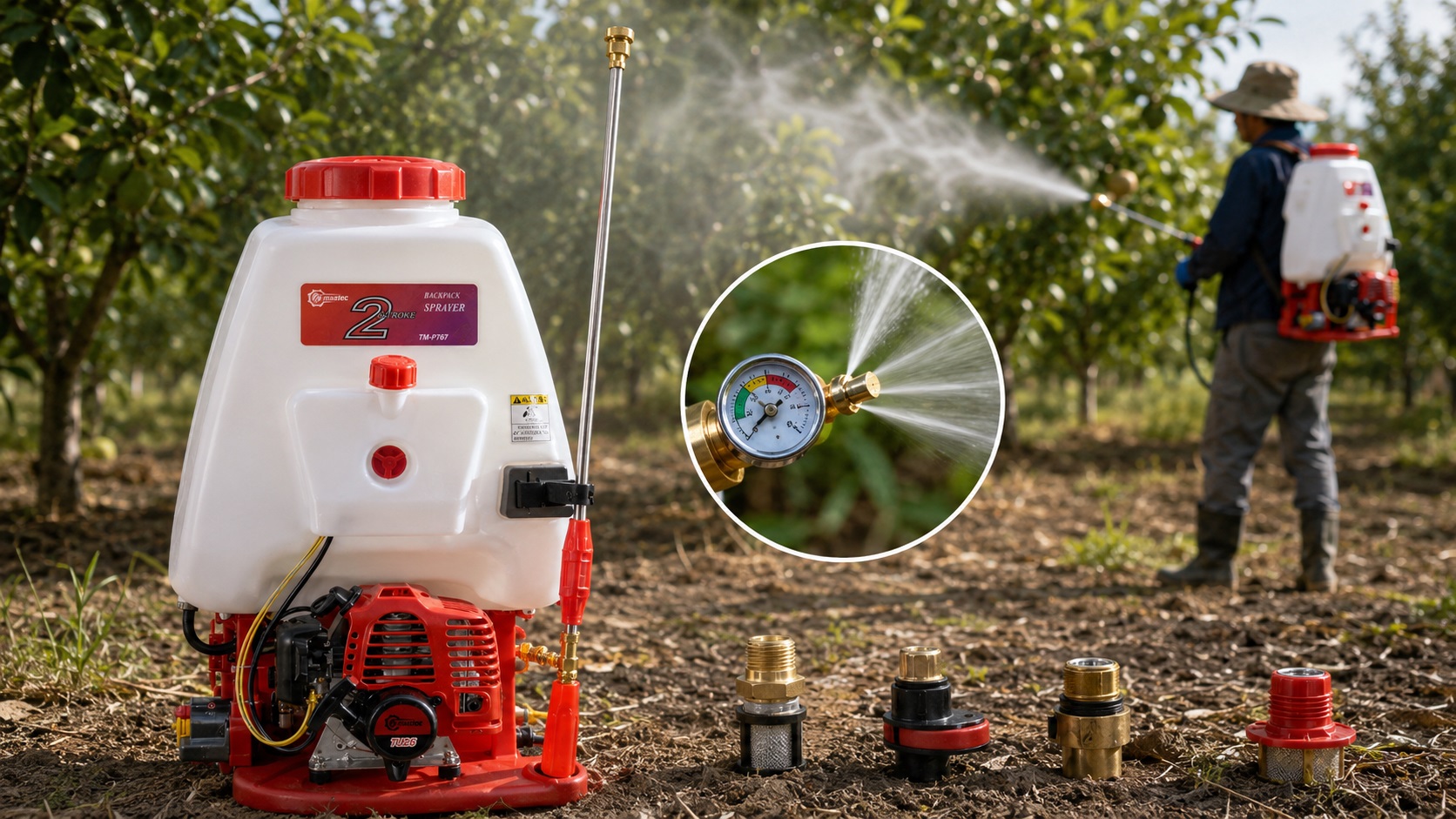
A practical troubleshooting and procurement guide for power sprayer importers, dealers, repair shops and agricultural equipment distributors.
When a power sprayer delivers pressure in repeated surges instead of a stable spray pattern, operators may notice the hose shaking, the spray distance changing, the engine load rising and falling, or the nozzle alternating between strong and weak output. Minor pressure movement can be normal in some piston-pump systems, but strong or irregular pulsing usually indicates a problem in the liquid supply, pump assembly, pressure regulator or discharge system.
For dealers, this symptom deserves careful diagnosis. Replacing the complete pump too early increases warranty cost, while ignoring suction leaks, dirty filters or damaged valves can result in repeated customer complaints. The most efficient approach is to inspect the sprayer from the tank toward the nozzle in a logical sequence.
Pressure pulsing is commonly caused by restricted liquid flow, air entering the suction line, a blocked tank filter, worn pump valves or seals, an unstable pressure regulator, an unsuitable nozzle, or engine speed that is too low or inconsistent. Start with the tank, filter, hose connections and nozzle before dismantling the pump.
|
Recommended Gasoline Backpack Sprayer
TM-P708 Power SprayerThe TM-P708 is a gasoline-powered backpack sprayer for agricultural spraying, orchard treatment, crop protection and other mobile field applications. Importers can discuss configuration, packaging, accessories and order requirements according to local market needs.
|
Is Some Pressure Pulsation Normal?
A piston-type sprayer pump does not always produce the same perfectly smooth flow as a centrifugal pump. The movement of the piston and valves may create a slight rhythmic pressure change, especially at low engine speed. A small and regular pulse that does not affect spray coverage may therefore be a normal operating characteristic.
The condition becomes abnormal when the spray repeatedly collapses, the hose jerks strongly, the pressure gauge needle moves across a wide range, the engine speed changes under load, or the pump cannot maintain the selected working pressure. These symptoms usually show that liquid delivery to the pump is unstable or that pressure is escaping inside the pump or regulator.
|
NORMAL
Light Rhythmic MovementSmall, regular pulses with stable spray coverage and no loss of working pressure. |
CHECK SOON
Uneven Spray PatternThe spray alternates between strong and weak output, especially when engine speed changes. |
STOP AND INSPECT
Severe Pressure SurgingThe hose shakes, pressure repeatedly disappears, or the pump produces unusual noise or overheating. |
Main Causes of Power Sprayer Pressure Pulses
1. Air Is Entering the Suction Line
A loose hose clamp, cracked suction hose, hardened sealing ring or poorly fitted connector can allow air to enter before the liquid reaches the pump. The pump then receives a mixture of air and liquid, causing the discharge pressure to rise and fall.
This problem may not always produce a visible liquid leak. A connection can draw air inward while remaining dry on the outside. Inspect every connection from the tank outlet to the pump inlet, and replace hoses that have become stiff, flattened or cracked.
2. The Tank Filter or Suction Strainer Is Restricted
Chemical residue, leaf fragments, dirt or poorly dissolved powder can restrict the inlet filter. The pump may initially build pressure, consume the available liquid, lose pressure and then recover as more liquid slowly passes through the blockage.
Dealers should remind users to mix chemicals in a clean container, use the tank filter when filling and wash the suction strainer after spraying. A clean-looking tank does not always mean the inlet filter is clear.
3. Air Remains Trapped Inside the Pump
After the tank has been emptied, the inlet hose has been removed or the pump has been serviced, air can remain in the liquid circuit. If the machine is immediately operated at high speed, the pump may struggle to prime and pressure may pulse heavily.
Fill the tank with clean water, place the pressure control at a low setting and allow the liquid to circulate until the output becomes continuous. Do not run the pump dry while waiting for it to prime.
4. Pump Valves Are Dirty, Worn or Sticking
The inlet and discharge valves control liquid movement through the pump. If a valve contains dirt, has a damaged seat, or cannot close correctly, some liquid flows backward during each pump stroke. This creates unstable pressure and reduced spray output.
Valve problems are more likely when the machine has been stored with chemical residue inside, used with unfiltered water, or operated for long periods without flushing. Inspect the valve surfaces and replace worn components as a matched repair set when appropriate.
5. Pump Seals or Packings Are Worn
Worn piston seals allow internal pressure to escape instead of moving the full liquid volume toward the outlet. The sprayer may still produce pressure at high engine speed, but the output becomes unstable and weak when the trigger is opened.
Before replacing seals, inspect the piston or plunger surface. Installing new seals on a scratched or corroded surface may provide only temporary improvement.
6. The Pressure Regulator Is Sticking
A regulator maintains working pressure by controlling bypass flow. Chemical deposits, a weak spring, damaged sealing parts or incorrect adjustment can make the regulator open and close repeatedly. The result is a noticeable cycle of pressure buildup and pressure release.
Check whether pulsing changes when the regulator is adjusted gradually. If the pressure cannot be stabilized at any setting, inspect the regulator components and bypass passage.
7. The Nozzle Is Blocked or Incorrectly Sized
A partly blocked nozzle creates excessive resistance, while an oversized or badly worn nozzle may discharge more liquid than the pump can supply at the selected speed. Both conditions can disturb the pressure balance.
Test the sprayer with a clean nozzle of the recommended type. Never clean a small nozzle opening with hard steel wire, because this can enlarge the orifice and permanently change the spray rate.
8. Engine Speed Is Too Low or Unstable
The pump depends on stable engine output. A dirty fuel filter, restricted air filter, carburetor problem, incorrect throttle setting or weak ignition can make the pump speed fluctuate. Pressure pulsing may therefore be an engine problem rather than a pump problem.
Listen to the engine while spraying. When the engine sound rises and falls at the same time as the pressure, check the engine system before dismantling the pump.
Symptom-to-Cause Comparison
| Observed Symptom | Likely Area | First Check | Common Repair |
|---|---|---|---|
| Strong pulse immediately after refilling | Air in pump | Priming and return flow | Bleed air and circulate clean water |
| Pressure weakens after several seconds | Restricted inlet | Tank filter and suction hose | Clean filter or replace damaged hose |
| Engine sound remains stable but pressure changes | Pump or regulator | Valves, seals and bypass system | Service valve or seal components |
| Engine speed and pressure rise and fall together | Engine system | Fuel, air filter and carburetor | Restore stable engine operation |
| Pressure improves after changing nozzle | Nozzle restriction or mismatch | Nozzle opening and spray pattern | Clean or replace the nozzle |
| Pulsing increases as pressure is adjusted | Pressure regulator | Spring, seat and bypass passage | Clean or replace regulator parts |
Step-by-Step Diagnostic Procedure
Step 1: Test with Clean Water
Empty the chemical mixture safely, rinse the system and test with clean water. This helps separate mechanical faults from problems caused by thick, foaming or poorly mixed chemicals.
Step 2: Inspect the Tank and Inlet Filter
Confirm that the tank contains enough liquid, the vent is operating correctly and the inlet strainer is clean. A blocked tank vent can also restrict liquid flow as the pump removes liquid from the tank.
Step 3: Check Every Suction Connection
Tighten clamps and inspect connectors, gaskets and hoses. Replace parts that are cracked, deformed or hardened. Do not use excessive sealant that could enter the pump.
Step 4: Prime the Pump at Low Pressure
Run the system at moderate speed with the pressure control reduced. Allow air to leave the circuit before increasing pressure gradually.
Step 5: Test the Gun, Hose and Nozzle
Inspect the discharge hose for internal damage or sharp bends. Test with a known clean nozzle and confirm that the trigger valve opens fully.
Step 6: Compare Pressure with Engine Sound
Determine whether the engine speed is stable. Engine surging should be corrected before evaluating internal pump pressure.
Step 7: Inspect the Regulator and Pump
Only after the external checks are completed should the regulator, valves, seals, piston and internal passages be dismantled and inspected.
Common Repair Mistakes
- Replacing the pump before checking the inlet filter. A restricted filter can produce symptoms similar to internal pump wear.
- Increasing engine speed to hide low pressure. This may temporarily improve output while increasing pump wear and fuel consumption.
- Using a larger nozzle without checking pump capacity. Excessive nozzle flow can prevent the system from maintaining stable pressure.
- Installing seals without inspecting the piston surface. Scratches or corrosion can quickly damage the replacement seals.
- Reusing contaminated chemical mixture after repair. Dirt can immediately block the cleaned valves or nozzle again.
- Adjusting the regulator to maximum pressure during priming. The pump should first establish continuous liquid flow at a lower setting.
Spare Parts Planning for Importers and Dealers
Pressure-related complaints are easier to manage when distributors stock small service parts rather than only complete pump assemblies. The correct spare parts package depends on the pump design, local chemical use, water cleanliness and expected working hours.
For markets where users apply wettable powders or operate with unfiltered water, filters, valves, seals and nozzles may require more frequent attention. Dealers should also confirm whether service parts remain consistent between production batches before placing repeat orders.
| Recommended Stock Item | Why It Matters | Dealer Note |
| Suction filters and strainers | Common source of restricted flow | Keep several units for quick replacement |
| Pump valve sets | Controls inlet and discharge flow | Match valve design to the exact pump version |
| Seal and packing kits | Restores internal pressure sealing | Store away from heat and direct sunlight |
| Pressure regulator parts | Helps correct unstable bypass control | Include springs and sealing components |
| Hose clamps and connectors | Prevents suction-side air leaks | Confirm hose diameter before stocking |
| Nozzles and trigger valves | Wear directly affects flow and pressure | Stock types commonly used in the local market |
Importer and Dealer Checklist
|
□ Check pump pressure stability during pre-shipment testing. □ Confirm suction hose and connector sealing quality. □ Review tank filter accessibility and cleaning method. □ Confirm included nozzles suit local spraying applications. □ Verify packaging protects the tank, pump and spray lance. |
□ Ask for recommended spare parts for the first order. □ Confirm parts compatibility for repeat orders. □ Check MOQ for custom packaging or accessories. □ Evaluate local repair skill and maintenance habits. □ Keep service diagrams or parts identification records. |
How Dealers Can Reduce Pressure-Related Complaints
Many complaints begin with incorrect setup rather than a manufacturing defect. A short dealer handover procedure can reduce unnecessary returns. Before delivery, demonstrate how to fill the tank through the filter, prime the pump, adjust working pressure gradually and flush the system after chemical use.
Dealers should also explain that the engine does not need to operate at maximum speed for every application. The correct combination of engine speed, regulator setting and nozzle size provides more stable spraying and can reduce wear.
When a machine is returned, record whether the problem occurs with clean water, whether the engine speed is stable and whether pressure changes with a different nozzle. These three observations can quickly separate inlet, engine and pump faults.
Frequently Asked Questions
Why does my power sprayer pressure go up and down?
The most common reasons are air entering the suction hose, a blocked inlet filter, trapped air, dirty pump valves, worn seals, an unstable regulator or fluctuating engine speed. Begin with external flow checks before opening the pump.
Can a blocked nozzle cause pressure pulsing?
Yes. A partly blocked nozzle can create excessive discharge resistance and make the regulator cycle repeatedly. Test with a clean nozzle of the correct size before servicing the pump.
Should I replace the pump when pressure is unstable?
Not immediately. Check the tank vent, filter, suction hose, clamps, nozzle, engine speed and regulator first. Many pulsing problems can be corrected without replacing the complete pump.
Why does the sprayer pulse only at high pressure?
High pressure increases demand on the pump, valves, seals and suction system. A small air leak, restricted filter or worn seal may become noticeable only when the regulator is set higher.
What spare parts should power sprayer dealers keep?
Useful service stock normally includes inlet filters, valve sets, seal kits, regulator components, hose clamps, connectors, trigger valves and commonly used nozzles. Parts should match the specific pump version.
How can importers evaluate pressure stability before ordering?
Ask for a running test using clean water at several regulator settings. Observe spray consistency, hose movement, engine stability, priming time and whether any liquid or air leaks appear around the inlet connections.
Discuss Power Sprayer Supply for Your Market
For importers and dealers looking for gasoline backpack sprayers, Teamax Power can discuss model configuration, accessories, packaging, spare parts planning and wholesale order requirements according to local market needs.
| Send Inquiry for TM-P708 |