
Electric Pruning Shears Stop Mid-Cut: Causes and Fixes
Electric pruning shears stop mid-cut due to thick branches, dull blades, low battery output, poor alignment, overheating, or motor protection.
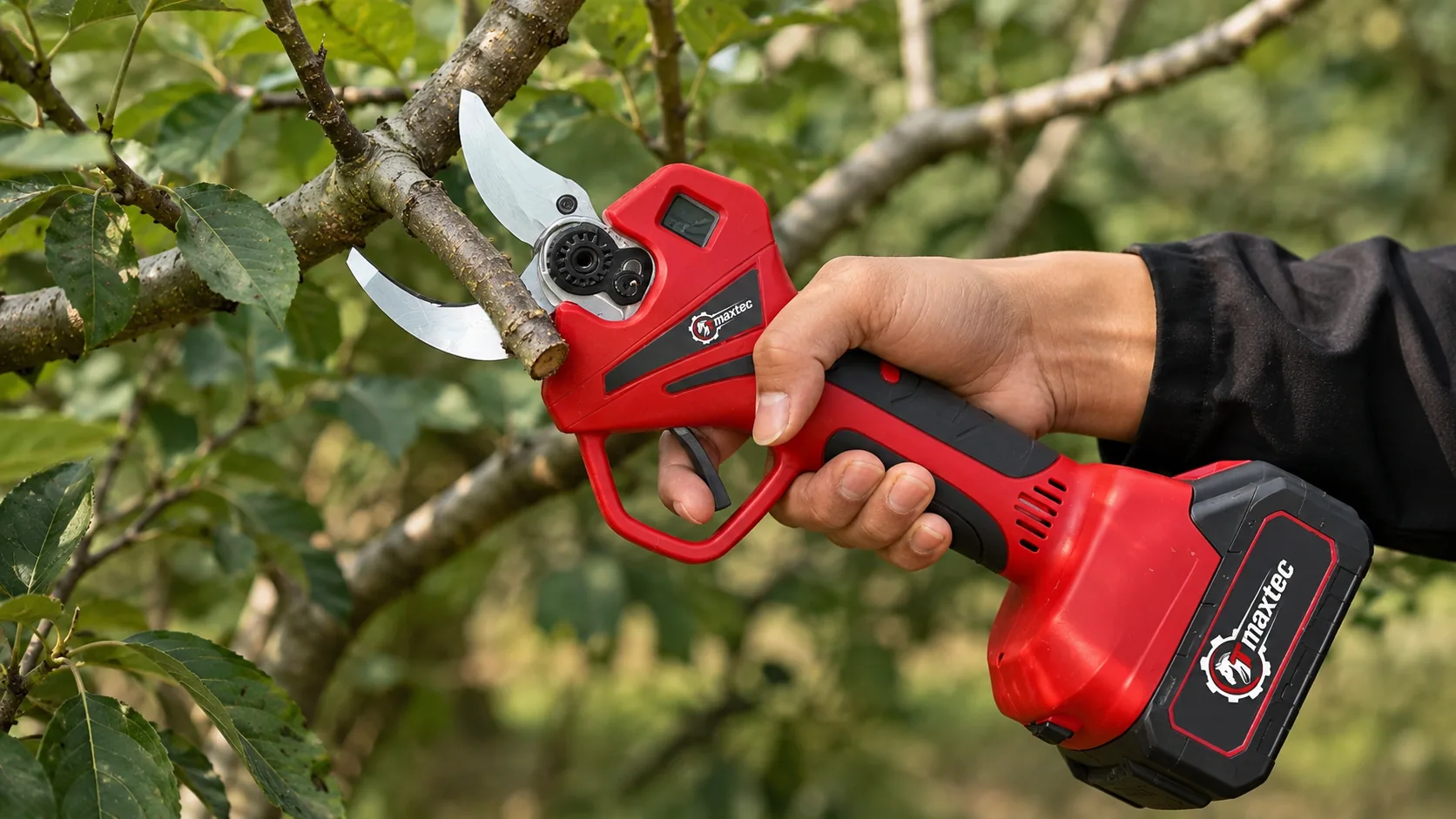
Field Service and Dealer Troubleshooting Guide
When electric pruning shears stop mid-cut, the tool is not necessarily defective. The cutting load may exceed the selected branch range, the blade may be dull or contaminated with sap, or the battery may be unable to maintain sufficient output under load. Incorrect blade adjustment, poor branch positioning, overheating, loose electrical contacts, and overload protection can produce the same symptom.
For importers, orchard tool dealers, repair shops, and agricultural equipment wholesalers, a structured cordless pruning shears troubleshooting process is essential. It helps technicians separate application problems from battery, blade, controller, motor, and gearbox faults before authorizing a return or replacing the complete machine.
| Quick Answer |
Quick answer: Electric pruning shears usually stop mid-cut because the branch is too hard for the available cutting force, the branch is positioned near the blade tip, the battery voltage drops under load, or the blade has become dull, dirty, dry, or incorrectly adjusted. Release the trigger immediately, switch off the tool, remove the battery, and free the branch without pulling the shears sideways. Dealers should then test the machine with a charged compatible battery, a clean lubricated blade, and a smaller fresh branch. Bulk buyers can reduce returns by matching the model to local tree species, stocking replacement blades and batteries, and training users on correct branch placement. |
What a Mid-Cut Stop Usually Means
The first question is whether the machine stops because of excessive cutting resistance or because a component cannot deliver normal performance. A fresh fruit-tree branch may be cut easily, while a dry branch of the same diameter can be much harder. Wood species, moisture, age, density, blade condition, cutting angle, and battery charge all affect the actual load.
The maximum cutting diameter in a product specification should not be understood as a guarantee that every branch of that diameter can be cut under all conditions. When most daily branches are close to the machine’s maximum range, the tool has little reserve capacity. A model with more cutting margin is normally more suitable for continuous orchard work or mature wood.
Dealer interpretation
If the shears cut smaller fresh branches normally but stop on dry, dense, or maximum-size branches, investigate application matching, blade condition, and battery output before treating the symptom as a motor failure.
Diagnostic Table for Electric Pruning Shears That Stop Under Load
| Symptom | Possible Cause | First Check | Dealer Action |
| Stops only on thick or dry branches | Excessive branch resistance or insufficient model capacity | Test a smaller fresh branch | Review model selection and explain realistic cutting limits |
| Blade moves normally without load but stops during cutting | Weak battery output, dull blade, sap buildup, or overload protection | Install a fully charged compatible battery and clean the blade | Compare battery performance and inspect blade sharpness |
| Blade becomes progressively slower | Sap, wood fibers, poor lubrication, or excessive blade tension | Remove battery and inspect the blade pivot | Clean, lubricate, and adjust according to the service guide |
| Machine stops and temporarily will not restart | Overload, overheating, low voltage, or protection activation | Remove the battery and allow the system to cool | Identify the cause before repeatedly resetting the tool |
| Intermittent operation during vibration | Loose battery, damaged contacts, trigger fault, or connector issue | Inspect battery fit, terminals, locking mechanism, and trigger | Test both without load and while cutting |
| Clicking, grinding, burning smell, or rapid heat | Gear, motor, controller, alignment, or electrical damage | Stop operation immediately | Arrange technical inspection instead of continued testing |
Branch Position and Cutting Technique Checks
Branch position has a major effect on available cutting force. The branch should normally be placed deeper inside the blade opening, closer to the pivot point. Cutting near the outer tip reduces mechanical advantage and makes a mid-cut stop more likely.
|
Correct setup
|
Common mistakes
|
A branch positioned at an angle may rotate or move while the blade closes. This can trap the blade even when the branch diameter is within the normal working range. Dealer demonstrations should therefore include correct branch placement, not only the startup sequence and trigger operation.
Battery Output, Contacts and Protection Systems
A low or deteriorated battery may still operate the display and move the blade without a branch. The problem appears only when the motor demands more current. Typical signs include slower cutting, rapid indicator drop, repeated stopping on thicker branches, unusual battery heat, or normal operation after changing to another battery.
| 1 | Charge the battery fully and test the shears on a smaller, fresh branch. |
| 2 | Compare with another compatible battery to separate a battery fault from a machine fault. |
| 3 | Inspect terminals and battery fit for dust, moisture, oxidation, cracks, looseness, heat marks, or damaged connectors. |
Electrical contacts should not be cleaned with water. Use an appropriate dry cleaning method according to the product instructions. The battery should lock securely without excessive movement. If vibration interrupts the connection, the shears may stop unexpectedly during a cut.
Electronic overload protection may also stop the machine when current becomes too high, battery voltage drops suddenly, the blade remains trapped, or the motor and controller become hot. Remove the battery, release the blade safely, allow the system to cool, and identify the cause before resetting the tool repeatedly.
Blade Cleaning, Sharpness and Adjustment
Fruit-tree sap, wood fibers, dirt, rust, and dry plant residue increase friction between the moving and fixed blades. During seasonal orchard pruning, the tool may complete hundreds of cuts per day, so contamination can build up quickly. A machine may cut normally at the start of the shift, become progressively slower, and eventually stop on branches that were previously easy to cut.
After removing the battery, inspect the cutting system for sap buildup, trapped fibers, foreign objects, rust, damaged edges, and pivot contamination. Clean the blade using a method suitable for the blade material and lubricate the moving surfaces according to the operating instructions. Excessive oil should not be applied near the motor, battery connection, or electronic components.
| Dull blade signs
Crushed bark, rough cuts, slower cutting, higher battery use, and repeated stopping. |
Adjustment too tight
Slow no-load movement, scraping noise, pivot heat, and reduced runtime. |
Adjustment too loose
Side movement, uneven cuts, vibration, visible gaps, and thin branches folding. |
Do not tighten the adjustment nut randomly. Small changes can significantly affect blade movement. A damaged blade should also not be sharpened repeatedly without checking its original geometry and alignment. Incorrect sharpening can change the cutting angle and increase the load on the motor and transmission.
Model Selection for Gardens, Vineyards and Orchards
Model selection should be based on real branch hardness, average diameter, peak diameter, daily cutting volume, battery configuration, and local maintenance capability. Importers should test samples on local tree species rather than relying only on soft demonstration branches.
|
TM-SH3504Li Li-Ion Cordless Pruning Shears |
|
|
Practical positioning: Routine garden, vineyard, nursery, and orchard pruning where the branch range matches the actual model specification. Procurement focus: Confirm average branch hardness, cutting frequency, battery quantity, replacement blade supply, charger compatibility, and local service requirements.
|
|
Higher capacity evaluation TM-SH4501Li Lithium Battery Pruning Shears For users who regularly work with larger branches, this model may be evaluated as an alternative according to branch hardness, daily workload, battery configuration, and local application requirements. |
|
| Application | Model to Evaluate | Buying Focus |
| Routine garden and nursery pruning | TM-SH3504Li | Handling, battery runtime, blade availability, and typical fresh branch range |
| Vineyard and orchard maintenance | TM-SH3504Li or TM-SH4501Li | Local wood density, daily cut volume, spare battery planning, and service access |
| Regular cutting of larger or harder branches | TM-SH4501Li | Capacity margin, overheating risk, battery output, and replacement cutting parts |
Safe Release Procedure When the Blade Is Trapped
Do not keep pressing the trigger when the blade is trapped. Repeated activation can increase motor current, heat the battery and controller, damage the gearbox, or tighten the blade further around the branch.
- Release the trigger immediately.
- Switch off the machine if a separate power switch is fitted.
- Remove the battery before touching the blade area.
- Support the branch so it cannot move suddenly.
- Release the branch using the correct procedure for the tool.
- Use another suitable cutting tool if the surrounding branch section must be removed.
- Inspect the blade, holder, pivot, and alignment before reinstalling the battery.
Safety warning: Never place fingers between the blades, even when the machine appears to have stopped. Do not pull the shears sideways or use them as a lever. Side pressure can bend the blade, damage the holder, and create an alignment problem that causes future mid-cut stops.
When Repair Inspection Is Necessary
The machine should be removed from service when it stops on small fresh branches, remains slow after cleaning, overheats quickly, produces abnormal motor noise, smells burnt, displays repeated error codes, or has a bent blade. Clicking and grinding sounds may indicate internal gear or transmission damage.
Technicians should inspect the complete system instead of replacing the motor immediately. The actual cause may be the blade, battery, charger, switch, connector, controller, gear assembly, fastener, or blade alignment.
| Recommended service stock
Replacement blades, compatible batteries, chargers, blade fasteners, trigger assemblies, battery connectors, selected gear components, and suitable lubrication materials. |
| Why this matters for dealers
Basic diagnostic parts allow technicians to identify the failed component and reduce unnecessary complete-machine replacements, shipping costs, and delayed warranty decisions. |
Importer and Dealer Bulk Order Audit
Before placing a wholesale order, buyers should evaluate the complete cutting system rather than comparing only the advertised branch diameter. A proper audit should cover product consistency, application suitability, service parts, packaging, and after-sales procedures.
|
Before Ordering
|
Before Shipment
|
Frequently Asked Questions
Why do electric pruning shears stop halfway through a branch?
The most common causes are excessive branch hardness, cutting near the blade tip, low battery output, sap buildup, a dull blade, incorrect blade tension, overheating, or electronic overload protection.
What should users do when the pruning shear blade is stuck?
Release the trigger, switch off the machine, remove the battery, support the branch, and release it safely. Do not twist the shears, pull sideways, or place fingers between the blades.
Can a weak battery make cordless pruning shears stop under load?
Yes. A weak battery may operate the blade without load but fail when cutting resistance increases. Test with a fully charged compatible battery and compare performance with another battery before replacing the motor.
How can dealers reduce electric pruning shears after-sales complaints?
Dealers should explain practical branch limits, demonstrate correct branch placement, provide cleaning and lubrication guidance, stock wear parts, and match the model to local tree species and daily workload.
What spare parts should pruning shear importers stock?
Useful service inventory includes replacement blades, batteries, chargers, blade fasteners, trigger assemblies, battery connectors, selected gear parts, and suitable lubrication materials.
What should importers inspect before a bulk order?
Importers should test local branch types, compare battery consistency, check blade adjustment and battery fit, verify charger compatibility, inspect packaging, confirm spare-parts availability, and review repeat-order component consistency.
Electric pruning shears that stop mid-cut are often responding to excessive cutting resistance, insufficient battery output, contaminated or dull blades, incorrect adjustment, or an activated protection system. A consistent troubleshooting procedure helps importers and dealers distinguish user application issues from genuine component faults while reducing avoidable returns.
|
Wholesale model evaluation Compare branch range, battery configuration and spare-parts planning before ordering. Review the TM-SH3504Li for routine pruning applications or compare the TM-SH4501Li when your market regularly handles larger or harder branches. |
|