
Backpack Brush Cutter Won’t Start After Storage: What to Check
Learn why a backpack brush cutter won’t start after storage, how to inspect fuel, oil, spark, carburetor, and what dealers should check before delivery.
Dealer Troubleshooting and Storage Inspection
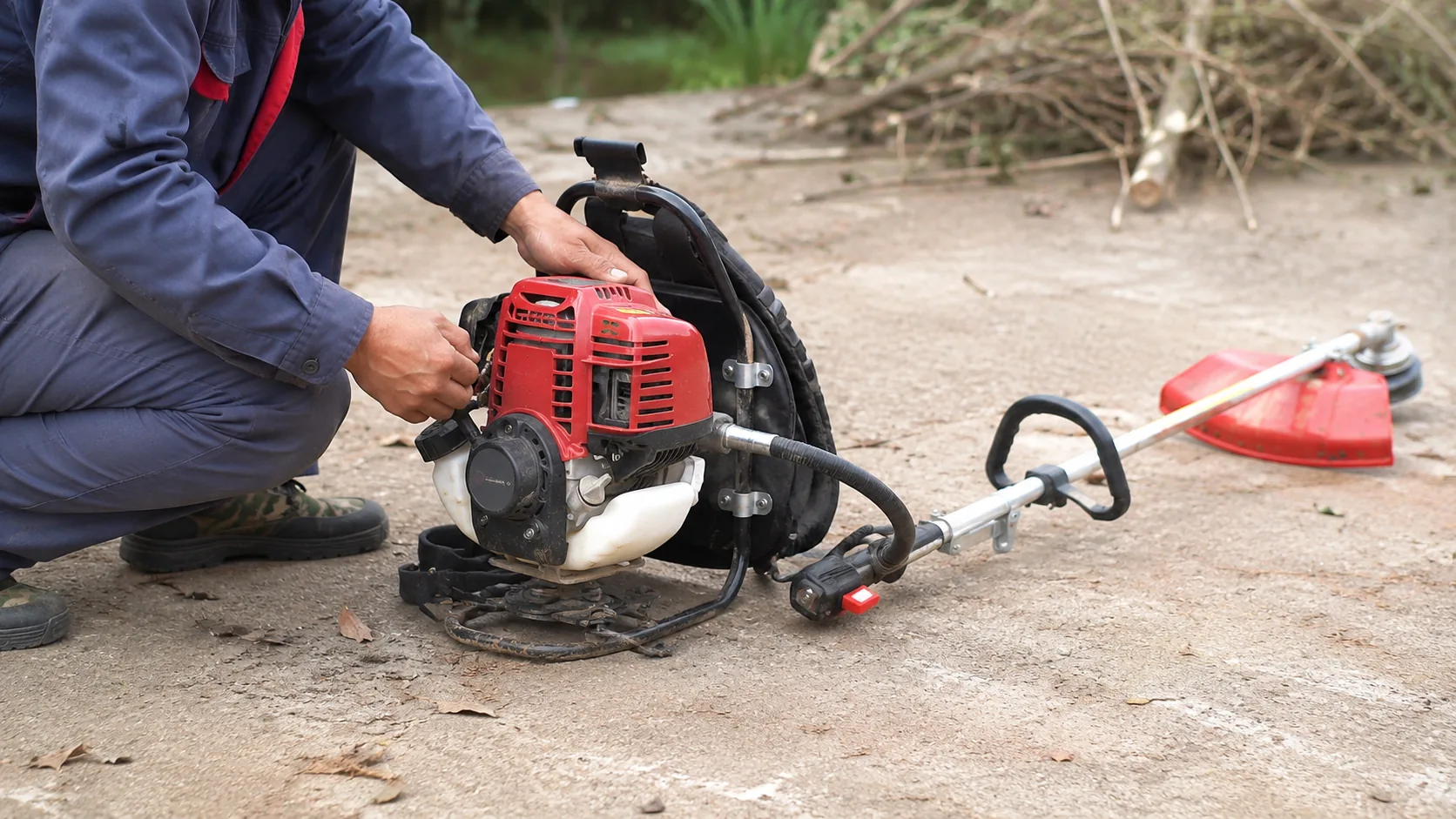
When a backpack brush cutter won’t start after storage, the problem is usually related to old fuel, an incorrect fuel-and-oil procedure, a blocked carburetor, a fouled spark plug, damaged fuel-system parts, or an incorrect cold-start sequence. Repeatedly pulling the starter without checking these areas can flood the engine and make diagnosis more difficult.
For importers, wholesalers, repair shops, and regional dealers, storage-related starting failures are also an inventory-management issue. Machines may remain inside warehouses for weeks or months before delivery. A documented storage policy, spare-parts plan, and pre-delivery inspection can prevent avoidable returns and reduce after-sales costs.
Quick answer: Start by draining questionable fuel, adding clean gasoline, confirming the correct engine oil level, checking that the stop switch and fuel supply are open, and using the correct choke sequence. Then inspect whether the spark plug is wet or dry. A wet plug usually points to flooding or weak ignition, while a dry plug often indicates restricted fuel flow. Importers and dealers should also inspect the primer bulb, fuel hoses, tank vent, carburetor, flexible shaft, clutch, and cutting attachment before replacing engine parts. Standardized warehouse storage and pre-delivery testing are the most effective ways to reduce repeat complaints.
What the Starting Symptom Usually Means
The exact symptom provides useful information before any parts are removed. Dealers should record whether the starter feels normal, whether the engine fires briefly, whether the primer bulb fills, and whether the machine runs only with the choke closed. These details help separate fuel, ignition, starting-procedure, and drive-system problems.
| Observed symptom | Possible cause | First inspection | Recommended dealer action |
| Primer bulb stays empty | Blocked filter, cracked hose, carburetor restriction, or air leak | Fuel filter, hose connections, primer bulb, and carburetor inlet | Restore fuel flow before adjusting carburetor screws |
| Spark plug is wet | Flooded cylinder, incorrect choke use, weak ignition, or plug fouling | Plug condition, electrode gap, plug cap, and starting sequence | Dry or replace the plug and clear excess fuel |
| Spark plug is dry | Fuel is not reaching the cylinder | Tank vent, filter, fuel line, primer system, and carburetor | Clean or replace restricted fuel-system parts |
| Engine fires and immediately stops | Restricted carburetor passage, blocked vent, incorrect choke transition, or drive resistance | Fuel flow, choke operation, clutch, shaft, and cutting head | Inspect both the engine and cutting-drive system |
| Starter feels unusually heavy | Jammed cutting head, seized gearbox, bent flexible shaft, or engaged clutch | Blade, trimmer head, gearbox, clutch, and flexible shaft | Disconnect the spark plug cap before inspecting moving parts |
Check Fuel Condition and Engine Type First
Old gasoline should be the first suspected cause when a machine has remained unused for an extended period. Fuel can lose volatility and leave deposits inside the carburetor, fuel line, primer bulb, and filter. Hot warehouse conditions can accelerate deterioration, while humid storage may allow water contamination.
Signs that stored fuel should be replaced
|
Correct service responseDrain questionable fuel, inspect the tank, and refill it with clean gasoline that matches the engine instructions. Avoid repeated starting attempts with contaminated fuel because deposits can be drawn deeper into small carburetor passages. |
The service team must also identify whether the backpack brush cutter uses a 2-stroke or 4-stroke engine. A 2-stroke model normally requires gasoline mixed with the specified 2-stroke oil. A 4-stroke model generally uses gasoline in the fuel tank and engine oil in a separate crankcase.
Putting a 2-stroke mixture into a 4-stroke machine can cause smoke, poor combustion, plug deposits, and difficult starting. Operating a 4-stroke engine without the required crankcase oil can cause serious damage. Always verify the correct oil type, oil level, filling procedure, and machine position according to the actual model instructions.
Use the Correct Choke Sequence Before Removing Parts
A mechanically normal brush cutter may still refuse to start when the operator uses the wrong choke procedure. A cold engine normally needs a richer mixture during the first pulls. After the engine fires or briefly attempts to run, the choke should be moved gradually toward the operating position.
Keeping the choke fully closed for too many pulls can flood the cylinder. Opening it too early may prevent enough fuel from entering during a cold start. Instead of continuing to pull the starter, follow a controlled sequence.
| 1 | Place the machine securely on stable ground with the cutting attachment clear of obstacles. |
| 2 | Confirm that the stop switch is in the running position and open the fuel supply when the model has a fuel valve. |
| 3 | Operate the primer bulb only as directed and confirm that fuel enters it without excessive air bubbles. |
| 4 | Set the choke for a cold or warm start, hold the machine firmly, and pull the starter smoothly. |
| 5 | Move the choke after the engine fires or attempts to fire. Stop and inspect the plug if repeated pulls produce no change. |
IGNITION Read the Spark Plug Before Adjusting the Carburetor
The spark plug can show whether fuel is reaching the combustion chamber. Remove it after several unsuccessful starting attempts and compare its condition with the symptoms below.
A wet spark plug usually means fuel is entering the cylinder but is not igniting correctly. Possible causes include flooding, excessive choke use, heavy carbon deposits, a loose plug cap, an unsuitable electrode gap, or a damaged plug.
A completely dry spark plug suggests that fuel may not be reaching the cylinder. Inspect the tank vent, fuel filter, fuel hose, primer bulb, and carburetor before replacing ignition components.
A wet plug can be dried before reinstallation. A heavily fouled, cracked, burned, or damaged plug should be replaced with the correct reference. Importers should include commonly used spark plugs in the initial spare-parts order and list the correct plug reference in manuals and dealer service sheets.
Inspect the Carburetor, Fuel Lines and Storage-Aged Parts
Small carburetor passages may become restricted when gasoline remains in the machine during storage. Typical symptoms include an engine that starts briefly and stops, runs only with the choke closed, idles unevenly, or starts only when fuel is introduced manually.
Before turning adjustment screws, inspect the complete fuel path. Incorrect carburetor adjustment will not repair a cracked hose, blocked filter, hardened primer bulb, restricted tank vent, or air leak.
| Part to inspect | Storage-related risk | Dealer check |
| Fuel hose | Hardening, cracking, leakage, or air entry | Bend gently and inspect all connection points |
| Primer bulb | Loss of flexibility or poor fuel draw | Check whether it fills and returns normally |
| Tank cap and vent | Leakage or restricted fuel flow | Inspect the seal and confirm ventilation |
| Carburetor diaphragms and gaskets | Hardening, deposits, or poor sealing | Clean carefully or install the correct service kit |
| Air filter and rubber mounts | Dust blockage, moisture, or material deterioration | Clean, dry, and replace damaged components |
Carburetor cleaning should be carried out carefully because jets, diaphragms, seals, and gaskets can be damaged by incorrect tools. Where deposits have hardened, replacing the appropriate service parts may be more reliable than repeated adjustment. Carburetor kits, primer bulbs, filters, hoses, and gaskets are low-cost items that can significantly shorten dealer repair time.
Do Not Ignore the Cutting Drive and Flexible Shaft
Starting resistance is not always caused by the engine. A jammed cutting head, incorrectly installed blade, seized gearbox, damaged clutch, or restricted flexible shaft can place additional load on the drive system. The starter may feel unusually heavy, or the engine may stop immediately after firing.
Disconnect the spark plug cap before checking:
- Grass, rope, wire, and packaging around the cutting attachment
- Correct blade and trimmer-head installation
- Gearbox movement and lubrication condition
- Flexible shaft lubrication and freedom of movement
- Clutch release when the engine is stopped
- Sharp bends or compression damage caused by warehouse stacking
Backpack machines should not be stored with the flexible shaft tightly folded or trapped beneath heavy cartons. Poor packaging support can create drive resistance, shaft deformation, and early wear before the machine reaches the customer.
Recommended 4-Stroke Backpack Model for Dealer Programs
|
Product Recommendation TM-BG435 Backpack Brush CutterEngine configuration: 4-stroke, air-cooled engine The TM-BG435 backpack brush cutter is suitable for distributors seeking a backpack configuration with a 4-stroke engine. The separate gasoline and crankcase-oil procedure should be clearly explained to technicians and end users, especially in markets where 2-stroke brush cutters are more common. Buying focus: Confirm operating instructions, engine-oil guidance, flexible-shaft protection, starting labels, spare spark plugs, carburetor service parts, fuel hoses, and primer bulbs before a bulk order. |
Useful for importers, agricultural-tool dealers, repair shops, and professional vegetation-maintenance buyers.
|
Dealer Pre-Delivery Inspection After Warehouse Storage
Every stored machine should receive a pre-delivery inspection before it is handed to the buyer. The test should cover cold starting, warm restarting, idle stability, throttle response, stop-switch operation, clutch engagement, flexible-shaft movement, gearbox condition, fuel leakage, and guard installation.
A printed inspection sheet should record the model, serial reference where applicable, storage period, inspection date, test result, technician, and any parts replaced. This prevents different branches or dealers from using inconsistent inspection standards.
Before Ordering
|
Before Shipment and Delivery
|
How to Prevent Starting Problems During Future Storage
Preventive storage is more reliable than repairing a restricted fuel system later. Dealers should clean each machine, manage or drain fuel according to the engine instructions, inspect the spark plug, clean the air filter, check engine oil, lubricate the flexible shaft where required, and protect exposed metal parts from moisture.
The machine should be kept upright in a dry, ventilated area. Avoid direct sunlight, excessive heat, coastal moisture, tightly bent shafts, and heavy cartons resting on the drive system. Attach a storage-date label to the machine or carton so older stock can be inspected and delivered before newer arrivals.
Wholesale machines should not remain filled with gasoline during long-distance shipment or extended warehouse storage unless the engine instructions specifically require an approved storage procedure. When fuel is added for testing, the dealer should decide whether it must be drained according to the expected delivery date and local safety requirements.
Frequently Asked Questions
1. Why won’t a backpack brush cutter start after storage?
The most common causes are deteriorated fuel, a blocked fuel system, incorrect choke use, a wet or fouled spark plug, low or incorrect engine oil, a hardened primer bulb, or resistance in the flexible shaft and cutting drive.
2. Should the carburetor be adjusted immediately?
No. First inspect the fuel, filter, tank vent, hoses, primer bulb, carburetor inlet, spark plug, and starting procedure. Carburetor adjustment cannot correct blocked fuel flow, cracked hoses, flooding, or drive-system resistance.
3. What should importers check when buying a 4-stroke backpack brush cutter?
Importers should confirm the separate gasoline and crankcase-oil procedure, starting instructions, spark plug reference, carburetor service parts, flexible-shaft compatibility, packaging support, pre-shipment testing, manuals, and dealer training requirements.
4. What spare parts should dealers stock for storage-related starting problems?
Useful inventory includes spark plugs, fuel filters, fuel hoses, primer bulbs, carburetor repair kits, gaskets, air filters, tank-cap seals, flexible shafts, clutch parts, and commonly used gearbox service components.
5. How can dealers reduce after-sales complaints?
Use clear fuel and oil labels, train buyers on the cold-start sequence, date warehouse stock, protect flexible shafts during storage, test every machine before delivery, and keep routine service parts available locally.
6. Does a brush cutter that will not start need a new engine?
Usually not. Fresh fuel, the correct engine oil, proper choke operation, spark plug inspection, fuel-system cleaning, and a cutting-drive check solve many storage-related cases before major engine replacement is considered.
Planning a Wholesale Backpack Brush Cutter Order?Review the TM-BG435 4-stroke backpack brush cutter when comparing engine configuration, dealer training, storage procedures, spare parts, packaging support, and local after-sales requirements. |
|
A backpack brush cutter that won’t start after storage should be diagnosed systematically rather than treated as an automatic engine failure. Fresh fuel, the correct oil procedure, proper choke use, spark plug inspection, carburetor and hose checks, and inspection of the flexible shaft and cutting attachment will resolve many cases. For importers and dealers, consistent storage records, suitable spare parts, and documented pre-delivery testing provide the strongest protection against repeat starting complaints.