
Why Does a Gasoline Power Sprayer Lose Pressure While Spraying?
Learn why a gasoline power sprayer loses pressure, how to check suction leaks, valves, nozzles and hoses, and what dealers should inspect before delivery.
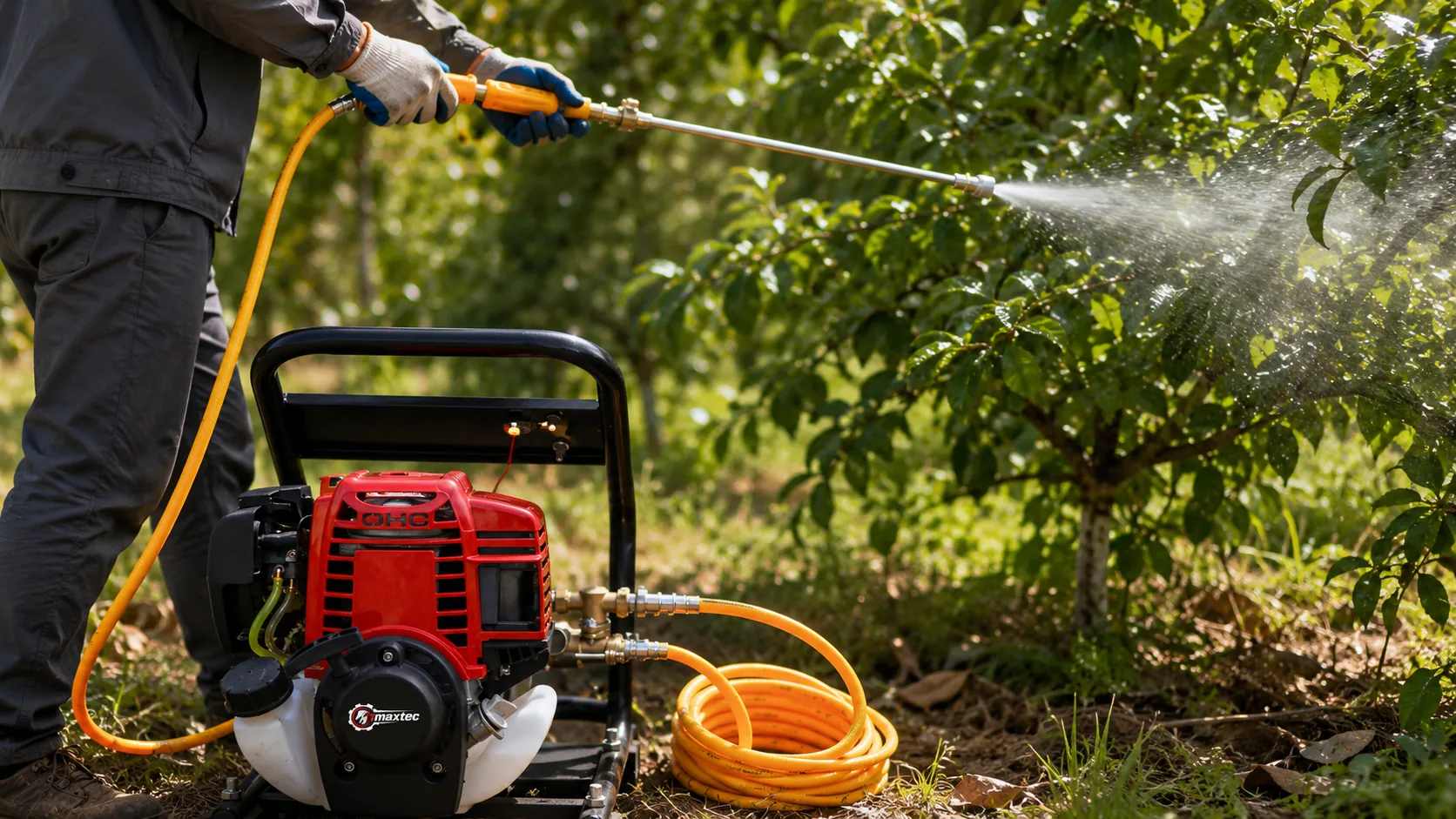
Field Troubleshooting and Dealer Service Guide
A practical diagnostic guide for importers, agricultural dealers, repair shops, wholesalers, and professional spraying-equipment buyers.
A gasoline power sprayer usually loses pressure because air is entering the suction line, the inlet filter is blocked, the pressure regulator is incorrectly adjusted, or internal pump valves are dirty or worn. The first response should not be increasing engine speed or adjusting the carburetor. Stop spraying and inspect the complete liquid-supply system before treating the symptom as an engine fault.
Low or unstable pressure can also come from the nozzle, discharge hose, chemical mixture, return hose, spray-gun assembly, or an incorrect operating setup. For dealers and importers, identifying the real cause is important because replacing an engine will not solve a restriction or air leak in the pump, hose, regulator, or spraying accessories. A clear diagnostic order reduces unnecessary returns, incorrect spare-parts replacement, and repeated customer complaints.
Quick answer:
When a gasoline power sprayer loses pressure, first confirm that the tank contains enough liquid and that the inlet filter remains fully submerged. Then check the suction hose, O-rings, clamps, filter screen, regulator setting, nozzle condition, and high-pressure hose. Test the machine with clean water before opening the pump or adjusting the engine. Importers and dealers can reduce after-sales risk by supplying compatible seals, filters, nozzles, hose fittings, valve kits, and clear operating instructions with every bulk order.
What Power Sprayer Pressure Loss Usually Means
A power sprayer depends on several systems working together. The engine drives the pump, the suction line supplies liquid, the pump valves move the liquid, the regulator controls pressure and bypass flow, and the nozzle converts liquid flow into the required spray pattern. A fault in any one of these areas can produce weak pressure, pulsing, delayed pressure buildup, or pressure that disappears when the spray-gun trigger is opened.
The engine can start and run normally while the pump receives an incomplete liquid supply. It can also maintain speed while a worn nozzle discharges too much liquid or a blocked inlet filter starves the pump. This is why dealers should not diagnose the machine only by listening to the engine.
The pressure-loss pattern often provides an early clue. Pressure that fluctuates irregularly usually points to air intake, low liquid level, or sticking valves. Pressure that remains consistently low may indicate a regulator setting, worn nozzle, restricted suction supply, worn seals, or insufficient engine speed. Pressure that builds with the gun closed but collapses when spraying often indicates excessive flow demand, hose leakage, pump wear, or an unsuitable nozzle configuration.
| 01 |
Pressure pulses while spraying Check liquid level, suction-hose air leaks, filter submersion, valve movement, and whether thick chemical residue is entering the pump. |
| 02 |
Pressure remains low at every regulator setting Inspect inlet restriction, worn nozzle, leaking hose, pump valves, plunger seals, engine speed, and bypass-system condition. |
| 03 |
Pressure improves with clean water The chemical mixture, undissolved powder, water quality, filter size, or nozzle compatibility is likely contributing to the problem. |
Gasoline Power Sprayer Diagnostic Table
Dealers should begin with checks that require no pump disassembly. A machine should be tested with clean water, the correct hose arrangement, a known good nozzle, and a moderate regulator setting before internal components are removed.
| Observed Symptom | Likely Cause | Check First | Recommended Action |
| Pressure rises and falls repeatedly | Air entering the suction line | Hose ends, clamps, O-rings and liquid level | Reseal the suction system and keep the filter submerged |
| Pump runs but spray remains weak | Blocked filter or low regulator setting | Inlet filter and bypass flow | Clean the filter and adjust pressure gradually |
| Pressure drops when the trigger opens | Worn nozzle, hose leak or pump wear | Nozzle size, hose condition and pump output | Test with a new matching nozzle and known good hose |
| Regulator adjustment has little effect | Dirty valves, damaged regulator or bypass fault | Return flow and regulator movement | Flush the system, then inspect the regulator and valve set |
| Liquid leaks around the pump body | Worn plunger seals or damaged fittings | Seal area, connectors and plunger surface | Replace the complete affected seal set and inspect wear surfaces |
| Engine slows when pressure increases | Excessive pump load or engine-service issue | Regulator setting, filter, fuel, air filter and choke | Reduce pressure and verify both liquid and engine systems |
This inspection order helps a repair shop avoid opening the pump before confirming basic operating conditions. In rural markets, a blocked filter, missing O-ring, incorrectly connected return hose, or enlarged nozzle is often more common than a major engine defect.
Liquid Supply, Suction Hose and Inlet Filter Checks
Begin by checking the liquid level in the tank. When the level becomes too low, the suction hose may draw air instead of spraying solution. The tank may still contain liquid, but the inlet filter can become exposed when the machine is tilted, transported across uneven farmland, or operated with a loose suction hose.
Confirm that the suction hose reaches the correct position, the inlet filter remains below the liquid surface, the tank outlet is open, and sediment has not blocked the supply path. Avoid operating the pump without liquid because dry running can increase wear on seals, valves, plungers, and other internal components.
Suction-Side Inspection Points
- Connection between the tank outlet and suction hose
- Connection between the suction hose and pump inlet
- Sealing washers, O-rings and threaded fittings
- Hose clamps and cracks near both hose ends
- Hardened, flattened or chemically damaged hose material
- Position and cleanliness of the inlet filter inside the tank
A suction-side air leak may not release much liquid. Because the inlet operates under vacuum, air can be drawn inward through a loose connector while the exterior appears dry. Testing the sprayer with clean water may reveal bubbles, pulsing flow, or a suction hose that does not remain full.
The inlet filter is another common restriction. Undissolved powder chemicals, fertilizer crystals, soil, tank rust, plant material, dried pesticide residue, and pieces of damaged tank lining can reduce liquid supply. Remove the filter and wash it with clean water. Do not enlarge the openings with wire, nails, or other sharp tools because larger openings can allow abrasive material into the pump.
If pressure returns after the filter is cleaned, the pump may still be in good condition. The underlying problem is more likely chemical preparation, tank cleanliness, insufficient filtration, or poor maintenance. Dealers serving agricultural markets should stock replacement filters, O-rings, suction-hose seals, and clamps because these low-cost parts resolve many field complaints.
Regulator, Nozzle and High-Pressure Hose Inspection
The pressure regulator controls how much pump output is sent to the spray hose and how much liquid returns through the bypass system. If it is set too low, the engine and pump may operate normally while the spray remains weak. If it is tightened excessively, the machine may experience unnecessary load, hose stress, leakage, engine-speed reduction, or accelerated wear.
Adjust the regulator gradually while spraying clean water. Observe the spray pattern, return flow, engine response, hose condition, and pressure stability. The correct setting depends on the nozzle, number of spray guns, discharge-hose length, crop height, required application rate, chemical viscosity, pump condition, and actual model specification. Maximum pressure is not automatically the correct setting for every task.
|
Regulator Risk Over-tightening can overload the pump and engine. A damaged regulator spring, seat, valve, or bypass passage can also prevent stable pressure adjustment. |
Nozzle Risk Residue can distort the spray pattern, while an enlarged or worn orifice can discharge too much liquid and make the pump appear weak. |
Hose Risk Pinholes, weak crimps, swelling, soft material, sharp bends, and leaking spray-gun connectors can reduce usable pressure at the nozzle. |
Remove the nozzle and inspect it for sand, dried chemical residue, or physical damage. Clean it with water and a soft brush. Do not use steel wire, nails, or drill bits because enlarging the opening changes the flow rate, droplet size, and chemical application pattern. Compare a suspected nozzle with a new nozzle of the same specification.
Nozzles should be replaced when the spray pattern becomes irregular, the opening is visibly damaged, droplets become uneven, discharge volume is excessive, or liquid continues to leak after the trigger is released. Distributors offering several nozzle styles should clearly identify the pump, gun, pressure, crop, and application range suitable for each one.
Inspect the entire high-pressure hose while the machine operates with clean water. Look for cracks near connectors, pinholes, swelling, loose crimped fittings, sharp bends, sections damaged by tools or vehicles, and leakage around the spray gun. Hose quality should be evaluated together with the sprayer during wholesale procurement because an unsuitable hose can create complaints even when the engine and pump are working correctly.
Pump Valves, Plunger Seals, Engine Load and Chemical Mixture
If the liquid level, suction hose, filter, regulator, nozzle, and discharge hose have been checked, the next stage is internal pump inspection. Power sprayer pumps depend on inlet and outlet valves opening and closing correctly. Chemical deposits, corrosion, dirt, damaged springs, worn valve seats, or incorrectly installed valve components can prevent the pump from moving the required liquid volume.
Valve-related symptoms include low pressure after filter cleaning, little response to regulator adjustment, irregular bypass flow, uneven knocking sounds, pressure that improves briefly and then falls, or a pump that cannot maintain a full suction hose. Flush the complete system with clean water before opening the pump. If the problem remains, a trained technician should inspect valves, springs, seats, seals, and installation direction.
Plunger seals help the pump generate pressure and prevent liquid from leaking into other areas. Worn seals may cause gradual pressure loss, reduced suction performance, leakage around the pump body, frequent regulator adjustment, or chemical residue around the plunger section. Seal life can be shortened by abrasive water, incompatible chemicals, dry running, poor flushing, or prolonged operation at excessive pressure.
Workshop Repair Priority
Do not replace only the most visible leaking seal without checking the remaining sealing set, plunger surface, valve condition, regulator, and lubrication requirements. Keep removed valves and springs organized because reversing an inlet or outlet component can prevent the pump from building pressure after reassembly.
The engine must also maintain sufficient speed when the pump is pressurized. If engine speed drops when the spray-gun trigger is opened, inspect the air filter, fuel condition, choke position, fuel filter, carburetor passages, spark plug, crankcase oil level, throttle linkage, and regulator setting. Excessive pressure or an internal pump restriction can overload the engine and imitate a fuel-system fault.
Chemical preparation should be checked whenever the sprayer works normally with clean water but loses pressure with the actual spraying mixture. Excessive powder, incomplete mixing, low water volume, poor water quality, settling material, incompatible chemicals, or a nozzle that is too small can restrict the system.
Wettable powders should be prepared according to the chemical manufacturer’s instructions and dissolved as completely as possible before entering the tank. Users should not increase chemical concentration simply to reduce the number of tank refills. For diagnostic work and dealer demonstrations, always test with clean water first so equipment faults can be separated from chemical-preparation problems.
TM-PGX35 Agricultural Power Sprayer and Application Fit
For agricultural dealers and importers evaluating a portable gasoline spraying model, the TM-PGX35 agricultural power sprayer combines a GX35 4-stroke engine with a published working-pressure range of 1.5–2.5 MPa. The engine has a listed output of 1.1 kW at 7,500 rpm.
| Model Information | TM-PGX35 Agricultural Power Sprayer |
| Engine Type | GX35 4-stroke gasoline engine |
| Listed Engine Output | 1.1 kW at 7,500 rpm |
| Working Pressure | 1.5–2.5 MPa |
| Suitable Procurement Focus | Agricultural spraying, portable field work, dealer resale, hose and nozzle matching, and rural after-sales support |
Because this model uses a 4-stroke engine, gasoline and crankcase oil should be handled according to 4-stroke operating requirements rather than a conventional 2-stroke fuel-mixing procedure. Dealers should make this distinction clear during delivery, especially in markets where operators are more familiar with 2-stroke brush cutters or mist dusters.
The regulator, nozzle, suction hose, return hose, discharge hose, and spray gun should be selected and adjusted within the needs of the actual application. Buyers should not evaluate the machine only by maximum pressure. Stable working pressure, hose durability, service access, spare-parts identification, and nozzle availability are equally important for repeat sales.
|
Evaluate the TM-PGX35 for Your Agricultural Market Check the working-pressure range, 4-stroke engine requirements, hose configuration, nozzle options, spare parts, and wholesale supply details. |
|
Dealer Delivery Test and Importer Procurement Checklist
Starting the engine alone is not a complete pre-delivery inspection. The dealer should test the full spraying system with clean water, confirm stable pressure under load, inspect all hose connections, and explain the function of the suction, return, and discharge hoses.
| No. | Inspection Item | What the Dealer or Importer Should Confirm |
| 1 | Engine configuration | Correct engine type, fuel instructions, oil requirement and operating label |
| 2 | Pressure range | Actual working pressure rather than only an unsupported maximum figure |
| 3 | Hose arrangement | Suction, return and discharge hoses are correctly identified and securely connected |
| 4 | Filters and seals | Filter screens, O-rings, washers, clamps and replacement seal kits are available |
| 5 | Regulator operation | Pressure changes smoothly and bypass return flow remains stable |
| 6 | Nozzle options | Standard nozzle, spray pattern and local crop applications are clearly matched |
| 7 | Pressure testing | Each sample or production batch is tested with clean water under load |
| 8 | Pump repair parts | Valve kits, plungers, regulator parts, seals and pump-body components can be identified by model |
| 9 | Packaging | Carton strength, internal protection, hose packing and accessory count are suitable for export |
| 10 | Manuals and labels | Operating, flushing, chemical-safety and 4-stroke fuel instructions are clear |
| 11 | Supply terms | MOQ, production lead time, spare-parts ratio and repeat-order consistency are confirmed |
| 12 | After-sales capability | Local dealers can diagnose suction, regulator, nozzle, pump and engine faults separately |
After spraying, the system should be flushed with clean water according to the chemical instructions. Residue left inside the pump, regulator, hose, gun, or nozzle can dry and restrict later operation. Dealers should explain that cleaning is part of normal maintenance rather than an optional step.
Recommended dealer spare parts include inlet filters, suction-hose seals, clamps, O-rings, nozzles, spray-gun service parts, pressure hoses, regulator assemblies, valve kits, plunger seals, recoil starters, air filters, spark plugs, and carburetor service components. Stocking complete repair kits is often more efficient than waiting for individual internal seals after each failure.
Frequently Asked Questions
Why does a gasoline power sprayer lose pressure while spraying?
The most common causes are low liquid level, suction-side air leakage, a blocked inlet filter, incorrect regulator adjustment, a worn nozzle, a leaking hose, dirty pump valves, or worn plunger seals. Test with clean water and inspect external components before opening the pump.
How can I tell whether the pump or chemical mixture is causing low pressure?
Flush the system and operate it with clean water. If pressure becomes stable, the problem may involve chemical concentration, poor mixing, undissolved powder, sediment, filter blockage, water quality, or nozzle compatibility.
Should the pressure regulator always be set to maximum?
No. The regulator should be adjusted for the nozzle, crop, application rate, hose length, number of spray guns, and working-pressure range of the machine. Excessive pressure can increase engine load, hose stress, leakage, and component wear.
What spare parts should agricultural power sprayer dealers stock?
Useful stock includes inlet filters, O-rings, hose seals, clamps, nozzles, spray-gun parts, pressure hoses, regulator assemblies, valve kits, plunger seals, recoil starters, air filters, spark plugs, and model-specific pump repair kits.
How can dealers reduce power sprayer after-sales complaints?
Dealers should test the complete spraying system with clean water, explain all hose connections, demonstrate regulator adjustment, confirm the correct fuel and oil procedure, supply suitable nozzles, and teach users to flush the machine after spraying.
What should importers check before buying the TM-PGX35 in bulk?
Importers should confirm the 1.5–2.5 MPa working-pressure range, GX35 4-stroke engine requirements, standard hoses, regulator design, spray-gun and nozzle options, spare seal and valve kits, pressure-testing procedure, packaging, manuals, MOQ, and repeat-order supply consistency.
Why does the engine slow down when the spray-gun trigger is opened?
The regulator may be set too high, the pump may be restricted, the nozzle and hose arrangement may create excessive demand, or the engine may have a blocked air filter, old fuel, incorrect choke position, spark-plug problem, throttle-linkage issue, or incorrect oil level.
When a gasoline power sprayer loses pressure, the correct troubleshooting order is liquid level, suction hose, inlet filter, regulator, nozzle, discharge hose, chemical mixture, pump valves, plunger seals, and engine performance under load. For importers and dealers, supplying matched hoses, filters, seals, nozzles, repair kits, and clear maintenance instructions is one of the most effective ways to reduce avoidable after-sales complaints.
|
Planning a Wholesale Agricultural Power Sprayer Order? Review the TM-PGX35 specifications and confirm pressure requirements, hose configuration, nozzle options, spare parts, packaging, and after-sales support for your market. |
|