
Cordless Chainsaw Stops During Cutting: Causes and Fixes
Learn why a cordless chainsaw stops during cutting, how to check the battery, chain, bar, and motor, and what dealers should inspect before bulk orders.
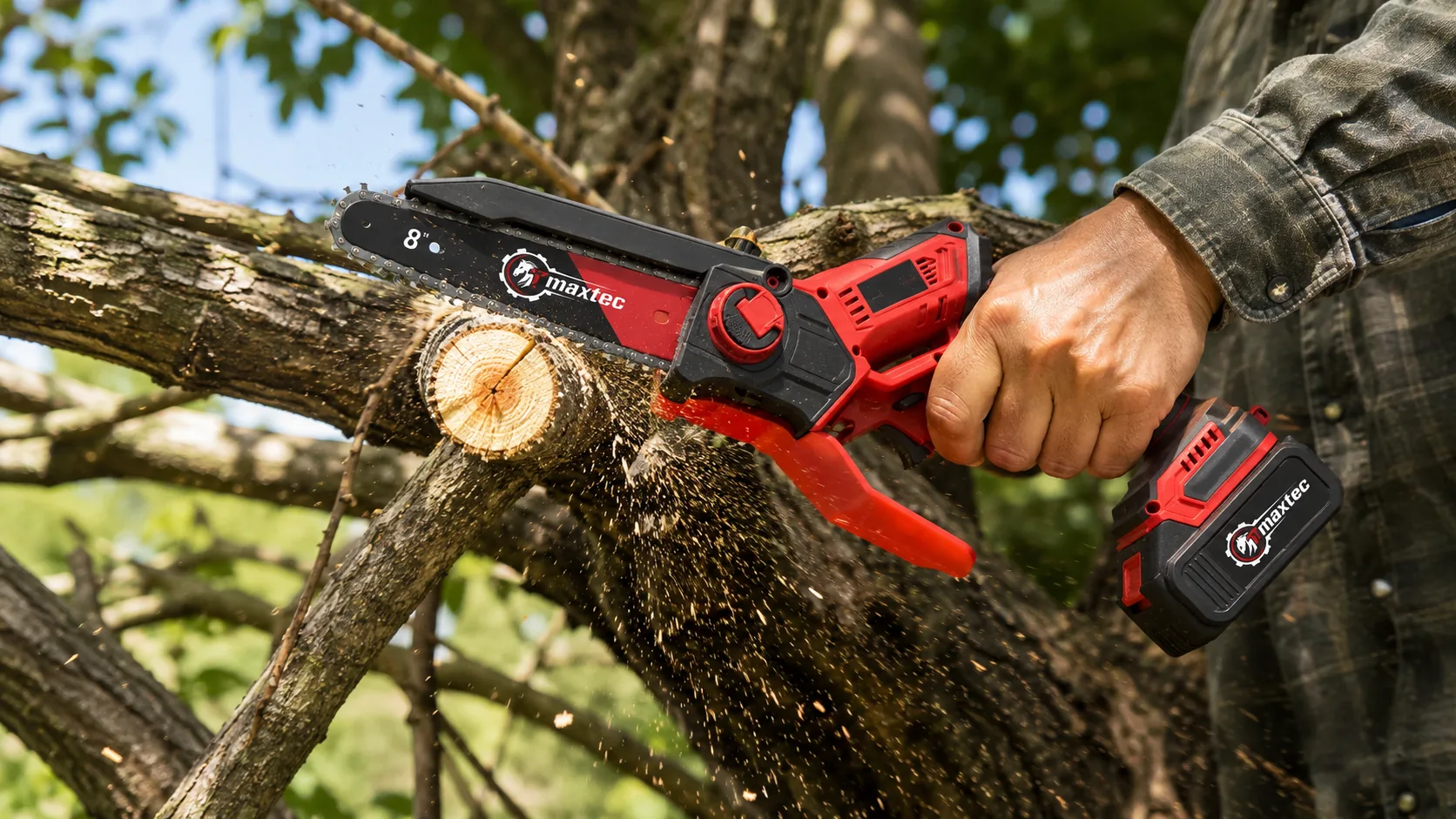
Cordless Tool Service Guide
When a cordless chainsaw stops during cutting, the shutdown is often caused by overload protection, low battery voltage, overheating, poor lubrication, or excessive resistance from the chain and guide bar. The problem does not automatically mean that the motor or battery has failed. In many cases, the saw is reacting to a condition that places more load on the cutting system than the battery, controller, or motor can safely support.
For importers, wholesalers, garden-tool dealers, repair shops, and regional distributors, correct diagnosis is important because the same customer complaint can have several different causes. Replacing batteries or electrical parts without checking chain tension, sharpening, lubrication, wood condition, and model suitability can increase warranty costs without solving the original problem.
| Quick answer: | A cordless chainsaw usually stops under load because the battery voltage drops, the protection system detects overload or heat, or the chain cannot move efficiently. Remove the battery before inspection. Check battery charge and temperature first, followed by chain tension, chain sharpness, installation direction, lubrication, bar condition, sprocket wear, and sawdust buildup. Dealers can reduce returns by testing samples in real wood, matching the model to the intended cutting diameter, supplying compatible batteries, and stocking the correct guide bars, chains, sprockets, oiling parts, and tensioning components. |
Check 01
Is the Battery Causing the Chainsaw to Cut Out?
Battery inspection should come early in the troubleshooting process because voltage can drop sharply when the chain enters dense or wet wood. A battery may show remaining charge and operate the saw normally without load, but still fail to supply enough current during an actual cut. This is especially common when the pack is nearly discharged, overheated, very cold, aged, damaged, or not fully compatible with the tool.
Charge the battery with the specified charger and allow a hot pack to cool naturally before testing it again. Inspect the terminals for dirt, corrosion, looseness, discoloration, melting, or other signs of overheating. Confirm that the pack locks securely into the chainsaw and that the electrical contacts remain stable when the machine vibrates.
Where possible, compare the saw with another confirmed-compatible battery. If one pack repeatedly causes sudden shutdowns while another operates normally under the same cutting conditions, the battery is the more likely source of the problem. If both batteries behave the same way, continue checking the chain, bar, lubrication, cutting load, and internal drive system.
Do not judge battery performance only by a no-load demonstration. A sample inspection should include repeated cuts in wood of consistent species, diameter, moisture level, and condition. Record whether power drops gradually, the tool stops suddenly, the runtime is unusually short, or the battery becomes excessively hot.
Check 02
Chain Tension, Sharpness and Installation Problems
A chain that cannot move freely creates resistance before it even reaches the wood. With the battery removed and the chain brake released according to the operating manual, check whether the chain can move smoothly around the guide bar while wearing suitable protective gloves. It should remain seated in the bar groove without binding, lifting excessively, or hanging loosely beneath the bar.
An overtightened chain increases the load on the motor, controller, battery, drive sprocket, guide bar, and tensioning mechanism. A chain that is too loose may derail, produce unstable cuts, damage the drive links, or strike the chain catcher. Tension should be checked before work and checked again after the chain warms up because a new or recently installed chain may stretch during initial operation.
| Inspection Point | Warning Sign | Recommended Action |
| Chain tension | Chain is difficult to pull by hand or hangs far below the bar. | Adjust according to the actual model manual and recheck after warming. |
| Chain direction | Motor runs, but cutting is extremely slow or ineffective. | Remove the battery and reinstall the chain in the correct cutting direction. |
| Cutter sharpness | Saw produces fine dust and needs heavy pushing pressure. | Sharpen evenly with the correct file or replace the chain. |
| Chain specification | Drive links bind, jump, or do not sit correctly in the groove. | Confirm pitch, gauge, drive-link count, bar compatibility, and sprocket match. |
| Damaged links | Chain tightens and loosens unevenly while being rotated. | Stop using the chain and replace damaged components before testing. |
A dull chain is one of the most common reasons a cordless chainsaw loses power under load. Sharp cutters remove visible wood chips and allow the saw to feed into the cut with limited pressure. A dull, unevenly filed, contaminated, or damaged chain produces fine dust and forces the operator to push harder. This additional pressure increases current demand and may trigger overload protection.
Check 03
Is Poor Lubrication Increasing Cutting Resistance?
The guide bar and chain need a steady supply of the correct bar-and-chain oil. Low oil, unsuitable oil, a blocked outlet, a dirty guide-bar groove, a restricted oil hole, or packed sawdust around the sprocket cover can increase friction quickly. The saw may slow down, heat up, consume battery power faster, or stop when the protection system detects excessive load.
Check the oil level before work and inspect whether oil is actually reaching the chain. Never assume that a full oil tank guarantees correct lubrication. The tank may contain oil while the outlet, delivery passage, bar hole, or pump area remains blocked. Clean the guide-bar groove, oil passage, sprocket-cover area, and surrounding sawdust only after removing the battery.
Signs of Poor Lubrication
|
Dealer Prevention
|
Complaints described as a weak motor, poor battery, or short runtime may actually result from dry cutting, blocked oil delivery, incorrect oil, or neglected cleaning. Dealers should include lubrication checks in customer training and in the first stage of after-sales troubleshooting.
Check 04
Cutting Conditions and Overload Risks Buyers Often Ignore
A compact pruning chainsaw and a larger cordless chainsaw are not designed for exactly the same work. Thick hardwood, wet timber, dirty bark, buried wood, repeated cross-cutting, and pinched cuts can demand much more torque than light branch pruning. Suitable cutting capacity depends on the actual model, motor, guide-bar length, chain specification, battery platform, controller setting, and intended duty cycle.
Let the chain reach operating speed before entering the wood. Keep the cut straight and avoid twisting the guide bar. Do not use the bar as a lever or continue forcing the chain when the kerf begins to close. If the bar becomes pinched, release the trigger and remove the battery before attempting to free it.
Soil, wire, nails, stones, fencing material, and construction debris should be removed from the cutting area. Contact with soil can dull the cutters very quickly. A chain that operated normally at the start of the job may begin overloading the saw after one contaminated cut.
| Light orchard pruning | Compact cordless pruning saw or small chainsaw with a suitable battery. |
| Garden branch cutting | General cordless chainsaw matched to normal branch diameter and runtime needs. |
| Repeated hardwood cutting | Larger model, higher-capacity battery system, sharp chain, and planned cooling intervals. |
| Dirty or buried timber | Not recommended until soil, wire, stones, and other contaminants are removed. |
Check 05
Heat Protection, Bar Wear and Drive-System Binding
Heat can build up in the battery, controller, motor, chain, and guide bar during continuous cutting. If the saw works normally after cooling but stops again during repeated heavy cuts, thermal protection may be activating. This interruption can protect the battery and tool from damage, but frequent overheating during suitable work should be investigated.
Allow the tool and battery to cool naturally in a shaded, ventilated location. Do not cool a hot battery with water or place it in extreme cold. Inspect the ventilation openings and remove accumulated sawdust. Commercial users may need several charged batteries so each pack can cool while another is in use.
With the battery removed, inspect the guide bar, nose sprocket, drive sprocket, chain links, bar rails, tensioning mechanism, and sprocket-cover area. A bent bar, pinched rails, damaged nose sprocket, packed sawdust, worn drive sprocket, or uneven bar wear can prevent smooth chain movement.
If the chain moves freely before the sprocket cover is installed but binds after assembly, inspect the bar position, chain match, tensioning pin, fasteners, and cover installation. If the motor runs but the chain does not move, the fault may involve the sprocket, coupling, gear drive, control system, or another model-specific component. Internal electrical and drive repairs should be handled by trained service personnel using suitable replacement parts.
Diagnosis
A Practical Check Order When the Saw Stops
- Release the trigger and remove the battery. Do not repeatedly restart the saw while the chain remains pinched or overloaded.
- Check battery condition. Confirm charge level, temperature, terminal cleanliness, physical condition, and model compatibility.
- Confirm the chain brake position. Make sure it is fully released before controlled testing.
- Inspect the chain. Check tension, direction, sharpness, damaged links, pitch, gauge, and drive-link count.
- Inspect lubrication. Check oil level, oil flow, the outlet, bar hole, bar groove, and sawdust buildup.
- Check the guide bar and sprocket. Look for binding, wear, bending, rail damage, and abnormal chain movement.
- Review the cutting task. Consider wood hardness, diameter, contamination, moisture, pinching, and model capacity.
- Reassemble correctly. Make a controlled test cut in clean wood of a suitable size.
- Compare components. Test another confirmed-compatible battery or cutting attachment where available.
- Arrange professional service. Further inspection is required if shutdowns continue under normal load.
Product Selection
Choosing Cordless Chainsaw Models for Orchard and Garden Work
A buyer comparing cordless chainsaws should evaluate the complete cutting system rather than comparing only battery voltage, bar length, or external appearance. The battery, controller, motor, sprocket, guide bar, chain, lubrication system, charger, and intended duty cycle work as one system. Weakness or mismatch in any one area can lead to shutdown complaints.
Lithium Battery Cordless Chainsaw RangeModel: Select from the available cordless chainsaw models and confirm the actual model code before ordering. Suitable for pruning, branch cutting, orchard maintenance, garden work, wood cutting, and other applications according to each model’s specifications. Buyers should confirm bar size, battery platform, charger, oiling system, spare chains, and intended workload. |
|
Before confirming a bulk order, request a working sample and test it under repeatable conditions. Check chain-speed recovery during cutting, shutdown behavior, battery temperature, oil delivery, tension adjustment, trigger response, brake operation where fitted, and the ease of replacing the guide bar and chain.
Importers should also decide whether the local market needs a compact pruning saw, a general garden chainsaw, or a larger model for heavier wood cutting. Selling an undersized saw for demanding work can create overload complaints. Selling an unnecessarily heavy model for occasional pruning can increase the purchase price and reduce user acceptance.
Procurement Audit
Importer and Dealer Checklist Before a Bulk Order
Before Ordering
|
Before Shipment
|
Every checklist item should be confirmed according to the actual model specification. Battery capacity, cutting diameter, charging time, chain speed, oiling design, and duty cycle can vary between models. Importers should avoid using one general sales claim for an entire range unless the claim has been verified for every model included in the order.
Buyer Questions
Frequently Asked Questions
Why does my cordless chainsaw stop when it touches the wood?
The battery may be unable to supply enough current under load, or the protection system may be responding to excessive resistance. Check battery charge, temperature, compatibility, chain tension, sharpness, lubrication, bar condition, and the hardness or diameter of the wood.
Can a chain that is too tight make a cordless chainsaw stop?
Yes. An overtightened chain increases friction and places additional load on the motor, controller, battery, guide bar, sprocket, and tensioning parts. Adjust the tension according to the model manual and check it again after the chain warms up.
Why does the saw work again after cooling?
The tool or battery may be activating thermal protection. Allow both to cool naturally, clean the ventilation areas, and reduce continuous heavy cutting. Repeated overheating during normal applications may indicate poor lubrication, a binding chain, an unsuitable battery, or a component fault.
What spare parts should cordless chainsaw dealers stock?
Common service stock may include compatible batteries, chargers, guide bars, chains, drive sprockets, tensioning parts, oil-tank components, oil-delivery parts, covers, fasteners, and model-specific electrical or drive components. The exact list should match the models sold locally.
How can importers reduce cordless chainsaw returns?
Test samples in real wood, define suitable cutting applications, confirm battery and charger compatibility, provide lubrication and tension instructions, prepare spare parts, and ensure that bulk production matches the approved sample. Clear market positioning can prevent users from applying a compact saw to oversized or continuous commercial work.
What should be inspected before ordering cordless chainsaws in bulk?
Inspect shutdown behavior under load, battery temperature, runtime, charging time, chain-speed recovery, oil flow, chain adjustment, brake operation where fitted, packaging protection, manuals, labels, spare-parts support, and consistency between the approved sample and bulk units.
A cordless chainsaw that stops during cutting is not always suffering from a failed motor or defective battery. Correct troubleshooting often identifies excessive chain resistance, poor lubrication, unsuitable cutting conditions, heat buildup, bar or sprocket binding, or a mismatched battery. For importers and dealers, realistic application guidance and repeatable pre-shipment testing can reduce avoidable returns and improve after-sales efficiency.
Compare Cordless Chainsaws for Your MarketReview available lithium battery garden-tool models and confirm the correct saw size, battery configuration, spare-parts plan, packaging, and application before placing a wholesale order. |
|