
Lawn Mower Starts Then Stops: What Should You Check?
Find out why a petrol lawn mower starts then stops, which fuel, air, spark, and blade checks to make, and how dealers can reduce repeat complaints.
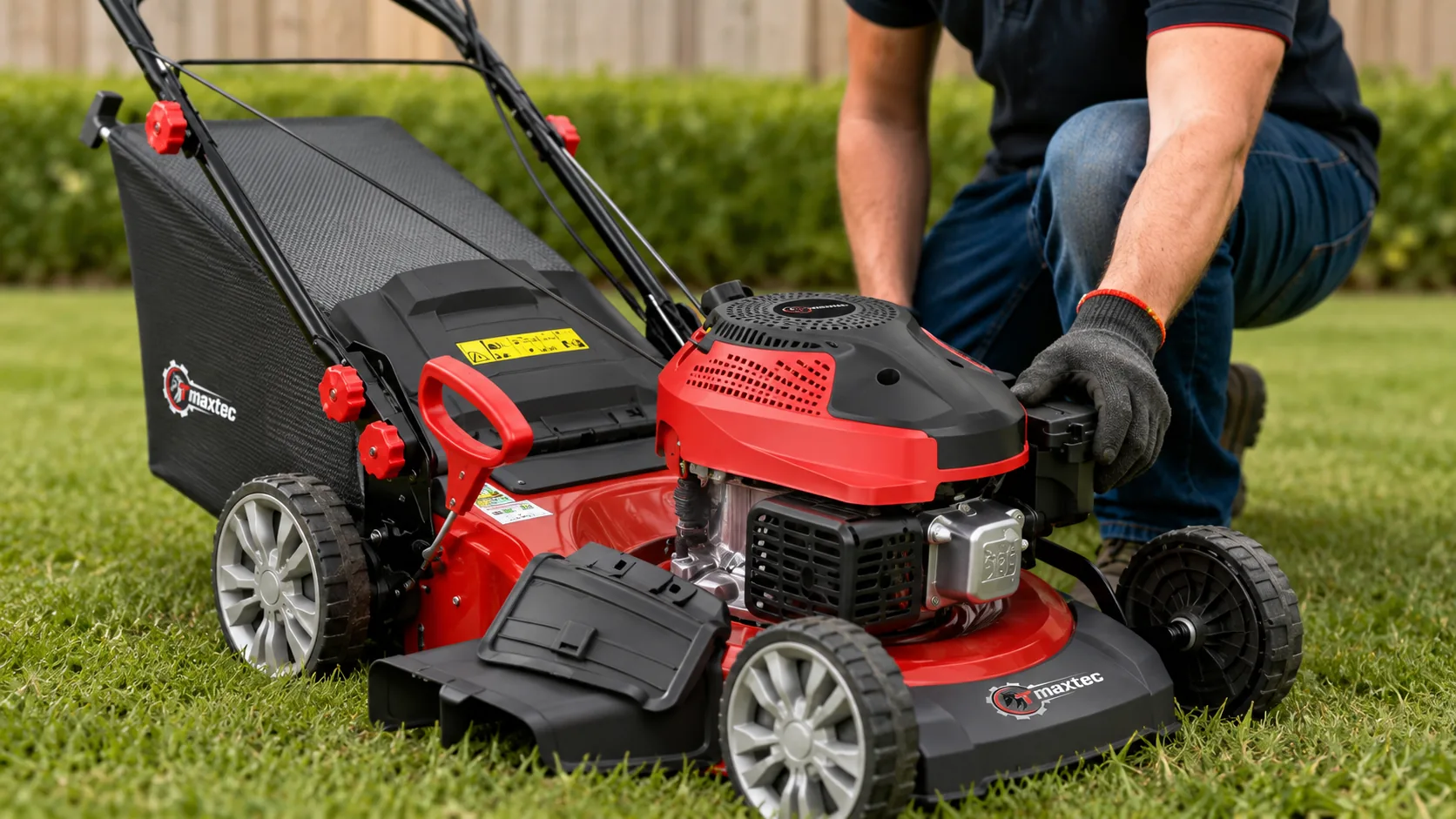
Field Service and Dealer Support Guide
A petrol lawn mower that starts then stops usually has an interrupted supply of fuel, air, or ignition. Stale gasoline, a restricted carburetor, a blocked fuel-cap vent, a dirty air filter, an unsuitable spark plug, incorrect oil level, and excessive blade resistance are among the most common causes.
For importers, lawn mower wholesalers, repair shops, and regional dealers, the important question is not only whether the engine can start. Buyers should also determine how long it runs, whether it stops gradually or suddenly, whether the fault appears only after the engine becomes hot, and whether the mower stalls only when cutting grass. These details help separate a fuel-system problem from an ignition, maintenance, setup, or cutting-load issue.
Quick answer: When a petrol lawn mower starts then stops, first replace old fuel, confirm the fuel valve and choke position, inspect the fuel-cap vent, and check whether fuel is reaching the carburetor. A mower that dies after a few seconds often has a restricted jet or fuel passage. A mower that stops after several minutes may have a blocked tank vent, overheating ignition component, or oil-related problem. If it runs normally without load but stops in grass, inspect the blade, deck, cutting height, discharge passage, and grass conditions. Dealers can reduce returns by testing cold starting, warm restarting, continuous running, and cutting performance before shipment.
1. What the Stopping Pattern Usually Means
The time between starting and stopping is one of the most useful diagnostic clues. When an engine starts normally but dies within several seconds, it may be running only on the small quantity of fuel delivered during priming or choking. After this initial fuel is consumed, a blocked carburetor jet, restricted fuel hose, dirty filter, or obstructed tank outlet prevents the engine from continuing to run.
Listen to the way the engine stops. If it gradually loses speed, begins to surge, sputters, and then dies, the fault is more likely related to fuel delivery or an incorrect air-fuel mixture. If the engine shuts down instantly without losing speed first, the spark plug connection, ignition coil, operator-control cable, safety switch, or related wiring deserves closer inspection.
Stops After a Few SecondsCheck the fuel supply, carburetor bowl, main jet, primer system, choke position, fuel hose, and tank outlet. The engine may be consuming only the fuel supplied during starting. |
Stops After Several MinutesInspect the fuel-cap vent, ignition components, engine temperature, cooling passages, and oil level. A mower that restarts after cooling may have a heat-related fault. |
Before beginning any inspection, stop the engine, allow it to cool, disconnect the spark-plug cap, and work in a ventilated area away from cigarettes, flames, heaters, and other ignition sources. Avoid repeatedly pulling the starter without checking the basic setup because excessive priming or choking may flood the engine and hide the original problem.
2. Fuel and Carburetor Problems to Check First
Old gasoline is one of the most frequent causes of seasonal lawn mower complaints. Fuel left in the tank during storage can deteriorate, absorb contamination, and form deposits inside the carburetor, fuel line, filter, primer passages, and tank outlet. A mower may still start because a limited amount of fuel reaches the cylinder, but the flow may not be stable enough to maintain operation.
Drain gasoline that is discolored, contains water, smells unusual, or has remained in the machine for an extended storage period. Refill the mower with the fuel grade specified for the actual engine. Do not mix a small quantity of fresh gasoline into a tank containing a large amount of old fuel and assume the contamination has been corrected. Where necessary, the tank, fuel line, filter, and carburetor bowl should be drained according to the correct service procedure.
Symptoms of Restricted Carburetor Flow
- The engine runs only while the choke remains engaged.
- The mower stops when the choke is moved to the normal running position.
- Engine speed repeatedly rises and falls.
- The mower restarts only after repeated priming.
- Fuel is present in the tank but does not enter the carburetor consistently.
- The engine gradually sputters and loses speed before stopping.
Do not replace the complete carburetor before checking the fuel hose, tank outlet, filter, shut-off valve, and carburetor bowl. A bent hose, contaminated filter, closed fuel valve, or blocked outlet can create similar symptoms. Internal carburetor disassembly should be completed carefully because small jets, seals, float parts, gaskets, and adjustment screws can be damaged or incorrectly reinstalled.
In markets where fuel quality and storage practices are inconsistent, dealers should stock complete carburetor assemblies together with fuel hoses, filters, primer parts, bowl seals, gaskets, and spark plugs. These low-cost components are often more useful for local after-sales service than replacing an entire mower.
3. Fuel-Cap Vent, Air Filter, Spark Plug and Oil Checks
Fuel leaving the tank must be replaced by air. This normally happens through a small vent in the fuel cap or tank ventilation system. If the vent becomes blocked by dirt, dried grass, corrosion, or damaged components, a vacuum gradually forms inside the tank. The mower may run normally at first, but the fuel flow becomes slower until the engine stops.
A mower with a blocked tank vent may restart after standing for several minutes because pressure slowly equalizes. Inspect the cap for contamination, leakage, poor fit, and vent damage. Do not drill, modify, or continue using a leaking fuel cap. Importers should include cap fit, venting, sealing, and fuel compatibility in sample and pre-shipment inspections.
A heavily restricted air filter can create an excessively rich mixture. This may cause rough running, dark exhaust smoke, spark-plug fouling, weak power, and stalling. Inspect the filter according to the engine manual. Reusable elements may permit limited cleaning, while torn, oil-soaked, deformed, or heavily contaminated filters should be replaced. The mower should not be operated without an air filter as a permanent solution because dust and grass particles can enter the engine and increase internal wear.
The spark plug should also be checked for carbon deposits, oil contamination, physical damage, incorrect electrode gap, and wear. A wet plug may indicate that fuel is entering the engine but not burning correctly. A dry plug after repeated starting attempts may indicate insufficient fuel delivery. Four-stroke mower engines also require the correct oil type and level. Too little oil can cause overheating and damage, while too much oil can contribute to smoke, plug contamination, unstable running, and difficult restarting.
LOAD TEST Why the Mower Stops Only When Cutting Grass
A petrol lawn mower that runs normally on a clear surface but stops as soon as it enters grass may not have a basic starting fault. The engine may be overloaded by packed clippings, a damaged or incorrectly installed blade, an unsuitable cutting-height setting, excessive walking speed, a blocked discharge passage, or grass conditions that exceed the mower’s intended working range.
After disconnecting the spark-plug cap, inspect underneath the cutting deck. Look for wet grass packed around the blade, rope or wire wrapped around the blade shaft, a bent blade, loose mounting components, incorrect blade installation, or abnormal resistance in the rotating assembly. The discharge passage and collection route should also remain clear so clippings can leave the deck efficiently.
| Tall or Dense Grass Raise the cutting height, reduce walking speed, and remove grass in several passes instead of cutting to the final height at once. |
| Wet Grass and Packed Clippings Allow the lawn to dry when possible and clean the deck. Wet material increases blade resistance and can block the discharge path. |
| Damaged or Incorrect Blade Verify blade condition, balance, installation direction, mounting security, and compatibility with the mower deck. |
Dealers should test the mower under a realistic cutting load rather than relying only on a brief no-load start. A machine may idle correctly in the workshop but stall during actual grass cutting because of deck blockage, incorrect setup, insufficient engine response, or unsuitable application expectations.
5. Petrol Lawn Mower Starts Then Stops Diagnostic Table
Use a consistent sequence instead of replacing the carburetor, ignition coil, or complete engine at random. Change only one condition at a time during testing so the repairer can identify which action corrected the fault.
| Observed Symptom | Possible Cause | Inspection Point | Recommended Action |
| Starts and dies within seconds | Restricted fuel flow | Jet, fuel line, filter, valve and tank outlet | Drain contamination and restore correct fuel flow |
| Runs only with choke engaged | Lean mixture or blocked carburetor passage | Carburetor, gasket, intake connection | Clean or service the affected fuel and intake parts |
| Stops after several minutes | Blocked tank vent or heat-related ignition fault | Fuel cap, coil, wiring and cooling area | Correct venting and arrange hot-engine ignition testing |
| Stops suddenly without sputtering | Ignition or safety-control interruption | Plug cap, coil, cable, switch and wiring | Inspect connections and test the control system |
| Stops only in grass | Excessive cutting load | Blade, deck, discharge, height and grass density | Clear the deck, raise height and reduce travel speed |
| Smokes, runs roughly and stops | Dirty filter, excessive oil or plug fouling | Air filter, oil level and spark plug | Correct oil level and replace unsuitable service parts |
6. TM460S Lawn Mower Application and Troubleshooting
The TM460S hand-push petrol lawn mower uses a four-stroke OHV engine and is intended for garden grass cutting, yard maintenance, and general outdoor lawn care. Its listed configuration includes a 460 mm cutting width, seven cutting-height positions from 30 to 75 mm, a 50-liter fabric grass bag, and a metal cutting deck.
When diagnosing this model type, separate an engine-running problem from a cutting-load problem. If the engine starts and stops while the mower remains on a clear surface, inspect the fuel, carburetor, air filter, spark plug, fuel-cap ventilation, control cable, and oil systems. If the engine runs normally without load but stalls in grass, inspect the deck, blade, collection path, cutting height, grass density, and operator speed.
|
Recommended Model Reference TM460S Petrol Lawn MowerSuitable for buyers sourcing a four-stroke hand-push mower for residential lawns, garden maintenance, dealer stock, and general yard-care applications. Confirm engine specification, packing, accessories, manuals, service parts, and market requirements before bulk ordering. |
|
Actual maintenance parts, engine oil requirements, spark-plug specification, carburetor settings, and service procedures should always be confirmed according to the engine and mower information supplied with the shipment. Importers should avoid assuming that every four-stroke mower uses identical service parts.
7. Dealer After-Sales Risks and Pre-Shipment Testing
Many “starts then stops” complaints do not begin with a major engine defect. They are often caused by old fuel, incorrect choke operation, missing engine oil, an unsuitable oil quantity, neglected air filters, packed grass, incorrect cutting height, or insufficient customer instruction. Dealers can prevent unnecessary returns by explaining these points before the machine leaves the shop.
Assembled demonstration machines require particular attention. Display units should not remain filled with aging gasoline between selling seasons. Dealers should use a documented fuel-storage procedure and record when the mower was last started, drained, inspected, and serviced. Machines may also be shipped without operating oil or with only residual protective oil, depending on the shipment arrangement, so dealers must verify the actual condition before demonstration.
Pre-shipment testing should include cold starting, several minutes of continuous operation, warm restarting, throttle response, fuel-cap ventilation, air-filter installation, spark-plug specification, operator-control cable adjustment, blade rotation, collection performance, and operation under normal grass-cutting load. A brief warehouse start is not enough to confirm that the mower will perform correctly for the end user.
Dealers should prepare a simple troubleshooting sheet covering fuel storage, choke use, air-filter maintenance, spark-plug inspection, deck cleaning, cutting-height selection, oil checking, and common restart procedures. Accessible instructions and locally available spare parts allow repair shops to solve routine complaints without replacing complete machines.
8. Importer and Dealer Bulk Order Checklist
Before confirming a wholesale petrol lawn mower order, buyers should review product consistency, local service capability, customer application, and spare-parts planning. The following checklist can be used during sample approval, order confirmation, and final inspection.
| 01. Engine Consistency Confirm the engine type, rated configuration, starting system, carburetor, plug specification, and oil instructions for repeated orders. |
02. Cold and Warm Starting Test initial starting, continuous running, shutdown, and restarting after the engine reaches operating temperature. |
| 03. Fuel-System Inspection Check the tank, cap vent, fuel hose, filter, valve, carburetor bowl, leakage resistance, and storage instructions. |
04. Cutting-Load Test Test the blade and deck in normal grass rather than accepting only a no-load engine demonstration. |
| 05. Cutting Height and Collection Verify height adjustment, blade clearance, discharge flow, grass-bag fit, collection performance, and deck cleanliness. |
06. Spare-Parts Availability Plan stock for air filters, spark plugs, carburetors, fuel hoses, filters, cables, blades, wheels, belts where applicable, and control parts. |
| 07. Operator Manual Accuracy Confirm fuel, oil, starting, stopping, maintenance, blade safety, cutting height, and storage instructions match the supplied model. |
08. Packaging Strength Inspect carton strength, internal protection, wheel and handle fixation, blade protection, accessory packing, labels, and transport resistance. |
| 09. Local Market Fit Match the cutting width, deck material, collection system, cutting height, engine configuration, and wheel design to local lawn conditions. |
10. Repeat-Order Consistency Record approved components and specifications so later shipments do not create incompatible spare parts or dealer confusion. |
Frequently Asked Questions
Why does my petrol lawn mower start and then stop after a few seconds?
The engine may be using only the fuel supplied during priming or choking. Check for stale gasoline, a blocked carburetor jet, restricted fuel line, dirty filter, closed fuel valve, or obstructed tank outlet.
Why does the mower restart after sitting for several minutes?
A blocked fuel-cap vent may create a vacuum in the tank, or an ignition component may fail when hot. During the waiting period, tank pressure may equalize or the ignition system may cool enough to operate again.
Why does the lawn mower stop when it begins cutting grass?
The blade and deck may be overloaded by tall grass, wet clippings, a low cutting-height setting, a blocked discharge passage, a damaged blade, or excessive walking speed. Inspect and clean the deck before continuing.
Can incorrect engine oil make a petrol mower stop?
Yes. Too little oil can cause overheating and engine damage, while too much oil may contribute to smoke, spark-plug fouling, and unstable running. Check the oil on level ground according to the actual engine instructions.
What spare parts should lawn mower dealers stock?
Useful service stock includes spark plugs, air filters, carburetors, fuel hoses, fuel filters, primer components, control cables, blades, wheels, seals, gaskets, and model-specific engine service parts.
What should importers inspect before a bulk lawn mower order?
Importers should inspect cold and warm starting, continuous engine operation, fuel-cap ventilation, oil instructions, cutting-load performance, blade installation, deck discharge, grass collection, packaging, manuals, spare parts, and repeat-order component consistency.
A petrol lawn mower that starts then stops should be diagnosed in a clear order: fresh fuel, correct choke and valve position, tank ventilation, air filter, spark plug, carburetor flow, oil level, blade resistance, and cutting conditions. For importers and dealers, testing the mower under realistic operating conditions and preparing suitable spare parts are the most practical ways to reduce after-sales complaints and unnecessary product returns.
Planning a Petrol Lawn Mower Wholesale Order?Review the TM460S configuration, cutting specifications, application range, packing, spare-parts requirements, and dealer support needs before confirming your order. |
|