
Cordless Hedge Trimmer Runs but Blades Won’t Move: Fixes
Cordless hedge trimmer blades not moving? Learn how to check jams, battery power, lubrication, blade damage, switches, and internal drive faults safely.
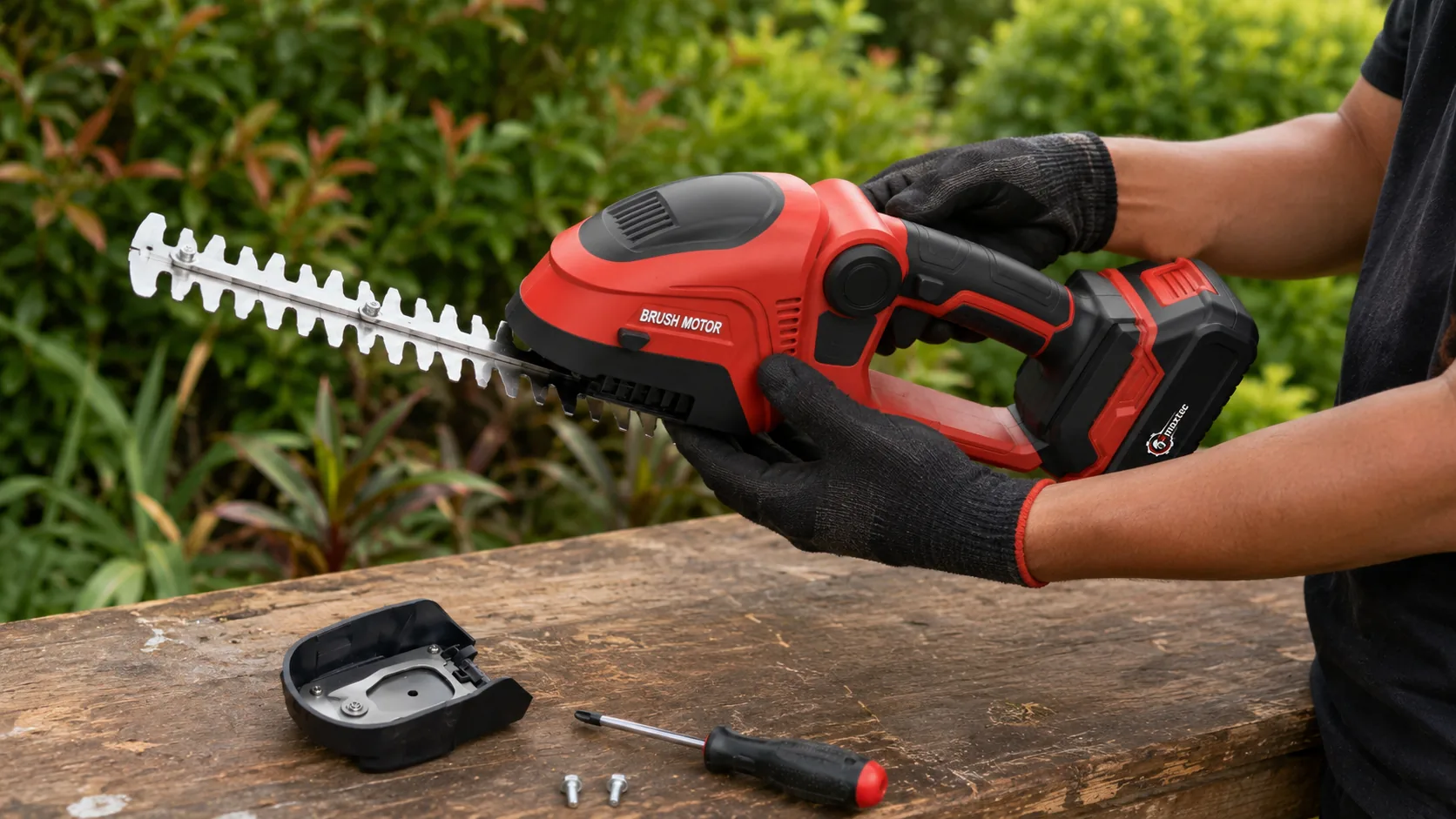
Field Service and Dealer Troubleshooting Guide
When a cordless hedge trimmer runs but the blades won’t move, the problem is usually located between the motor and the cutting assembly. Common causes include jammed teeth, dried plant material, a damaged blade drive, incorrect blade installation, an overloaded protection circuit, or internal gearbox wear. Continuing to hold the trigger can overheat the motor, battery, wiring, or electronic controller.
For importers, dealers, repair shops, and garden tool wholesalers, this fault should not be treated as a single “motor problem.” A structured inspection can determine whether the machine needs cleaning, lubrication, blade adjustment, a replacement cutting assembly, or internal repair. It also helps dealers reduce unnecessary product returns and prepare the correct spare parts before selling cordless hedge trimmers locally.
Quick answer: Remove the battery before touching the blades. First check for branches, wire, dried sap, rust, or an overtightened cutting assembly. Clean and lubricate the blade, then move it carefully by hand only when the battery is disconnected. If the blade moves freely but does not operate under power, inspect the blade coupling, eccentric drive, gearbox, and attachment lock. If the motor only hums, stops, or becomes hot, discontinue testing because the cutting system may be seized. Importers should confirm spare blades, drive components, battery compatibility, and repair procedures before placing a bulk order.
01What This Hedge Trimmer Failure Usually Means
The sound of the machine provides an important first clue. If the motor sounds normal but the blades remain completely stationary, the motor may be turning without transferring movement to the cutting assembly. This can happen when a drive pin, gear, eccentric mechanism, connecting plate, or attachment interface is worn, loose, or incorrectly installed.
If the machine produces a humming sound, slows immediately, or cuts out after the trigger is pressed, the blade assembly may be jammed. The battery and controller may shut the tool down because the motor is drawing too much current. This protection is useful, but repeated testing without removing the obstruction can still create heat and accelerate component wear.
A third condition occurs when the blades move without load but stop as soon as they touch a hedge. In this case, the cutting teeth may be dull, bent, dirty, dry, incorrectly tensioned, or unsuitable for the branch thickness. The battery may also be discharged, aged, overheated, or unable to supply enough current under load.
|
MOTOR SOUNDS NORMAL Check the drive connectionInspect the blade coupling, attachment lock, drive plate, eccentric mechanism, gears, and fasteners. The motor may be rotating while the blade is disconnected from the drive system. |
MOTOR HUMS OR STOPS Check for a seized bladeLook for trapped branches, fencing wire, sap buildup, bent teeth, corrosion, poor lubrication, or excessive blade pressure. Stop testing until the blade can move freely. |
02Checks to Make Before Opening the Tool
Always remove the battery before cleaning, touching, adjusting, or removing the blade. Gloves should be worn because hedge trimmer teeth remain sharp even when the machine is switched off. Do not rely only on the trigger lock, and do not attempt to pull material from the blade while the battery is installed.
Inspect the complete blade path under good lighting. Thin wire, plastic ties, fibrous vines, bark, and dry hedge material can become trapped between the moving and fixed blade sections. Sap may also harden between the teeth and create enough resistance to prevent movement, especially when the machine has been stored without cleaning.
After removing visible debris, apply a suitable blade lubricant along the cutting surfaces. With the battery disconnected, check whether the blade has limited controlled movement. Do not force a blade that is severely stuck, because excessive leverage may bend the teeth, connecting plate, or internal drive mechanism.
| 1 | Remove the battery. Keep it away from the work area during blade inspection. |
| 2 | Clear the blade teeth. Remove branches, vines, wire, hardened sap, and compacted debris. |
| 3 | Inspect for damage. Look for bent teeth, loose screws, impact marks, corrosion, or an uneven blade gap. |
| 4 | Lubricate and retest. Reinstall a charged, cool battery only after the cutting assembly moves freely. |
03Cordless Hedge Trimmer Runs but Blades Won’t Move: Diagnostic Table
The following table separates external blade problems from internal drive and electrical faults. Dealers can use it as a workshop intake guide before approving a return or replacing the complete machine.
04Mechanical Causes Dealers Should Inspect
A jammed or contaminated blade
Plant sap, fine fibers, dust, and moisture can build up between the blade surfaces. When the residue dries, it increases friction and can effectively glue the moving blade to the fixed section. This is especially common when users trim wet hedges and store the tool without cleaning it.
Bent teeth or an uneven blade gap
A blade can be damaged by fencing wire, stones, thick woody branches, or dropping the machine. Even a small deformation may cause the moving blade to catch at one point in its stroke. Tightening loose screws without checking alignment can also make the assembly too tight to operate correctly.
Incorrectly installed removable blade assembly
On models supplied with a removable cutting head, the blade must engage fully with the drive interface. A blade may appear attached while the internal slot, pin, or coupling is not correctly aligned. Dealers should demonstrate installation during delivery and include clear instructions in the local language where necessary.
Worn gears or eccentric drive components
The motor normally converts rotary movement into the side-to-side motion of the blades. Wear in the gears, eccentric mechanism, connecting plate, or bearing can interrupt this transfer. Grinding sounds, metal particles, excessive free play, or repeated failure after blade replacement indicate that internal service may be required.
WORKSHOP WARNING
Do not keep pressing the trigger when the blade is locked. A stalled cutting assembly can create high current demand and heat the motor, battery terminals, wiring, switch, and controller. Repair the source of resistance before electrical parts are replaced.
05Battery, Switch and Protection-System Checks
A battery can operate the motor without producing enough power to move a dirty or heavily loaded blade. The pack may be nearly discharged, overheated, cold, aged, damaged, or incompatible with the tool. A useful dealer test is to compare the machine with a known good, fully charged battery of the correct specification.
Battery terminals should be clean, straight, and free from discoloration. Darkened plastic, looseness, corrosion, or a burnt smell may indicate poor contact and excessive resistance. The machine and battery should be removed from service if there are signs of swelling, impact damage, melted terminals, or abnormal heat.
Cordless garden tools may also use safety switches, trigger interlocks, blade guards, attachment sensors, and overload protection. A poorly seated blade attachment or incomplete safety-switch engagement can allow partial motor operation while preventing normal cutting. Dealers should compare the failed unit with a correctly assembled sample rather than bypassing a safety device.
If the motor does not sound stable, produces an electrical smell, creates sparks, or becomes hot within seconds, stop testing. Electrical diagnosis should be completed by a trained technician using the correct wiring diagram and test procedure.
06How Importers Can Reduce After-Sales Complaints
Many cordless hedge trimmer complaints are caused by application mismatch rather than a manufacturing fault. Compact models are generally purchased for shaping shrubs, trimming light hedge growth, maintaining garden edges, and completing short residential tasks. They should not be promoted as replacements for heavy commercial machines used on thick, mature, woody vegetation.
Dealers should explain the maximum practical branch size based on the supplier’s instructions and local testing. Users often force several thick branches into the blade at once, twist the machine during a cut, or use the blade as a lever. These habits can overload the motor and damage the cutting teeth or drive system.
A simple handover demonstration can prevent many returns. Show the customer how to install the battery, engage the safety controls, attach the blade correctly, clean plant residue, lubricate the cutting surface, and stop work when wire or hard material is encountered. For wholesale distribution, these points should also appear in the manual, carton information, dealer training sheet, or service video.
| Application | Market Fit | Common Risk | Dealer Advice |
| Shrub shaping and garden edging | Suitable for regular light maintenance | Sap buildup and poor cleaning | Supply blade oil and cleaning instructions |
| Small residential hedges | Suitable when branch growth is controlled | Trying to cut branches that are too thick | State realistic cutting limits before sale |
| Short landscaping service visits | Possible with spare batteries and cleaning | Heat buildup and insufficient runtime | Offer compatible spare batteries where available |
| Dense woody hedges and continuous heavy work | Often unsuitable for a compact model | Blade jamming, overload, and early wear | Recommend a heavier-duty hedge trimmer |
07Recommended Model for Light Garden Maintenance
|
PRODUCT RECOMMENDATION |
||
TM-SH704Li Lithium Battery Hedge TrimmerModel: TM-SH704Li This compact cordless model is suitable for buyers serving residential garden users, hardware stores, garden maintenance teams, and customers who prefer easier starting and lower routine maintenance than a gasoline-powered tool. Before wholesale ordering, confirm the battery and charger configuration, included cutting attachments, charger plug, carton contents, spare blade supply, replacement switches, and compatibility between repeat orders. |
Buying focus:
|
|
08Importer and Dealer Checklist Before a Bulk Order
A cordless hedge trimmer is a complete system rather than only a bare tool. Machine quality, battery consistency, charger compatibility, cutting attachments, packaging, spare parts, and dealer training all influence the return rate. Use the following checklist when comparing suppliers and preparing a repeatable wholesale order.
Before Ordering01. Confirm the exact model number and product configuration. 02. Verify battery voltage, capacity options, connector type, and platform compatibility. 03. Confirm the charger input, plug type, labeling, and destination-market requirements. 04. Check which blades, guards, tools, and accessories are included. 05. Request prices and MOQ information for spare blades, switches, gears, and batteries. |
Before Shipment06. Test blade movement, trigger response, safety controls, and attachment locking. 07. Compare battery fit and tool performance across random cartons. 08. Inspect carton strength, internal protection, labels, manuals, and barcodes. 09. Confirm spare parts are packed and identified correctly. 10. Record the approved sample so repeat orders maintain the same configuration. |
Importers should also consider local customer habits. Markets with limited access to replacement batteries or repair technicians may require a larger spare-parts allocation and clearer operating instructions. Dealers selling to professional landscapers may need additional batteries and blade assemblies, while hardware stores serving homeowners may prioritize simple packaging and easy attachment installation.
09Frequently Asked Questions
Why does my cordless hedge trimmer motor run but the blades do not move?
The blade may be jammed by plant material, wire, dried sap, corrosion, or bent teeth. If the blade moves freely, the drive coupling, gears, eccentric mechanism, connecting plate, or removable attachment may be disconnected or damaged.
Can I use penetrating oil to free a stuck hedge trimmer blade?
Use a lubricant suitable for hedge trimmer blades and follow the manufacturer’s maintenance instructions. Remove the battery first. Avoid applying excessive liquid near the motor housing, switches, battery terminals, or electrical components.
Why do the blades move without load but stop when cutting?
The battery may be weak, the teeth may be dull or dry, the blade may have excessive resistance, or the branches may be too thick for the machine. Clean and lubricate the blade, test a known good battery, and reduce the cutting load.
What spare parts should cordless hedge trimmer dealers stock?
Useful spare parts may include cutting blades, blade fasteners, guards, drive plates, gears, switches, safety-lock components, batteries, chargers, and commonly damaged housing parts. The correct stock depends on the model design and local repair capability.
Is a compact cordless hedge trimmer suitable for continuous commercial work?
It may be suitable for short landscaping tasks when the cutting load is light and spare batteries are available. It may not be the right choice for continuous cutting of dense, woody hedges. Buyers should match the machine category to the expected workload.
What should importers inspect before ordering the TM-SH704Li?
Confirm the exact battery and charger configuration, included blade attachments, safety controls, spare blade availability, packaging, manual language, carton contents, MOQ, production consistency, and compatibility between the approved sample and future repeat orders.
When a cordless hedge trimmer runs but the blades won’t move, begin with blade resistance and attachment installation before replacing the battery or motor. A clean, lubricated, correctly aligned blade should move without excessive resistance. If the motor operates but cannot transfer movement to the blade, the drive system needs inspection. For importers and dealers, matching the tool to realistic applications and stocking the right spare parts will reduce after-sales delays and unnecessary returns.
|
WHOLESALE PRODUCT INQUIRY Compare the TM-SH704Li for Your Garden Tool MarketReview the model configuration and confirm battery options, included accessories, packaging, spare parts, and bulk-order requirements. |
|