
Brush Cutter Uses Too Much Fuel: Causes and Practical Fixes
Brush cutter uses too much fuel? Learn how fuel mix, carburetor settings, air filters, cutting load, and maintenance affect 2-stroke fuel consumption.
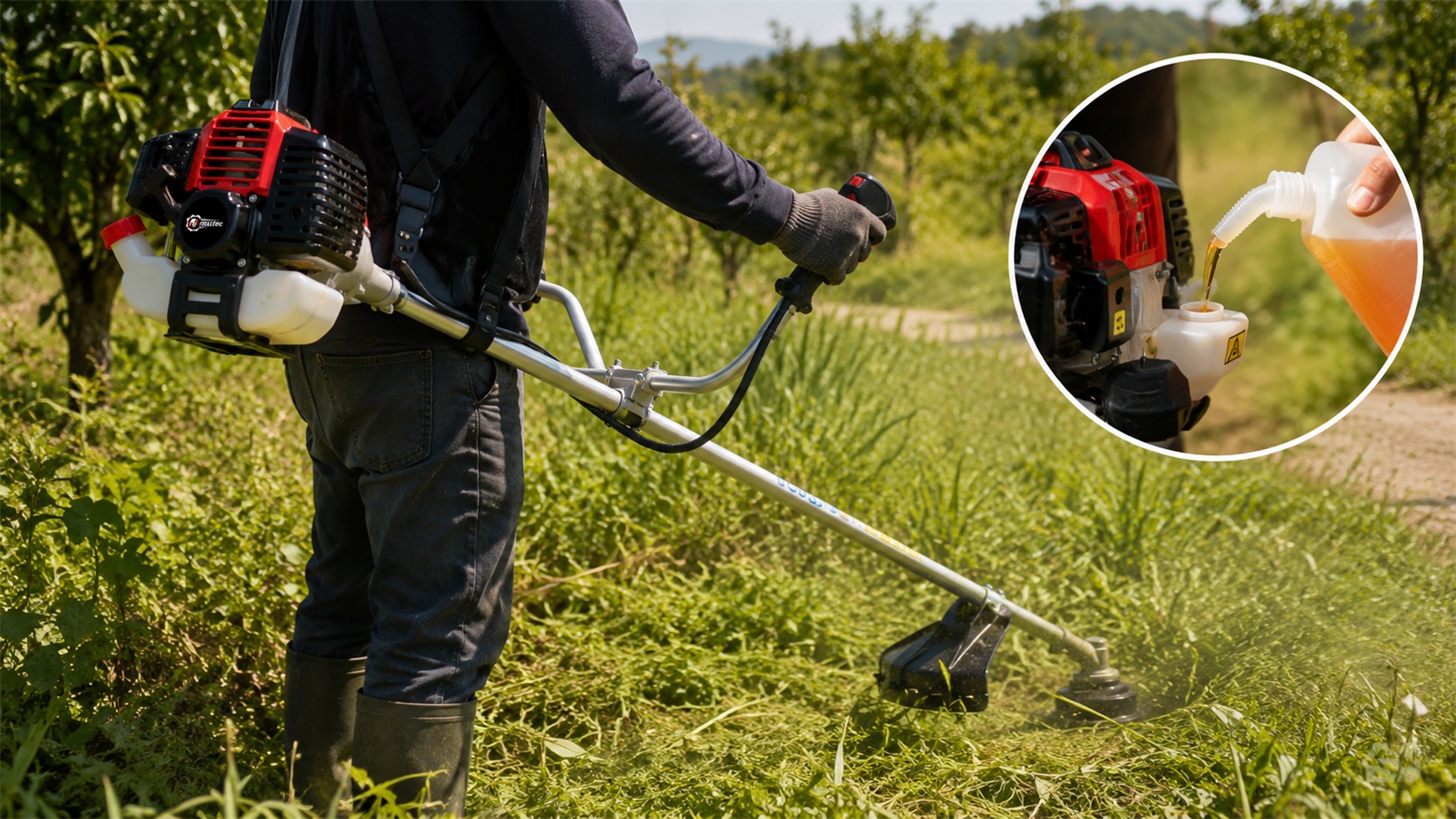
Dealer Troubleshooting and Procurement Guide
When a brush cutter uses too much fuel, the cause is often an overly rich fuel mixture, restricted airflow, incorrect choke operation, excessive cutting resistance, carburetor problems, or fuel escaping before it reaches the engine. Replacing the carburetor immediately may not solve the complaint and can increase unnecessary after-sales costs.
Importers, dealers, repair shops, and agricultural machinery wholesalers should first determine whether the machine is actually consuming abnormal amounts of fuel. Vegetation density, blade selection, nylon-line length, operator technique, fuel preparation, ambient temperature, and maintenance condition can all affect how long one tank lasts.
Quick answer: A brush cutter normally consumes excessive fuel when the choke remains partly closed, the air filter is blocked, the gasoline-to-oil ratio is incorrect, the carburetor supplies too much fuel, or the cutting attachment keeps the engine under heavy load. First check for visible leakage, confirm the specified fuel ratio, open the choke fully, inspect the air filter and spark plug, and remove grass wrapped around the blade holder or gearbox. Importers can reduce repeat complaints by standardizing pre-delivery testing, matching accessories to local vegetation, and stocking filters, fuel hoses, primer bulbs, spark plugs, and model-correct carburetor parts.
01 Confirm Whether Fuel Consumption Is Actually Abnormal
Fuel consumption should be compared under controlled conditions. A machine cutting thick weeds with a metal blade will normally use more fuel than the same brush cutter trimming soft grass with a nylon head. One short operating session is not enough to confirm a mechanical defect.
| A | Keep the comparison consistent. Fill the tank to the same level, use the same blade or nylon head, and work on vegetation of similar density. |
| B | Measure working time, not impressions. Record how long the machine performs useful cutting instead of judging fuel use after repeated starting, idling, or walking between work areas. |
| C | Check the operating load. A dull blade, oversized cutting head, excessively long nylon line, or wrapped vegetation can keep the engine at full throttle without producing efficient cutting. |
Fuel use may appear high when the operator keeps the engine at full throttle while moving between cutting areas, repeatedly starts and stops the engine, or forces the machine through dense vegetation in one pass. Hot weather and inconsistent tank filling can also distort the comparison.
For dealer testing, record the attachment type, vegetation condition, approximate operating time, fuel volume, and operator. This creates a useful reference when customers return a machine claiming that one tank does not last long enough.
02 Fuel Preparation and Airflow Checks
Check the gasoline and two-stroke oil ratio
A two-stroke brush cutter requires gasoline and two-stroke oil to be mixed according to the specification of the actual model. Too much oil may contribute to smoke, carbon deposits, spark plug contamination, poor combustion, and reduced operating efficiency. Too little oil reduces lubrication and can damage the cylinder, piston, and bearings.
Do not assume that every 52cc brush cutter uses the same ratio. The TM-CG520 gasoline brush cutter, for example, is listed with a 1:30 fuel mixture ratio. Buyers and service technicians should use the product specification rather than copying the ratio used for another engine or brand.
- Use a clean, approved fuel container.
- Measure gasoline and oil instead of estimating by eye.
- Mix only the amount that can be used within a reasonable period.
- Shake the container before refilling, especially after storage.
- Discard contaminated or deteriorated fuel according to local safety requirements.
Make sure the choke opens fully
The choke restricts airflow during cold starting. Once the engine starts and warms up, it should be moved to the normal operating position. If it remains partially closed, the engine receives too much fuel relative to the available air.
Typical signs include dark exhaust smoke, poor acceleration, a wet or black spark plug, uneven running at full throttle, strong fuel smell, and unusually high fuel consumption. Check the choke lever, linkage, air-filter cover, and carburetor mechanism for sticking, damage, or incorrect assembly.
Inspect the air filter before adjusting the carburetor
A filter blocked by dust, dry grass, or excessive oil reduces airflow while the carburetor continues delivering fuel. This makes the mixture richer and can cause smoke, power loss, plug deposits, and higher consumption.
Foam filters may require cleaning and light re-oiling according to the maintenance instructions. Damaged, hardened, or heavily contaminated elements should be replaced. Running without an air filter is not a suitable repair because unfiltered dust can quickly increase cylinder and piston wear.
03 Diagnostic Table for a Brush Cutter That Uses Too Much Fuel
| Inspection Point | Common Evidence | Possible Cause | Recommended Action |
| Fuel tank and hoses | Wet surface, fuel smell, tank level drops while stored | Cracked hose, loose grommet, leaking cap or primer bulb | Replace the damaged part and retest for leakage |
| Choke system | Black smoke, poor acceleration, wet plug | Choke remains partly closed | Inspect lever travel, linkage, cover, and carburetor mechanism |
| Air filter | Dust, grass residue, oily blockage | Insufficient intake airflow | Clean correctly or install a replacement filter |
| Spark plug | Wet, oily, or heavily blackened electrode | Rich mixture, excess oil, prolonged choke use, weak ignition | Correct the underlying cause, then clean or replace the plug |
| Cutting attachment | Low cutting speed at full throttle | Dull blade, long nylon line, oversized head, wrapped vegetation | Fit the correct attachment and remove excessive resistance |
| Carburetor | Heavy smoke, unstable running, strong fuel smell | Rich adjustment, damaged diaphragm, sticking inlet needle | Inspect and adjust only after other checks are completed |
| Operator practice | Long periods at full throttle without active cutting | Inefficient throttle and cutting technique | Train operators to use controlled sweeps and staged cutting |
04 Fuel Leaks, Carburetor Problems and Spark Plug Evidence
Not all missing fuel is being burned. A cracked fuel hose, loose tank grommet, leaking tank cap, damaged primer bulb, carburetor gasket, or fuel-line connection can allow gasoline to escape. Inspect the machine while it is cold, away from flames, sparks, and other ignition sources.
|
Leakage Check
Inspect the tank seam, cap, primer bulb, fuel hoses, filter line, carburetor inlet, and gasket. Tilt the machine carefully because some cap leaks appear only during cutting. |
Carburetor Check
Possible faults include incorrect adjustment, dirty fuel passages, a sticking inlet needle, damaged metering diaphragm, loose screws, or unsuitable replacement parts. |
Spark Plug Check
A wet, oily, or black plug can indicate a rich mixture, excess oil, prolonged choke use, weak ignition, or repeated unsuccessful starting. |
Random carburetor adjustment should be avoided. Turning screws until the engine sounds faster can create a mixture that is too lean, excessive operating temperature, high idle speed, poor lubrication, or engine damage. The air filter, exhaust outlet, fuel lines, spark plug, cutting attachment, and general engine condition should be checked first.
Replacing a blackened spark plug alone will not correct high fuel consumption when the real problem is a blocked filter, incorrect fuel preparation, leaking carburetor, partially closed choke, or unsuitable cutting load.
05 Cutting Resistance and Operator Technique
A brush cutter consumes more fuel when the engine must remain under continuous heavy load. This can happen even when the fuel system is operating normally. A dull blade, oversized cutting head, incorrect nylon line, damaged gearbox, or vegetation wrapped around the output shaft can reduce cutting efficiency.
- Confirm that the blade is sharp, balanced, and installed in the correct direction.
- Use a cutting attachment suitable for the engine and vegetation.
- Check that the nylon-line diameter matches the cutting head.
- Do not allow nylon line to extend beyond the recommended cutting width.
- Remove grass, wire, and vines wrapped around the blade holder or output shaft.
- Confirm that the gearbox rotates smoothly and is correctly lubricated.
- Check that the guard does not contact the blade or trimmer head.
- Inspect the clutch and shaft if engine speed increases but attachment speed remains low.
A larger blade is not automatically more productive. If it is too heavy or unsuitable for the available engine output, the operator may hold full throttle while the attachment turns too slowly. This increases fuel use, heat, vibration, and clutch load.
Operators should use controlled cutting sweeps and avoid keeping the engine at full throttle while walking between work areas. Very tall or dense vegetation is often better removed in stages. Correct harness and handle adjustment also improves control and reduces inefficient, tiring movements.
06 Comparing TM-CG520, TM-CG520B and TM-CG520BV
Displacement alone is not enough when selecting a 52cc brush cutter for wholesale or dealer resale. Engine references, operating speed, carburetor configuration, starter parts, ignition components, air-filter design, fuel-system parts, shaft specification, and local service capability should all be confirmed.
| Model | Listed Engine | Referenced Specification | Buying Focus |
| TM-CG520 | 1E44F-5 | 7500 rpm rated output speed; 1:30 fuel mixture ratio | Fuel instructions, carburetor version, and spare-parts identification |
| TM-CG520B | 1E44F-5B | 6500 rpm rated output | Confirm whether service parts match existing dealer stock |
| TM-CG520BV | TB52 | 52cc model with a different listed engine reference | Confirm carburetor, ignition, starter, cylinder, filter, and fuel-system compatibility |
|
TM-CG520 52cc Gasoline Brush Cutter A useful reference model for buyers who need a listed 1E44F-5 engine, 7500 rpm rated output speed, and a specified 1:30 fuel mixture ratio. Dealers should repeat the fuel instruction clearly in manuals, labels, and customer handover. |
|
| TM-CG520B 1E44F-5B Engine |
The TM-CG520B is listed with a rated output of 6500 rpm. Importers should confirm the exact carburetor, starter, ignition, and fuel-system configuration before combining spare parts with other 52cc models.
|
| TM-CG520BV 52cc Brush Cutter
This model is listed with a TB52 engine. It may be considered where buyers want another 52cc configuration, but parts should be verified by model rather than ordered only by displacement. |
|
07 Importer and Dealer Checklist Before a Bulk Order
A brush cutter that uses too much fuel can become a repeated dealer complaint when fuel instructions, accessory selection, quality inspection, and spare-parts planning are not standardized. The following audit helps buyers reduce avoidable service cases.
| Before Ordering | Before Shipment and Resale |
|
|
08 Practical Inspection Order for Dealers and Repair Shops
A consistent inspection sequence helps technicians separate fuel-preparation errors, operator issues, maintenance failures, cutting resistance, leakage, and actual component defects. It also prevents carburetors and ignition parts from being replaced without evidence.
Step 1: Confirm that fuel is not leaking from the tank, cap, hoses, primer bulb, or carburetor.
Step 2: Verify the gasoline and two-stroke oil ratio against the actual model specification.
Step 3: Make sure the choke moves completely to the normal running position.
Step 4: Inspect, clean, or replace the air filter.
Step 5: Examine the spark plug for wet, oily, or heavily blackened deposits.
Step 6: Remove grass and wire from the output shaft, blade holder, and gearbox area.
Step 7: Check blade condition, nylon-line length, cutting-head size, and gearbox resistance.
Step 8: Compare operator technique and working conditions.
Step 9: Inspect and adjust the carburetor only after the previous causes have been eliminated.
FAQ Frequently Asked Questions
What is the most common reason a brush cutter uses too much fuel?
Common causes include a partially closed choke, blocked air filter, incorrect fuel ratio, rich carburetor setting, fuel leakage, and excessive resistance from the cutting attachment. The machine should be inspected in a logical sequence before parts are replaced.
Can a dirty air filter increase brush cutter fuel consumption?
Yes. A clogged filter restricts airflow and can make the fuel mixture richer. This may cause smoke, poor acceleration, black spark plug deposits, power loss, and higher fuel consumption.
Should every 52cc brush cutter use the same fuel mixture?
No. The correct ratio should be confirmed from the specification of the selected model. For example, the TM-CG520 is listed with a 1:30 fuel mixture ratio, but buyers should not automatically apply that ratio to every 52cc engine.
How can dealers reduce after-sales complaints about fuel consumption?
Dealers should test choke operation, inspect for leakage, verify the air filter and cutting attachment, explain the correct fuel ratio, and show customers how working conditions affect tank duration. A written pre-delivery checklist provides useful evidence when complaints occur.
What spare parts should importers stock for fuel-system complaints?
Useful stock commonly includes air filters, fuel hoses, tank grommets, fuel filters, primer bulbs, spark plugs, tank caps, carburetor gaskets, recoil parts, and model-correct carburetors. Compatibility should be confirmed by engine and model reference rather than displacement alone.
Can the wrong blade make a brush cutter consume more fuel?
Yes. A dull, oversized, overly heavy, or unsuitable blade can keep the engine under heavy load while reducing cutting speed. Incorrect nylon line and vegetation wrapped around the output shaft can create a similar problem.
| Planning a Wholesale Order for 52cc Brush Cutters?
Compare the engine configuration, rated speed, fuel instructions, standard accessories, spare-parts compatibility, packaging, and local application before confirming a bulk order. Correct model selection and clear maintenance guidance can reduce fuel-consumption complaints and improve repeat-order consistency. |
|