
Why Does a Chainsaw Chain Get Hot and Tight While Cutting?
Why does a chainsaw chain get hot and tight while cutting? Check lubrication, tension, chain sharpness, bar wear, sprocket condition, and cutting technique.
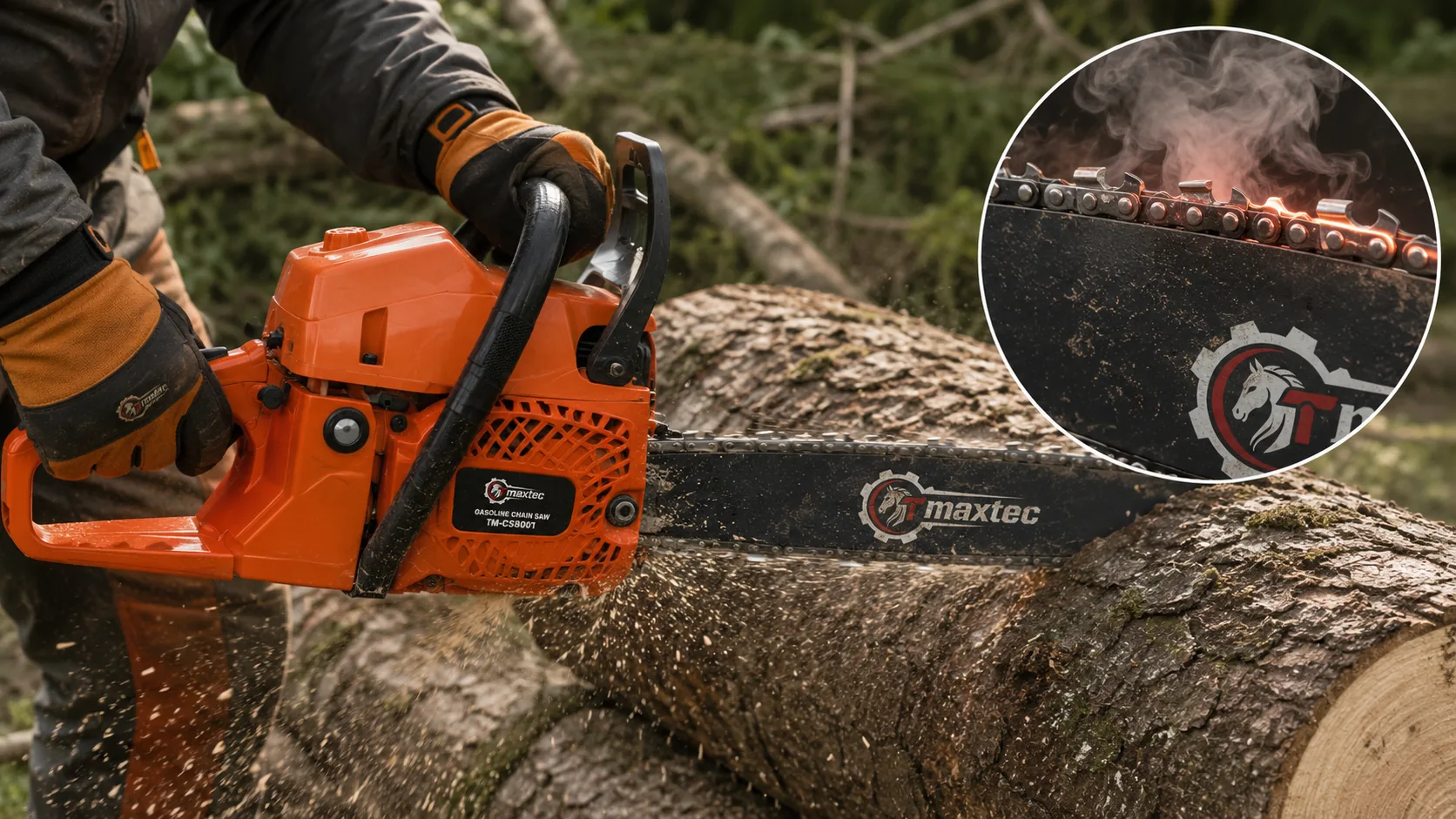
Dealer Troubleshooting and Cutting-System Inspection Guide
A practical guide for chainsaw users, repair shops, importers, and dealers diagnosing chain overheating, rapid tension changes, smoke near the guide bar, and premature cutting-system wear.
A chainsaw chain that gets hot and tight is usually experiencing excessive friction between the chain, guide bar, drive sprocket, and wood. The most common causes are insufficient chain oil, excessive initial tension, a dull or incorrectly sharpened chain, a blocked guide-bar groove, worn bar rails, or mismatched cutting components.
Stop cutting if the chain becomes difficult to move, smoke appears around the guide bar, or the bar reaches an unusually high temperature. Continuing to operate the saw can damage the chain, guide bar, clutch drum, drive sprocket, oil-pump drive, and other lubrication components. Dealers should diagnose the complete cutting system before replacing individual parts.
Quick answer: A chainsaw chain usually becomes hot and tight because oil is not reaching the bar, the chain was adjusted too tightly while cold, the cutters are dull, or the guide bar and sprocket are creating resistance. Stop the engine, allow the saw to cool, and check chain tension, oil delivery, the bar groove, the bar oil hole, cutter sharpness, sprocket wear, and chain compatibility. Importers and dealers can reduce repeat complaints by recording the correct pitch, gauge, drive-link count, guide-bar specification, and oil-system parts for every model they sell.
01What Rapid Chain Tightening Usually Means
Metal components expand as they become hot. A small tension change during operation can be normal, but the chain should not become extremely tight after only a few cuts. A chain that moves correctly when cold but becomes difficult to pull after cutting is usually generating more heat than the lubrication and cutting system can control.
Incorrect cold adjustment is a common starting point. If the chain is tightened until there is almost no free movement, normal heat expansion can make the drive links bind inside the guide-bar groove. This is particularly common after a new chain is installed. Because a new chain may settle during early use, some operators overtighten it in an attempt to prevent loosening.
With the engine switched off and the cutting system cool, the drive links should remain engaged in the bar groove while the chain can still be moved smoothly by hand. Gloves should always be worn, and the final tension method should follow the procedure for the specific chainsaw model.
| Symptom | Possible Cause | Recommended Check |
| Chain becomes tight after several cuts | Excess initial tension or cutting-system heat | Check cold tension and lubrication before readjusting |
| Smoke appears around the guide bar | Dry chain, dull cutters, or excessive cutting pressure | Stop immediately and verify oil reaches the chain |
| Chain is difficult to move even when cold | Pinched groove, wrong gauge, damaged sprocket, or excessive tension | Remove the bar and inspect components separately |
| Chain heats mainly during large cuts | Dull chain, long bar, poor lubrication, or excessive workload | Compare performance in smaller clean timber |
02Why Poor Lubrication Makes the Chain Overheat
Chain oil forms a protective film as the drive links travel through the guide-bar groove. When the oil supply becomes insufficient, metal-to-metal contact increases rapidly. The operator may hear a dry running sound, see smoke near the bar, or notice blue and dark heat marks on the guide-bar rails.
A full oil tank does not prove the chain is being lubricated. Oil may remain in the tank while the outlet, hose, pickup filter, pump, guide-bar oil hole, or bar groove is blocked. Compacted sawdust mixed with sticky chain oil can harden around the mounting area and prevent normal flow.
Oil SupplyCheck the oil level, oil viscosity, tank cap, pickup filter, hose, pump, and pump-drive components. |
Oil PassageClean the body outlet, guide-bar inlet hole, complete bar groove, and clutch-cover area. |
Oil ConsumptionNo oil-level decrease may indicate blockage. Unusually rapid loss may indicate a cap, hose, tank, or housing leak. |
The TM-CS5800 gasoline chainsaw for farm and wood cutting uses a separate lubrication system for the chain and guide bar. Operators should inspect the chain-oil level whenever fuel is refilled instead of waiting for the bar to show signs of dryness.
| View TM-CS5800 Details |
03Dull Chains, Cutting Pressure, and Smoke Near the Bar
A sharp chain removes visible wood chips efficiently. A dull chain scrapes and rubs against the wood, requiring the operator to apply more downward pressure. This increases the time the chain remains inside the cut and generates additional friction against the wood and guide bar.
Fine sawdust instead of clear chips, slow cutting, pulling to one side, visible smoke despite oil in the tank, and the need to force the saw into the wood are typical dull-chain symptoms. Cutting dirty timber containing soil or sand can damage the cutter edges very quickly.
Sharpening quality also matters. Unequal cutter lengths, inconsistent filing angles, or incorrect depth-gauge settings can cause crooked cuts, vibration, increased operator pressure, and rapid guide-bar wear. Dealers should not describe every overheating complaint as an oil-pump failure without inspecting the cutters.
Stop Cutting When You Notice These Signs
- Smoke coming directly from the chain and guide-bar area
- The chain becomes difficult to pull by hand after cooling
- The guide bar develops blue, black, or dark heat marks
- Cutting produces fine dust instead of normal wood chips
- The saw must be pushed heavily into the cut
- The chain tension changes rapidly during one working period
04Guide-Bar Wear and Chain Compatibility Problems
The guide bar should keep the chain aligned while allowing the drive links to move freely through the groove. Worn rails, sharp burrs, a widened groove, a pinched groove, or a seized bar-tip sprocket can all increase resistance and make a correctly tensioned chain run hot.
If one guide-bar rail wears lower than the other, the chain may lean and cut unevenly. Side movement can increase, and the customer may report crooked cutting or repeated chain derailment. Replacing only the chain will not solve the complaint if the bar groove is already damaged.
The replacement chain must match the guide bar and drive sprocket. Similar-looking chains may have different pitch, gauge, or drive-link counts. A chain that is too wide can bind inside the groove, while a chain that is too narrow can move sideways and damage the bar rails.
| Inspection Point | What to Look For | Dealer Action |
| Bar rails | Uneven height, burrs, heat discoloration, or spreading | Dress minor burrs correctly or replace a damaged bar |
| Bar groove | Packed sawdust, pinching, excessive width, or irregular wear | Clean fully and compare with the correct chain gauge |
| Chain specification | Wrong pitch, gauge, or drive-link count | Check the model record before supplying a replacement |
| Bar-tip sprocket | Rough movement, seizure, looseness, or damaged teeth | Lubricate where specified or replace the bar |
TM-CS5801 Petrol ChainsawThe TM-CS5801 petrol chainsaw may be supplied with different guide-bar and chain configurations depending on the order. Dealers should record the approved bar length, chain pitch, chain gauge, and drive-link count for every stocked version. This record helps repair staff avoid supplying a replacement chain based only on nominal guide-bar length. |
|
05Drive Sprocket, Clutch Drum, and Heavy-Cutting Load
The drive sprocket transfers engine power to the chain. As it wears, grooves can form where the drive links repeatedly contact the sprocket. A heavily worn sprocket may prevent smooth chain movement and create vibration, irregular loading, rapid chain wear, and tension changes.
When replacing a heavily worn chain, inspect the clutch drum, drum bearing, and drive sprocket. Installing a new chain on a damaged sprocket can shorten the replacement chain’s service life and lead to complaints that it stretches, jumps, or tightens abnormally.
If the chain runs normally without a load but becomes hot in large cuts, the complete configuration may be overloaded. A dull chain, unsuitable guide-bar length, low oil flow, large timber, pinched cuts, or a workload beyond the practical capacity of the saw can all contribute.
A longer guide bar increases the amount of chain the engine must move and increases lubrication demand. It may also encourage users to cut larger timber. The longest available bar is therefore not automatically the most suitable configuration for every market.
Application Configuration Reference
TM-CS5802 Gasoline Chainsaw
The TM-CS5802 gasoline chainsaw for demanding wood-cutting work can be configured for different cutting requirements. Importers should confirm the actual guide bar, chain, sprocket, and engine specification before selecting a version for local timber sizes and operating habits.
| Compare TM-CS5802 |
06A Fixed Dealer Troubleshooting Order
A repair shop should inspect a chainsaw chain overheating complaint in a consistent order. This prevents unnecessary oil-pump replacement and helps identify whether the problem comes from maintenance, incompatible parts, user operation, or component wear.
- Step 1 Check the chain-oil level, oil condition, and evidence of leakage.
- Step 2 Confirm oil reaches the guide-bar mounting area.
- Step 3 Clean the body outlet, bar oil hole, bar groove, and clutch-cover area.
- Step 4 Check cold chain tension and confirm the chain moves smoothly.
- Step 5 Inspect cutter sharpness, cutter length, filing angle, and depth gauges.
- Step 6 Confirm pitch, gauge, drive-link count, bar length, and sprocket specification.
- Step 7 Inspect the guide-bar rails and bar-tip sprocket.
- Step 8 Inspect the drive sprocket, clutch drum, and drum bearing.
- Step 9 Ask about timber size, cutting pressure, dirt contact, storage, and maintenance habits.
07Importer and Dealer Procurement Checklist
Chainsaw after-sales problems become more difficult when one model is supplied with several undocumented cutting configurations. Importers should establish a component record before placing a bulk order and keep the same information available for repeat orders and service technicians.
| Before Ordering | Before Shipment |
|
|
08Preventing Chainsaw Chain Overheating
Check chain oil and cold tension before every working period. Clean the guide-bar groove and lubrication hole regularly, sharpen the chain before cutting performance drops severely, and inspect the sprocket whenever a heavily worn chain is replaced.
During cutting, allow a sharp chain to feed into the wood without excessive downward pressure. Avoid twisting the guide bar inside the cut, running the saw below an effective cutting speed, continuing when the timber closes around the bar, or allowing the chain to contact soil and sand.
A chainsaw chain that repeatedly gets hot and tight is not experiencing harmless break-in. Systematic checks of lubrication, tension, chain condition, guide-bar wear, sprocket compatibility, component matching, and cutting technique will usually locate the problem without unnecessary parts replacement.
Frequently Asked Questions
Why does my chainsaw chain get tight when it heats up?
The chain and guide bar expand as temperature rises. Extreme tightening usually indicates excessive cold tension, poor lubrication, a blocked groove, a mismatched chain, or another source of cutting-system friction.
Why does the chain smoke when the oil tank is full?
Oil may not be reaching the chain. The body outlet, guide-bar oil hole, bar groove, hose, filter, pump, or pump drive may be blocked or damaged. A dull chain and excessive cutting pressure can also create smoke.
Can the wrong chain make a guide bar overheat?
Yes. Incorrect pitch, gauge, or drive-link count can cause binding, poor sprocket engagement, side movement, vibration, rapid rail wear, and excessive friction.
Should dealers replace the oil pump first?
Not automatically. Check chain tension, oil passages, bar cleanliness, cutter sharpness, bar wear, chain compatibility, and sprocket condition before replacing the oil pump.
What chainsaw spare parts should importers stock?
Useful service stock may include chains, guide bars, drive sprockets, clutch drums, drum bearings, oil pumps, pump-drive gears, oil hoses, pickup filters, chain tensioners, starter parts, and common maintenance items.
What should importers confirm before ordering chainsaws in bulk?
Confirm the complete cutting configuration, including bar length, chain pitch, gauge, drive-link count, sprocket specification, lubrication components, spare-parts compatibility, packaging labels, and repeat-order consistency.
Compare Chainsaw Configurations for Your Wholesale MarketCorrect chain, guide-bar, sprocket, and lubrication matching reduces overheating complaints and simplifies dealer service. Review the TM-CS5800, TM-CS5801, and TM-CS5802 configurations before selecting models for a bulk order. |
|