
Why Does a Power Sprayer Pulse Instead of Spraying Steadily?
Why does a power sprayer pulse instead of spraying steadily? Check suction leaks, filters, valves, regulators, hoses, and pump seals before replacing parts.
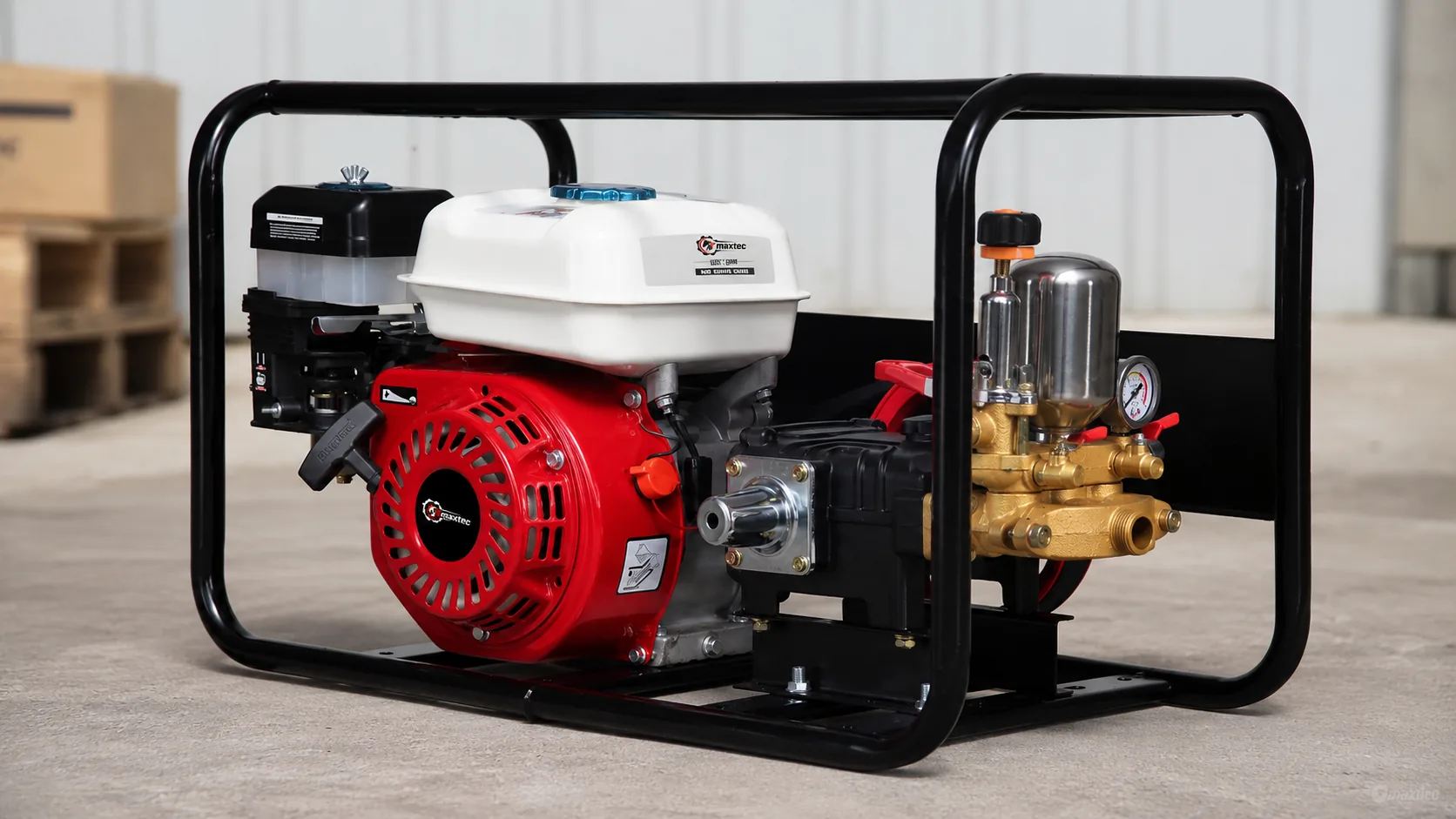
|
FIELD PUMP GUIDE
|
Agricultural Sprayer Troubleshooting and Dealer Service Power Sprayer Pulses or Pressure Surges: Causes, Checks, and Dealer Troubleshooting |
A power sprayer that pulses usually has an unstable liquid supply, an air leak on the suction side, restricted flow, sticking pump valves, incorrect regulator adjustment, worn plunger seals, or an outlet setup that does not match the pump capacity. The spray repeatedly strengthens and weakens because liquid is not entering and leaving the pump at a steady rate.
For agricultural equipment dealers, repair workshops, and importers, the main priority is to identify whether the pressure fluctuation begins before the pump, inside the pump, or after the discharge outlet. Following this diagnostic order prevents unnecessary replacement of pump heads, regulators, seals, and complete assemblies.
| Quick Diagnosis Start at the suction side |
Quick answer: A power sprayer pulses when the pump receives liquid unevenly or cannot regulate discharge pressure consistently. Check the tank level, suction filter, hose clamps, connector seals, priming condition, bypass flow, nozzle size, and engine speed before opening the pump. If these items are normal, inspect the pressure regulator, inlet and outlet valves, plungers, and seal sets. Importers can reduce after-sales complaints by matching the pump’s flow and pressure range with the correct suction hose, discharge hose, spray gun, nozzle quantity, and chemical application. |
Where Does the Pulsation Begin?
A useful diagnosis separates the system into three areas. The suction side delivers liquid from the tank to the pump. The pump section creates pressure through valves, plungers, seals, and the regulator. The discharge side carries liquid through the pressure hose, spray gun, and nozzle.
| Suction Side | Low liquid level, blocked filter, loose clamps, cracked hose, air leaks, collapsed hose, or poor priming. |
| Inside the Pump | Dirty valves, damaged valve springs, worn seats, sticking regulator, damaged plungers, or worn seals. |
| Discharge Side | Blocked nozzle, unsuitable nozzle size, damaged spray-gun valve, kinked hose, excessive hose length, or too many spray outlets. |
Air Leaks and Blocked Filters on the Suction Side
A power sprayer needs a continuous liquid supply. If air enters through a suction hose, clamp, tank fitting, connector, filter cover, or damaged sealing washer, the pump alternates between drawing liquid and drawing air. The engine may continue running normally while the discharge hose vibrates and pressure rises and falls.
Suction-side leaks can be difficult to see because the pump is pulling inward. A small gap may draw air into the system without releasing visible liquid. Inspect hoses for hardening, cracks, loose fittings, flattened sections, and collapse when engine speed increases.
The suction filter is another frequent cause. Leaves, soil, fertilizer particles, poorly dissolved powder, and chemical sediment restrict liquid flow. Pressure may appear normal immediately after starting and then begin pulsing as the pump consumes liquid faster than it can pass through the blocked filter.
Suction-System Model Reference
|
Product: TM-HTP22B Power Sprayer When inspecting the TM-HTP22B power sprayer for agricultural spraying, technicians should check the suction hose, return hose, filter housing, clamps, and connector seals before dismantling the pump body. This inspection order is especially useful when the engine remains stable but the hose output repeatedly strengthens and weakens. |
|
Priming Problems After the Pump Runs Dry
Running the pump without liquid allows air to enter the suction hose and pump chambers. It may also remove the liquid that cools and lubricates certain internal components. After the tank is refilled, trapped air can remain inside the pump, return hose, or suction line.
Do not close the bypass immediately and set maximum pressure while the pump is still trying to prime. Begin with low pressure and allow liquid to circulate until bubbles disappear and the return flow becomes steady.
- Fill the tank with enough clean liquid to keep the suction hose fully submerged.
- Open the bypass or return line so trapped air can leave the pump.
- Start at low pressure and observe the liquid returning to the tank.
- Wait for stable flow before opening the spray gun fully.
- Increase pressure gradually while checking for hose vibration or air bubbles.
Dirty Pump Valves and Unstable Pressure Regulation
Plunger-type agricultural sprayers use inlet and outlet valves to control liquid direction through each pump chamber. Every valve must open and close freely during each pumping cycle. Sand, chemical crystals, damaged springs, worn seats, or incorrectly installed valve parts can reduce the output of one chamber and create repeated pressure surges.
The pressure regulator controls how much liquid reaches the discharge hose and how much returns through the bypass line. If the regulator sticks, wears unevenly, or is adjusted beyond the practical range of the nozzle setup, pressure may repeatedly build and release. The pressure-gauge needle may move continuously instead of remaining within a stable working range.
| Inspection Point | Possible Problem | Recommended Action |
| Inlet and outlet valves | Dirt, crystals, worn seats, or damaged springs | Clean and keep each valve set in its original chamber position |
| Regulator handle | Sticking movement or incorrect adjustment | Release pressure, clean the seat, and inspect the spring |
| Bypass hose | Kink, blockage, or restricted return flow | Restore unrestricted return flow to the tank |
| Pressure gauge | Continuous needle movement | Compare regulator, valve, and discharge conditions |
TM-HTP22D Agricultural Power Sprayer
When servicing the TM-HTP22D agricultural power sprayer, keep every valve, spring, seat, washer, and sealing component in its original position during disassembly. Mixing similar-looking parts between chambers can create further flow imbalance.
| Check This Model |
Nozzle, Spray Gun, and Hose Mismatch
If bypass circulation is steady but pulsation begins when the spray gun opens, inspect the discharge side. A partially blocked nozzle may repeatedly restrict and release flow. A damaged gun valve, loose connector, kinked pressure hose, unsuitable nozzle size, or excessive hose length can create similar symptoms.
Test with one clean nozzle of the correct size. If several guns are connected, operate them one at a time. This helps determine whether the pump itself is unstable or whether one branch of the spraying system is creating excessive restriction.
| TM-HTP30 Fields and orchards |
Higher-flow configurations such as the TM-HTP30 power sprayer for fields and orchards should be matched with suitable suction hoses, discharge-hose diameters, nozzle quantities, and bypass settings. Restricting a larger pump through a very small nozzle or unsuitable hose arrangement can produce pressure fluctuation, regulator cycling, and unnecessary component load.
|
Engine Speed, Plunger Seals, and Multiple Spray Guns
The pump depends on stable engine speed. If the engine repeatedly accelerates and slows, spray pressure will change even when the liquid system is in good condition. Dirty air filters, restricted fuel flow, carburetor problems, old fuel, drive-belt slip, loose mounting, or governor problems may create pressure fluctuation.
Observe the engine while the pump circulates at low pressure. If engine speed remains steady but the hose pulses, focus on the liquid system. If engine speed rises and falls at the same time as discharge pressure, inspect the engine and drive connection first.
Worn plunger seals can also produce uneven output. Seals may harden, swell, wear, or become damaged by incompatible chemicals. One pump chamber may lose efficiency even when external leakage is limited. Inspect plungers for scratches, corrosion, and uneven surfaces before installing replacement seals.
Connecting multiple spray guns increases total flow demand. A system that operates steadily with one gun may pulse when two or three guns are opened because the suction supply, pump output, hose dimensions, nozzle flow, and required working pressure are no longer balanced.
| Configuration | Buying Focus | Common Risk |
| One spray gun | Correct nozzle size and stable bypass adjustment | Blocked nozzle or damaged gun valve |
| Two or more guns | Total nozzle flow, hose length, hose diameter, and pump capacity | Demand exceeds available liquid supply |
| Chemical spraying | Seal compatibility and complete rinsing after use | Swollen seals, crystals, sediment, and valve sticking |
Higher-Capacity Pump Reference
TM-HTP30D High-Pressure Agricultural Sprayer
The TM-HTP30D high-pressure agricultural sprayer is intended for applications requiring greater pressure and liquid delivery than smaller pump configurations.
Listed specification: 30mm plunger, 2.5–4.0 MPa working pressure, and 22–40 L/min suction volume. These figures must still be matched with an adequate tank supply, suction hose, pressure hose, regulator, and nozzle arrangement.
| Check Specifications |
Dealer Inspection Order Before Replacing the Pump
Power sprayer pulsation is often caused by a low-cost hose, filter, seal, valve, nozzle, or regulator problem rather than a defective complete pump. Dealers should use a fixed inspection sequence so that the simplest causes are eliminated first.
| 1 | Confirm sufficient liquid is available and the suction hose is submerged. |
| 2 | Prime the pump at low pressure and observe return flow. |
| 3 | Clean the suction filter and inspect suction hoses, clamps, and seals. |
| 4 | Check bypass and return hoses for kinks, blockages, and restricted flow. |
| 5 | Test with one clean nozzle of the correct size. |
| 6 | Observe whether engine speed remains stable during pulsation. |
| 7 | Inspect regulator movement, spring condition, and valve seat cleanliness. |
| 8 | Inspect pump valves, plungers, and seal sets only after external causes are eliminated. |
Importer and Dealer Bulk Order Checklist
Importers stocking 22mm and 30mm pump configurations should not assume that valves, seals, pump heads, regulators, and repair kits are interchangeable. Every model should have a clear specification and spare-parts record.
| Importer Checks | Dealer Service Checks |
|
|
Frequently Asked Questions
Why does my power sprayer pressure rise and fall?
The most common causes are air entering the suction hose, a blocked filter, incomplete priming, sticking pump valves, regulator cycling, a blocked nozzle, unstable engine speed, or worn pump seals.
Can a small air leak cause strong pressure pulsation?
Yes. A small suction-side leak can draw air into the pump without releasing visible liquid. Check hose clamps, connector seals, tank fittings, filter covers, and hardened suction hoses.
Why does the sprayer pulse only when the gun opens?
This usually points to the discharge side. Inspect the nozzle, spray-gun valve, pressure hose, outlet connections, hose length, and total nozzle flow before opening the pump.
How should a power sprayer be primed after running dry?
Refill the tank, submerge the suction hose, open the bypass line, start at low pressure, allow liquid to circulate until bubbles disappear, and then increase pressure gradually.
Can multiple spray guns cause pulsation?
Yes. Multiple guns increase total flow demand. The pump, suction supply, hose diameter, hose length, nozzle sizes, and required pressure must all be balanced.
What spare parts should power sprayer dealers stock?
Useful parts include suction filters, hose clamps, connector seals, inlet and outlet valves, valve springs, regulator components, gauges, plunger seals, oil seals, spray-gun parts, and common nozzle sizes.
What should importers inspect before ordering power sprayers in bulk?
Confirm pump size, working pressure, practical flow, hose specifications, nozzle compatibility, chemical-resistant seals, repair-kit availability, packaging strength, model labeling, and repeat-order component consistency.
|
Wholesale Selection Support Match Pump Capacity With the Complete Spraying SystemA stable power sprayer requires more than a larger pump. Compare suction supply, pressure range, hose dimensions, nozzle flow, chemical compatibility, and spare-parts support before confirming a bulk order. |
|