
How to Choose a Battery Tea Leaf Picker for Tea Harvesting
Learn how to choose a battery tea leaf picker for tea harvesting, including cutting width, working time, field conditions, maintenance, and bulk buying checks.
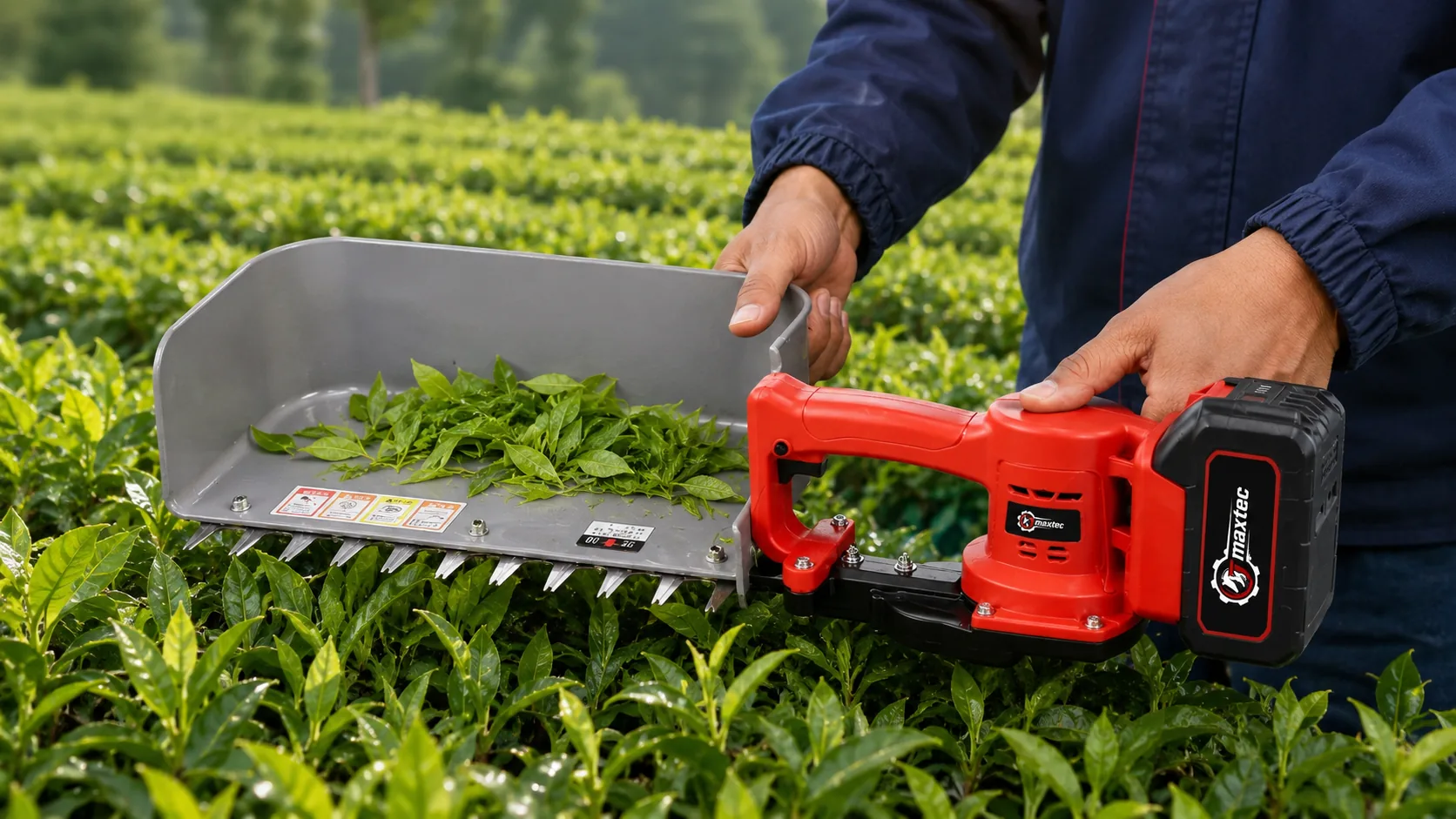
Tea Harvesting Equipment Procurement Guide
Battery Tea Leaf Picker Buying Guide: What Importers and Plantations Should Check
Choosing a battery tea leaf picker is not simply a matter of comparing machine appearance or asking which model has the longest advertised working time. The correct choice depends on plantation size, tea bush conditions, field terrain, harvesting frequency, operator experience, charging access, leaf collection requirements, and the spare parts support available after the sale.
For importers, agricultural equipment dealers, tea garden operators, and regional distributors, the buying decision should cover the complete working system. A machine may cut well during a short demonstration but still create complaints if the battery package is insufficient, the collection bag is inconvenient, the blade is difficult to maintain, or replacement parts cannot be supplied for repeat orders.
| Quick answer: | A battery tea leaf picker is most suitable for buyers who need easier starting, lower routine engine maintenance, quieter operation, and organized harvesting periods with reliable charging access. Before ordering, check actual field handling, cutting width, machine balance, blade maintenance, leaf collection efficiency, battery rotation, charger availability, and replacement-part supply. Importers can reduce purchasing risk by testing a sample under local tea field conditions, defining the intended application clearly, and ordering batteries, chargers, blades, bags, and wear parts as one complete package rather than evaluating the machine alone. |
Start with the Harvesting System, Not One Specification
A battery tea leaf picker is mainly used to increase harvesting efficiency in tea gardens where labor availability, working speed, operator comfort, and consistency are important. It is commonly considered by plantations moving away from fully manual picking and by dealers looking for a cleaner, simpler alternative to gasoline-powered harvesting machines.
However, no single specification can confirm whether a model will work well in a particular market. A wider blade may improve coverage, but it may also require steadier handling. A lighter machine may reduce fatigue, but buyers still need to check balance during real cutting movement. A battery may perform well in a short test, but daily productivity depends on workload, charging time, battery rotation, and the number of operators sharing the equipment.
Professional buyers should therefore evaluate the picker as a complete harvesting system that includes the machine, batteries, charger, cutting assembly, collection bag, spare blades, maintenance routine, operator training, and after-sales support.
|
Suitable buying focus Small Farms and Short SessionsPrioritize easy operation, manageable weight, convenient charging, simple cleaning, and a practical battery package. These users may value convenience and low daily maintenance more than uninterrupted full-day operation. |
Suitable buying focus Plantations and Dealer ProjectsEvaluate machine quantity, battery rotation, charger capacity, operator assignment, spare blade supply, collection-bag replacement, training materials, and repeat-order consistency. |
Battery Tea Leaf Picker or Gasoline Model?
Many buyers are not deciding between two battery models. They are first deciding whether a cordless picker or a gasoline machine better matches local working conditions. Battery machines are generally considered where users want easier starting, lower operating noise, no fuel mixing, no carburetor maintenance, and simpler daily preparation.
A gasoline model may remain practical for remote plantations that have limited charging access or require long operating periods without organized battery replacement. A battery model can still serve medium or large plantations, but only when battery rotation, charging locations, and operator schedules are planned before the machines enter service.
For distributors, the correct recommendation depends on the customer’s working pattern. Selling a cordless model to a farm without reliable electricity or enough spare batteries can create complaints that the picker has insufficient endurance. Selling a gasoline machine to customers who mainly want easy starting and low routine maintenance can create a different kind of dissatisfaction.
Dealer Positioning Advice
Do not present a battery tea leaf picker as a universal replacement for every gasoline machine. Position it for farms and plantations that can support charging, battery rotation, routine blade cleaning, and organized harvesting periods. Clear application guidance usually reduces returns more effectively than simply increasing product claims.
Field Conditions and Application Limits Buyers Often Ignore
A tea leaf picker should be selected according to the actual plantation rather than a catalog image. Tea bush density, row shape, slope, humidity, harvesting frequency, leaf standard, operator skill, and daily working hours can all affect handling and productivity.
Relatively level plantations with organized rows and convenient charging access may be easier environments for introducing cordless harvesting equipment. Sloped or uneven fields place more emphasis on balance, carrying comfort, operator control, and collection-bag handling. Remote areas may require additional battery packs, portable charging arrangements, or shorter planned work periods.
Buyers should also confirm what the machine is expected to cut. A tea leaf picker intended for routine leaf harvesting should not automatically be promoted for rough branch cutting, neglected bushes, or unrelated vegetation. Incorrect application is a common source of blade damage, motor overload, poor collection results, and after-sales disputes.
| Application Condition | Buying Focus | Common Risk | Dealer Advice |
| Small tea farm | Easy handling and simple charging | Buying unnecessary battery quantity | Match the package to actual daily use |
| Large plantation | Battery rotation and charger planning | Downtime between battery changes | Quote a complete operating package |
| Sloped tea field | Weight, balance, and bag control | Operator fatigue or unstable cutting | Arrange a field handling test |
| Remote working area | Charging access and spare batteries | Insufficient working continuity | Confirm power access before recommending |
| First-time mechanized users | Training and maintenance instructions | Incorrect blade cleaning or storage | Provide a clear demonstration routine |
Which Product Features Matter Most?
Importers often focus on battery capacity or motor information while overlooking the features that workers notice during actual harvesting. A useful comparison should include cutting coverage, movement balance, battery management, blade serviceability, and leaf collection performance.
| 01 |
Cutting WidthA wider cutting area may improve coverage, but the picker must remain controllable across the shape and spacing of local tea rows. Test efficiency together with handling stability. |
| 02 |
Machine Weight and BalanceThe picker should be evaluated while moving across the tea surface, not only while being held still. Poor balance can increase fatigue and reduce cutting consistency during longer sessions. |
| 03 |
Battery and Charger SystemConfirm normal field runtime, charging time, recommended batteries per machine, charger compatibility, storage requirements, and whether replacement packs can be reordered later. |
| 04 |
Blade Structure and CleaningTea residue can accumulate around the cutting system. Buyers should check whether the blade is easy to inspect, clean, adjust, maintain, and replace through the local dealer network. |
| 05 |
Leaf Collection DesignThe collection bag or collection system should be practical to attach, control, empty, clean, and replace. Cutting performance alone does not guarantee an efficient harvesting process. |
Importers should request clear confirmation of the complete supply configuration. A low machine price may not represent a competitive package if essential batteries, chargers, bags, blades, or replacement components are quoted separately or cannot be supplied consistently.
Recommended Battery Tea Leaf Picker for Evaluation
Buyers comparing cordless harvesting equipment can review the following model as a battery-powered option for tea farms, agricultural distributors, plantation projects, and local dealer evaluation. Final suitability should be confirmed through a sample test based on local tea varieties, field layout, working hours, and operator habits.
|
Model for dealer and plantation review TM-4CD35ALi Li-ion Battery Tea Leaf PickerPractical use: Battery-powered tea harvesting where buyers prioritize easier starting, cleaner daily operation, simplified maintenance, and cordless handling. Procurement focus: Confirm battery quantity, charger arrangement, blade and collection-part supply, packaging configuration, operator training, and repeat-order availability. |
Review the model configuration before preparing a sample or bulk order.
|
Battery Planning and Common Dealer Complaints
The correct number of batteries depends on field workload, normal runtime, charging time, operator schedule, harvesting duration, and access to electricity. Buyers should not rely only on a maximum runtime figure measured under unspecified conditions. Normal leaf density, cutting resistance, weather, battery condition, and operator technique can change actual working time.
A common after-sales complaint is that the picker cannot work for a full shift. In some cases, the machine is not defective; the original package simply included too few batteries for the buyer’s working plan. Dealers should calculate whether one battery is being used while another is charging and whether charging can keep pace with field consumption.
Replacement availability matters as much as the first supply. Importers should confirm whether the same battery and charger can be reordered, whether battery contacts and housings remain consistent between production batches, and whether replacement packs can be supplied without changing the complete tool system.
Questions to Ask About the Battery Package
- What is the expected working time under normal tea harvesting load?
- How long does a normal charging cycle take?
- How many batteries are recommended for one machine and one working shift?
- Can one charger support the planned number of operators?
- Will the same battery format be available for future orders?
- What storage instructions should dealers give during inactive periods?
Maintenance and Spare Parts Planning for Importers
Battery-powered equipment removes several gasoline-engine service points, but it is not maintenance-free. Tea residue, moisture, repeated blade movement, loose fasteners, poor battery storage, dirty contacts, and damaged collection bags can still affect performance and customer satisfaction.
Operators should clean and inspect the cutting area after use, check blade condition, confirm fastener tightness, keep battery contacts clean and dry, inspect the charger and cable, empty and clean the collection bag, and store the equipment according to the supplier’s instructions. The battery should be removed before inspecting or cleaning the cutting system.
Dealers should stock the parts most likely to stop a machine from returning to work. The exact spare-parts package should be confirmed with the supplier, but planning commonly covers blades, blade-related hardware, collection bags, fasteners, batteries, chargers, switches, and other wearing or service components included in the selected configuration.
| Inspection Point | Possible Problem | Recommended Action |
| Blade and cutting area | Residue buildup, wear, or poor cutting | Clean, inspect, adjust, or replace as specified |
| Fasteners and covers | Vibration, looseness, or abnormal noise | Inspect before use and tighten correctly |
| Battery contacts | Intermittent power or poor connection | Keep contacts clean, dry, and undamaged |
| Collection bag | Poor collection or damaged attachment points | Empty, clean, inspect, and replace when necessary |
| Charger and storage | Charging complaints or shortened battery service life | Follow approved charging and storage instructions |
Importer and Dealer Checklist Before a Bulk Order
A sample should be tested before a large purchasing decision whenever possible. The test should reproduce local harvesting movement, tea bush conditions, expected working periods, bag emptying, battery replacement, and routine cleaning rather than only confirming that the motor starts.
| Before Ordering | Before Shipment |
|
|
Importers should also consider how the product will be demonstrated to dealers and farms. Clear training on battery rotation, blade cleaning, correct cutting technique, bag handling, and storage can prevent many complaints that might otherwise be reported as product defects.
Battery Tea Leaf Picker FAQ
1. What should importers check before buying a battery tea leaf picker?
Check field suitability, cutting and collection performance, machine balance, battery runtime under normal load, charging time, battery quantity, spare-parts availability, packaging, instructions, MOQ, and consistency between the approved sample and bulk production.
2. Is a battery tea leaf picker suitable for a large plantation?
It can be suitable when the plantation plans machine quantity, battery rotation, charger capacity, working shifts, blade maintenance, operator training, and spare-parts support. The complete operating system should be evaluated rather than one machine alone.
3. How many batteries should be ordered for each machine?
There is no universal number. The correct quantity depends on actual runtime, charging time, daily harvesting hours, workload, charging access, and whether operators can rotate batteries without stopping the harvesting schedule.
4. How can dealers reduce after-sales complaints?
Explain suitable applications clearly, supply an adequate battery package, demonstrate correct cutting and bag handling, provide cleaning and storage instructions, stock common replacement parts, and avoid promoting the picker for rough cutting outside its intended use.
5. What spare parts should tea picker distributors stock?
The exact list depends on the model configuration, but buyers should discuss spare blades, blade-related hardware, collection bags, fasteners, batteries, chargers, switches, and other wearing or service components with the supplier before ordering.
6. How should buyers compare different battery tea leaf picker models?
Compare actual field handling, cutting coverage, machine balance, battery support, charging arrangements, blade serviceability, leaf collection design, package contents, spare-parts supply, and the total cost of keeping the machines operational after resale.
|
Plan the complete harvesting package Evaluate the TM-4CD35ALi for Your Local Tea MarketReview the machine together with its batteries, charger, cutting parts, collection system, packaging, spare parts, and intended field application before preparing a sample or wholesale order. |
|