
2-Stroke vs 4-Stroke Power Sprayer: Which Should You Choose?
Compare 2-stroke vs 4-stroke power sprayers for fuel use, weight, maintenance, repair access, and farm spraying conditions before choosing a model.
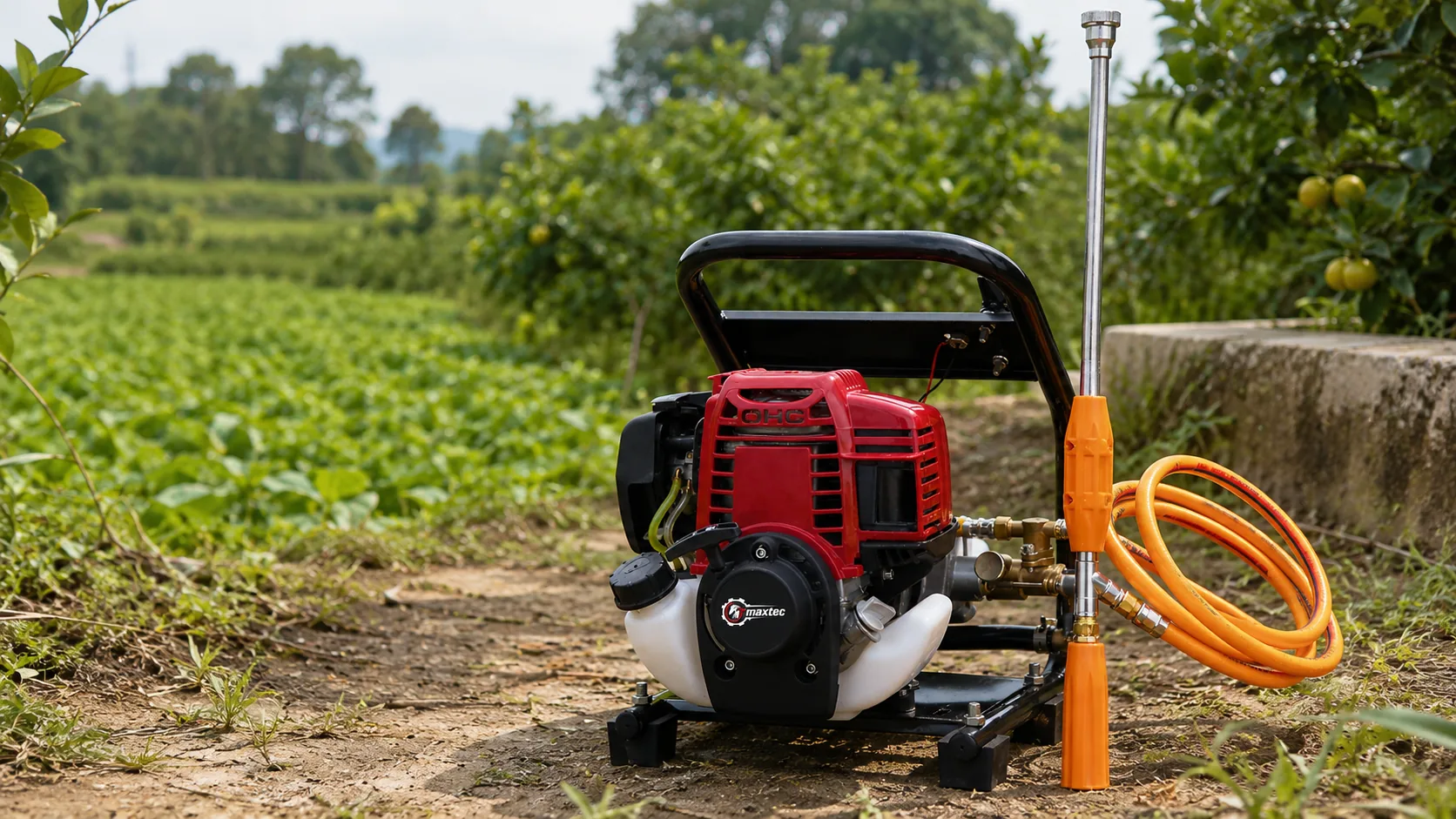
2-Stroke vs 4-Stroke Power Sprayer: Model Comparison and Importer Selection Guide
Choosing between a 2-stroke vs 4-stroke power sprayer is not simply a comparison of engine size or purchase price. The practical decision depends on carrying weight, daily spraying duration, fuel-handling habits, local repair capability, pump configuration, and the availability of engine and pump spare parts.
For distributors and agricultural machinery dealers, selecting the wrong engine platform can create avoidable complaints. A lightweight 2-stroke machine may fit scattered vegetable plots but frustrate users who do not prepare mixed fuel correctly. A GX35 4-stroke model may suit longer work periods, yet it still requires correct engine-oil maintenance and suitable local servicing.
Start With the Actual Spraying Work
Engine specifications matter, but the daily work pattern should be reviewed first. A smallholder moving between separated vegetable plots may value a machine that can be lifted onto a vehicle and repositioned without excessive effort. An orchard operator working for several hours may place more importance on fuel handling, stable operation under repeated load, and convenient daily maintenance.
Before comparing quotations, define the expected spraying routine:
Field and Operator Conditions
|
Spraying-System Conditions
|
These questions usually provide a more reliable purchasing direction than assuming that a larger, more expensive, or higher-output engine will automatically be better for every farm.
TM-PTU26 and TM-PGX35 Specification Comparison
The TM-PTU26 and TM-PGX35 are both listed with a working pressure range of 1.5–2.5 MPa. Their engine platforms and stated power outputs are different, so pressure alone should not be used as the final model-selection criterion.
| Comparison Point | TM-PTU26 | TM-PGX35 | Procurement Meaning |
| Engine type | TU26 2-stroke | GX35 4-stroke | Determines fuel preparation, maintenance routine, and local repair requirements. |
| Displacement | 25.6 cc | GX35 engine platform | Engine identity should be confirmed together with the supplied pump and coupling. |
| Listed output | 0.81 kW at 7,500 rpm | 1.1 kW at 7,500 rpm | Higher listed output may provide more reserve, but it cannot correct a leaking or restricted liquid circuit. |
| Working pressure | 1.5–2.5 MPa | 1.5–2.5 MPa | The same range does not confirm identical flow, pump response, or hose performance. |
| Listed packing weight | 6.5 kg net / 7.5 kg gross | Confirm final configuration | Weight affects transport, loading, dealer display, and repeated repositioning in the field. |
| Fuel routine | Gasoline and oil mixture | Gasoline and engine oil managed separately | Select the system local operators are more likely to maintain correctly. |
Actual spraying behavior also depends on pump displacement, regulator adjustment, nozzle opening, hose length, hose diameter, suction sealing, liquid filtration, and the number of operating outlets. Two power sprayers can display the same pressure range while responding differently after the hose or nozzle configuration changes.
When the TM-PTU26 2-Stroke Power Sprayer Makes More Sense
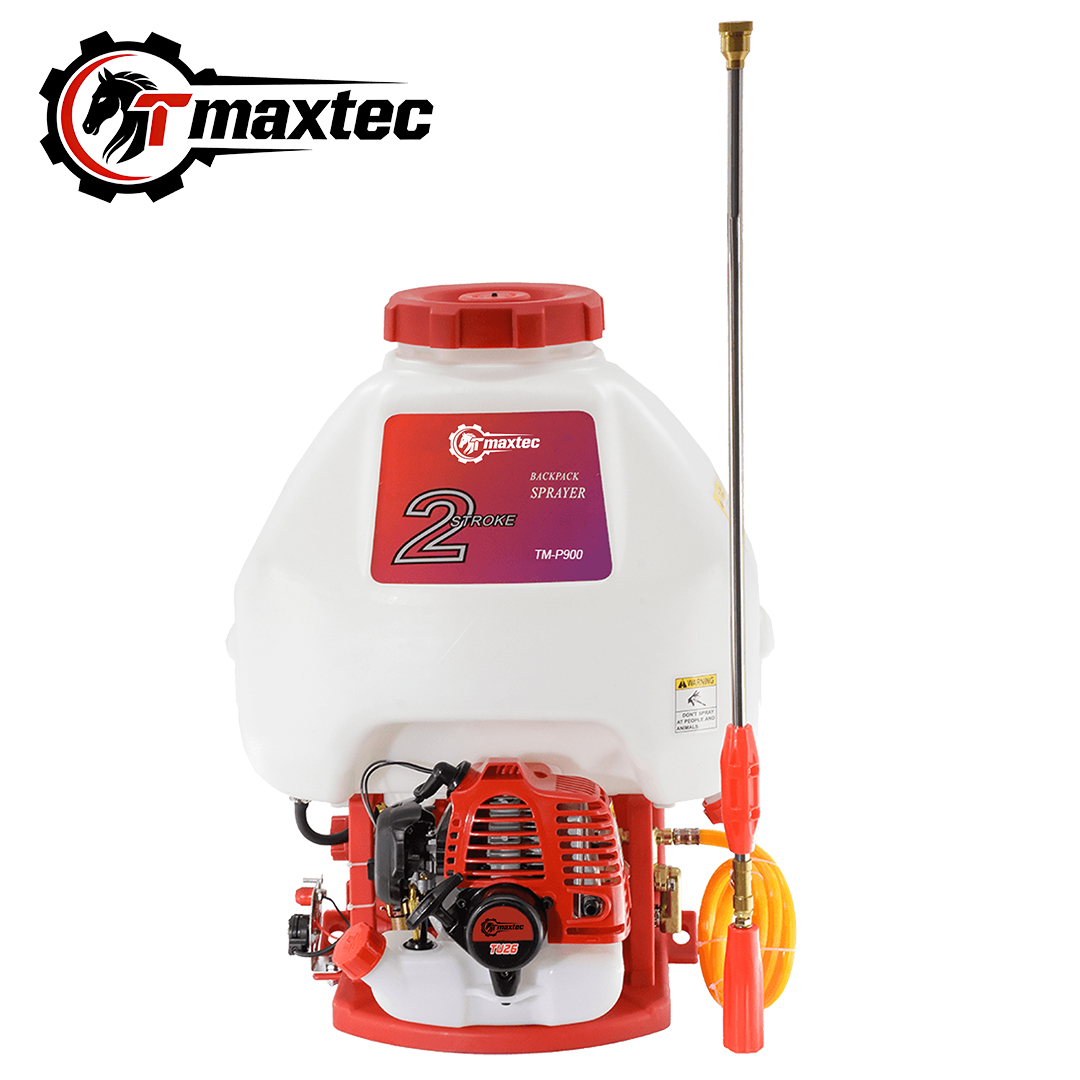
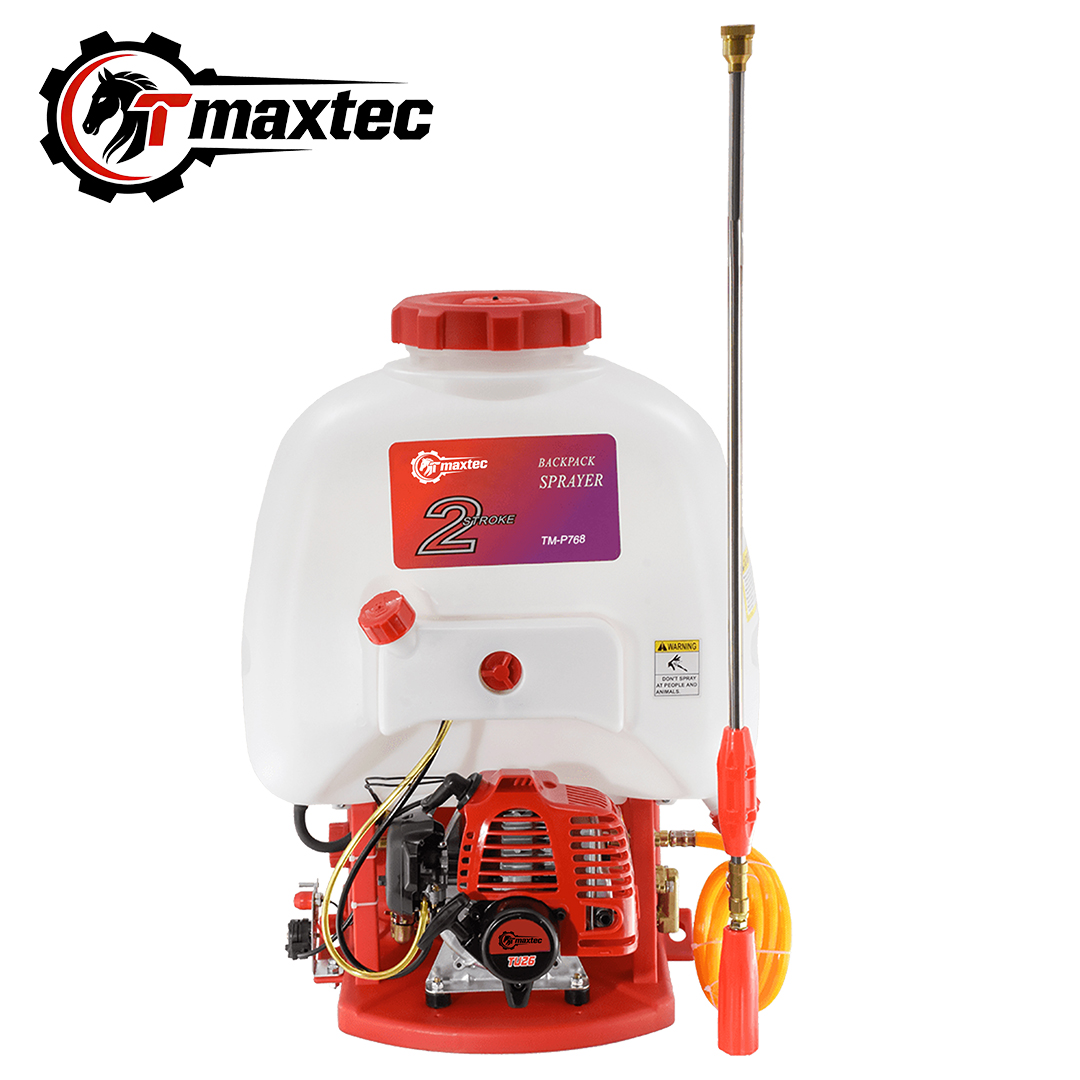
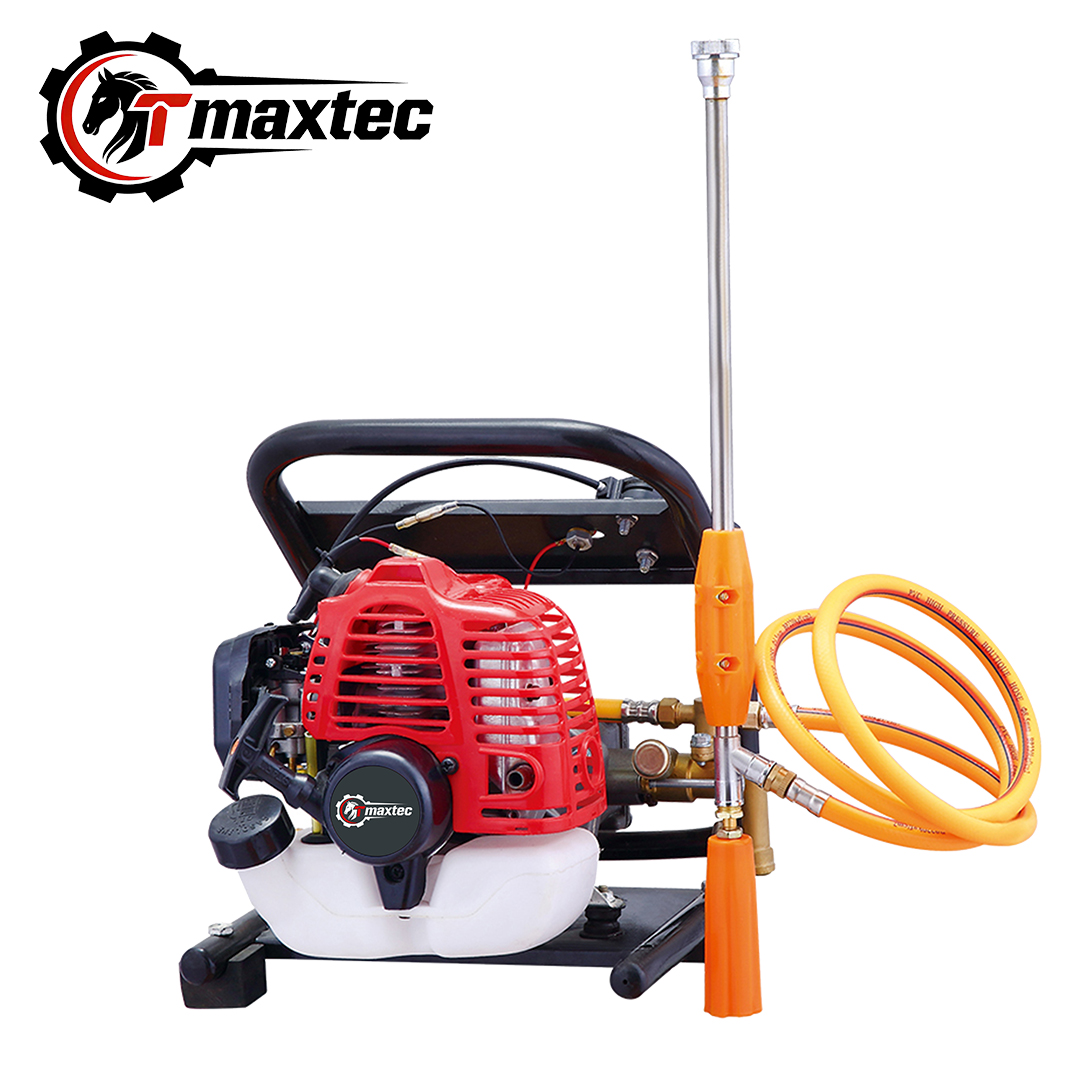
The TM-PTU26 2-stroke power sprayer is relevant for markets where operators already use brush cutters, mist dusters, or other small 2-stroke tools. Familiar fuel preparation and access to TU26-type repair knowledge can make this engine platform easier for local dealers to support.
Its listed net and gross weights are 6.5 kg and 7.5 kg. This is a practical consideration when the machine is frequently lifted, loaded onto a small vehicle, or moved between separate spraying locations.
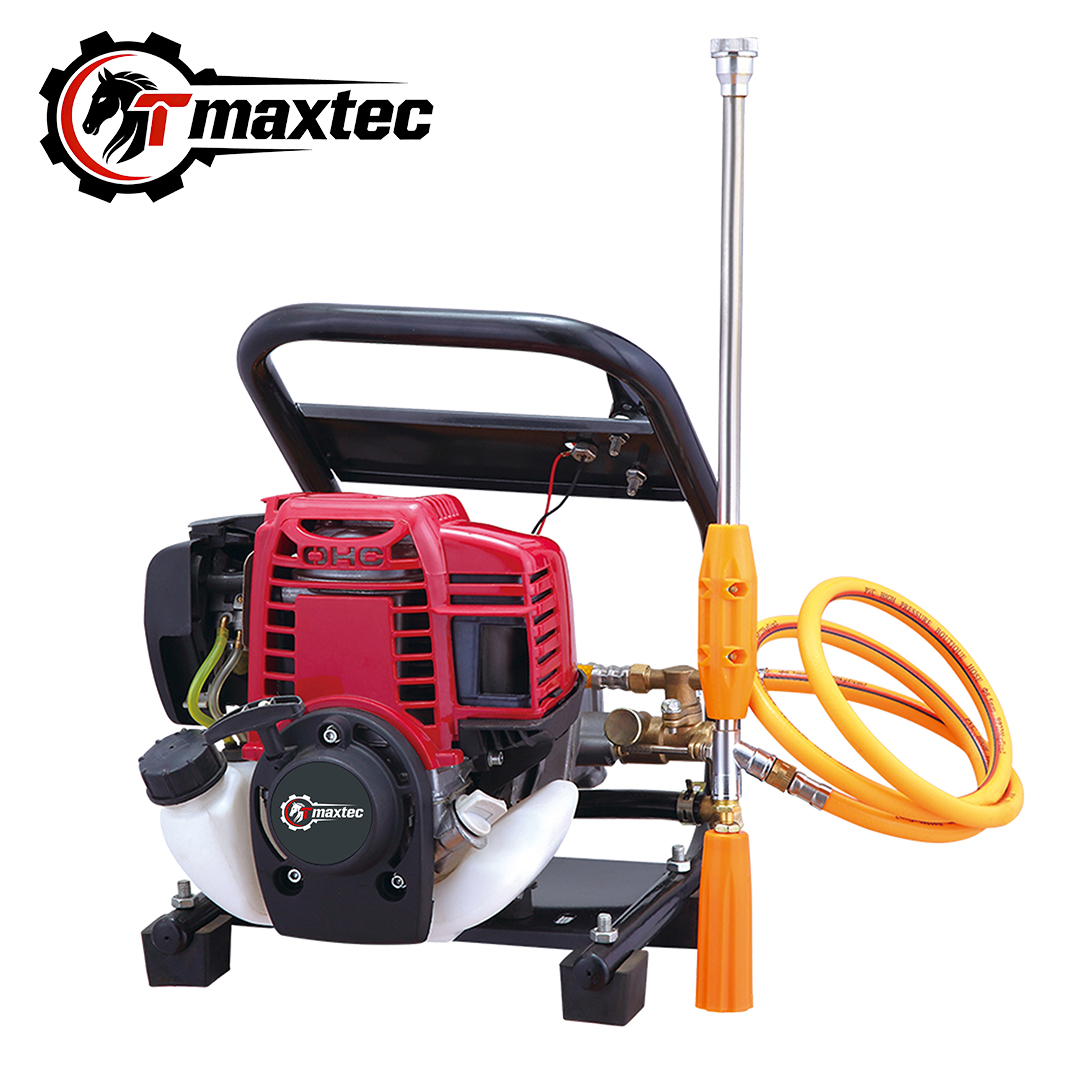
| TM-PTU26 25.6 cc TU26 2-stroke engine |
Relevant for:
|
|
The main service risk is incorrect gasoline-and-oil mixing. Too little oil can reduce lubrication. Too much oil may contribute to smoke, carbon deposits, spark-plug fouling, and unstable running.
When the TM-PGX35 4-Stroke Power Sprayer Is More Suitable
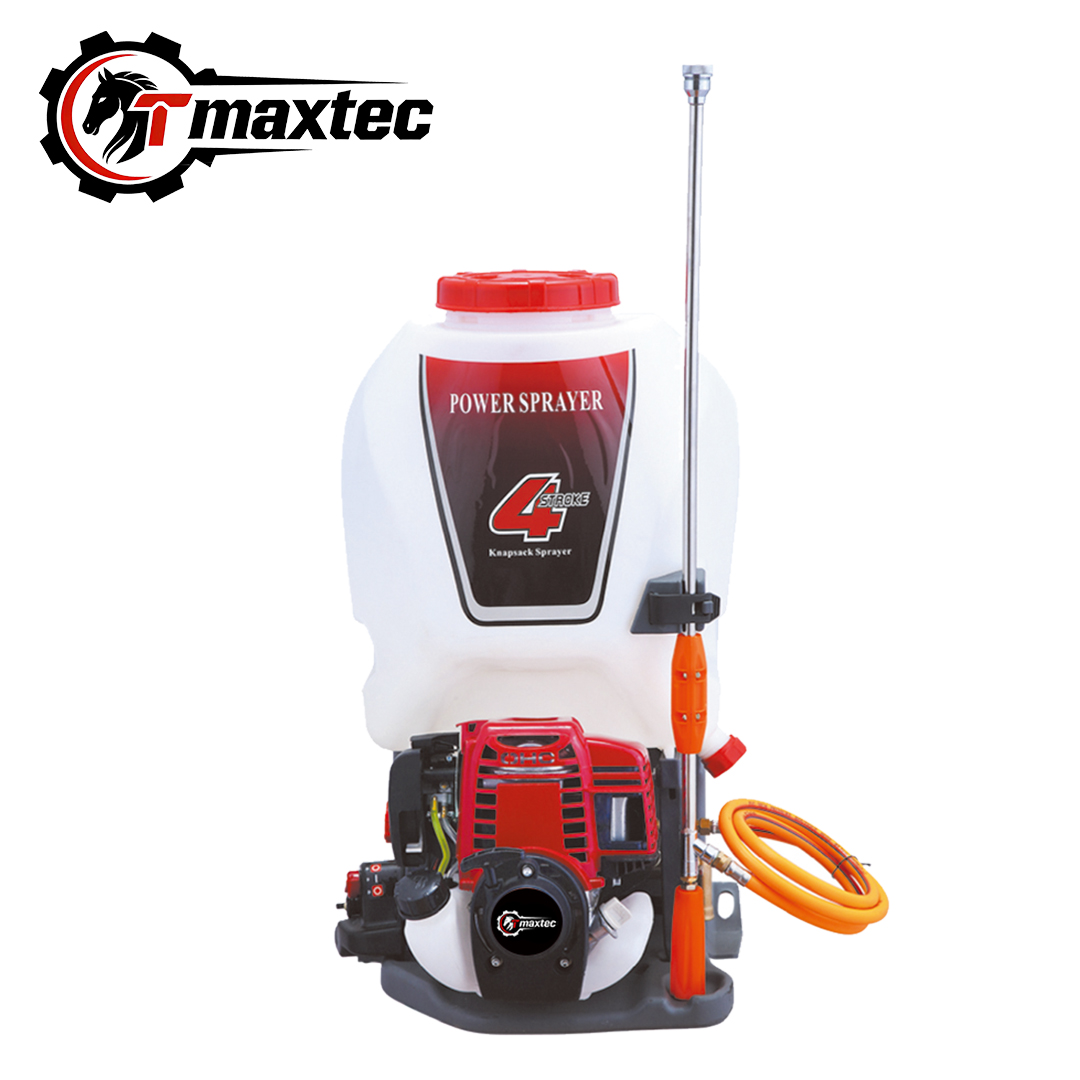
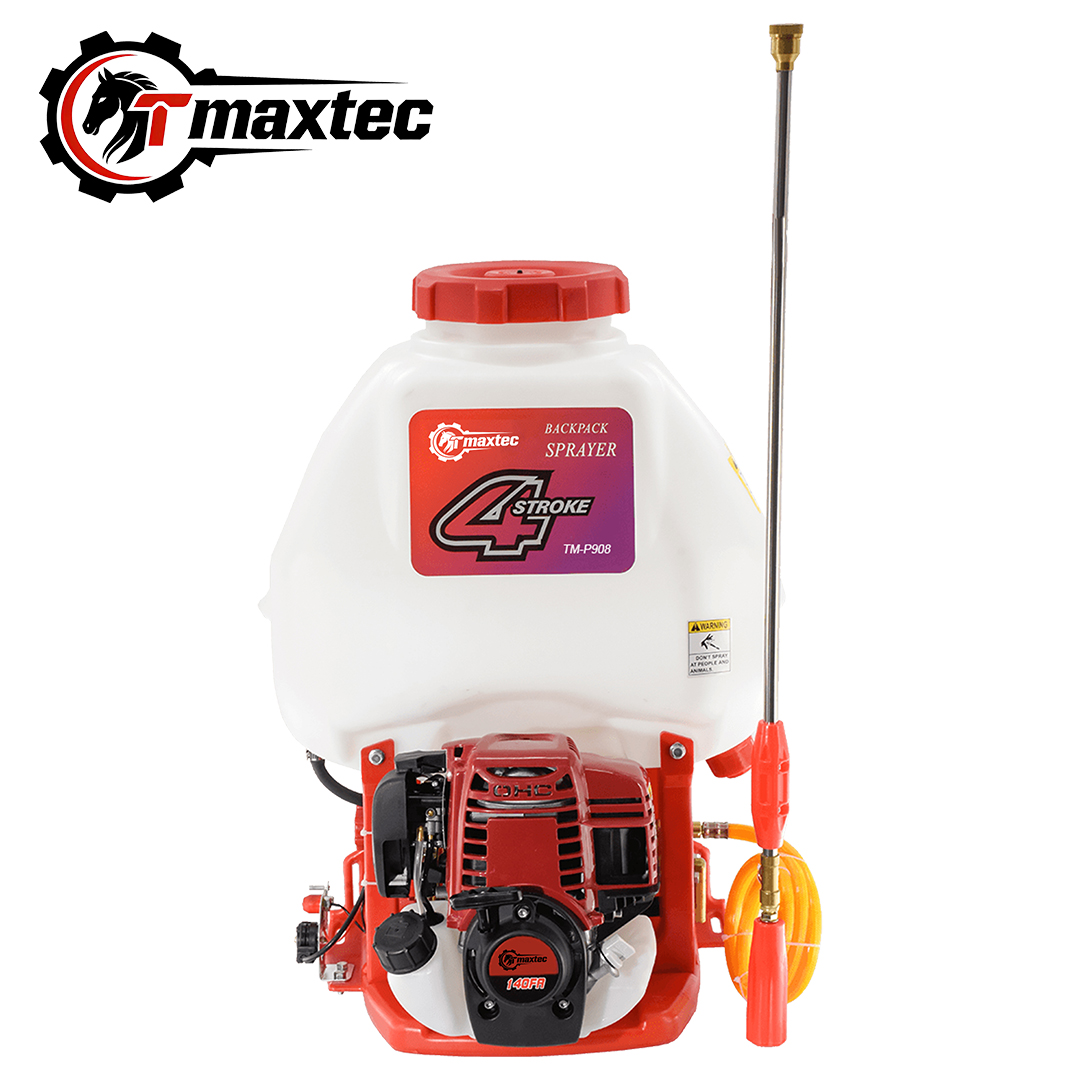
The TM-PGX35 GX35 power sprayer uses a 4-stroke engine with a listed output of 1.1 kW at 7,500 rpm. It is the more relevant comparison for buyers who want to fill gasoline without preparing a gasoline-and-oil mixture.
This model may also fit distributors serving customers who expect longer repeated spraying sessions, already use GX35-powered agricultural equipment, or prefer a higher-positioned option beside a basic 2-stroke sprayer.
A 4-stroke engine does not remove the need for operator training. Users must check the engine-oil level, use the specified oil grade, keep the air filter clean, and avoid running the engine when lubrication is insufficient.
The maintenance risk changes rather than disappears. A 2-stroke system requires correct fuel mixing, while a 4-stroke system requires separate gasoline and engine-oil control.
Compare Fuel Handling, Pump Load, and Pressure Stability
Buyers often ask which power sprayer uses less fuel. A dependable conclusion cannot be made from engine type alone unless both models are tested under the same pressure, nozzle, hose, flow, and operating conditions.
Actual fuel use can change with engine speed, regulator setting, nozzle opening, pump load, idle time, maintenance condition, and the length of each spraying cycle. For purchasing decisions, fuel handling is often easier to evaluate than an unsupported fuel-consumption estimate.
| Operating Task | 2-Stroke Fuel Routine | 4-Stroke Fuel Routine |
| Before filling | Measure gasoline and the specified 2-stroke oil. | Check gasoline supply and engine-oil level separately. |
| During preparation | Mix only a suitable amount and prevent dirt or water contamination. | Avoid putting gasoline into the oil opening or oil into the fuel tank. |
| Main operator error | Wrong oil ratio or use of old premixed fuel. | Low oil level, incorrect oil, or missed oil changes. |
| Dealer training focus | Correct ratio, clean mixing container, and fuel-storage control. | Oil-level inspection, oil-fill identification, and maintenance intervals. |
Engine choice should also not be used to compensate for a spraying fault. A machine that pulses, loses pressure, or sprays weakly may have a suction leak, blocked strainer, oversized nozzle, incorrect return-hose installation, worn pump seals, or a sticking pressure regulator.
- Confirm that the engine reaches normal operating speed under load.
- Inspect the suction hose and connections for air entry.
- Clean the inlet strainer and check liquid flow to the pump.
- Verify the return-hose routing and pressure-regulator response.
- Compare nozzle opening with the intended pressure and flow.
- Inspect pump valves, seals, and packing when leakage or unstable pressure continues.
If the engine maintains speed but spray delivery remains irregular, investigate the pump, regulator, hose, and nozzle before assuming that a higher-output engine is required.
Local Repair Conditions and Spare Parts Can Decide the Better Engine
An engine may look suitable in a product comparison but still create after-sales pressure if local workshops cannot identify or source its carburetor, recoil starter, ignition coil, air filter, gaskets, or routine service parts.
A TU26-type 2-stroke engine may be easier to support in markets where small gasoline tools are already widespread. A GX35-type 4-stroke engine may be more attractive where mechanics regularly service 4-stroke brush cutters, power sprayers, or related equipment.
A familiar engine name does not guarantee that the pump, frame, coupling, hose thread, pressure control, or accessories are interchangeable. Compatibility should be confirmed for the exact selected model and final order configuration.
Importer and Dealer Procurement Audit
A meaningful 2-stroke vs 4-stroke power sprayer quotation comparison requires more than checking the engine column. Use the following audit before approving samples, bulk orders, or repeat-order specifications.
| 01 | Confirm the exact engine model, engine type, displacement, and stated output. |
| 02 | Verify the working-pressure range and the pump supplied with that engine. |
| 03 | List the included spray gun, nozzle type, suction hose, return hose, and discharge hose. |
| 04 | Confirm discharge-hose length, internal diameter, connector type, and thread specification. |
| 05 | Check the pressure-regulator design and availability of regulator repair parts. |
| 06 | Review net weight, gross weight, carton size, internal protection, and handling requirements. |
| 07 | Request a separate list of standard engine parts and pump service parts. |
| 08 | Confirm fuel, lubrication, starting, shutdown, storage, and pressure-release instructions. |
| 09 | Compare standard accessories line by line instead of comparing only the final unit price. |
| 10 | Record the confirmed branding, color, carton, labeling, manual, and spare-parts configuration for repeat orders. |
| 11 | Verify whether the target market can service both the selected engine and the supplied pump. |
A lower quotation may exclude hoses, guns, nozzles, strainers, or spare parts that another supplier includes as standard. A higher-priced configuration may also contain accessories that are unnecessary for the intended market.
Treat listed specifications as reference values until the final engine, pump, accessories, branding, color, labeling, and packing are confirmed in the quotation or proforma invoice.
Practical Selection Rule for Distributors
Choose the TM-PTU26 when:
|
Choose the TM-PGX35 when:
|
Neither engine type is automatically suitable for every farm or distribution market. The correct selection should match operator experience, field size, transport frequency, spraying duration, local mechanics, spare-parts access, and the service capability of the dealer.
For importers comparing the TM-PTU26 and TM-PGX35, the next step is to confirm the complete hose, gun, nozzle, pump, packing, and spare-parts configuration rather than selecting by engine name alone.
Frequently Asked Questions
Is a 4-stroke power sprayer always better than a 2-stroke model?
No. A 4-stroke model can simplify fuel filling because gasoline and engine oil are managed separately, but it still requires correct oil-level checks and suitable local servicing. A lighter 2-stroke model may be more practical where mixed fuel and TU26 repairs are already familiar.
Do the TM-PTU26 and TM-PGX35 have the same working pressure?
Both are listed with a working pressure range of 1.5–2.5 MPa. This does not mean that every hose, nozzle, flow, or pump response will be identical. The complete spraying configuration must be compared.
Which model is easier to carry between fields?
The TM-PTU26 has listed net and gross weights of 6.5 kg and 7.5 kg, making its weight relevant for frequent lifting and repositioning. The final weight of any compared configuration should still be confirmed before ordering.
Will a higher-output engine fix weak or pulsing spray pressure?
Not necessarily. Weak or unstable spraying may result from suction leaks, restricted strainers, incorrect regulator adjustment, oversized nozzles, hose problems, or worn pump valves and seals. Inspect the liquid circuit before changing engine size.
What should be included in a wholesale power sprayer spare-parts package?
The package should be based on the confirmed model. Common review items include air filters, spark plugs, recoil parts, carburetor service parts, pump packing, valves, regulator components, hose connectors, gun seals, nozzles, and strainers.
What is the most important check in a 2-stroke vs 4-stroke power sprayer quotation?
Confirm the complete configuration rather than comparing only engine names. The pump, pressure regulator, gun, nozzle, suction hose, return hose, discharge hose, connectors, packing, manuals, and spare parts can change the real value of the quotation.
| Compare the Complete Power Sprayer Configuration
Review the TM-PTU26 and TM-PGX35 according to local fuel habits, field workload, service capability, pump accessories, and wholesale spare-parts requirements. |
|