
Why Is a Manual Reel Mower Hard to Push Across the Lawn?
Find why a manual reel mower becomes hard to push, how to check reel clearance, grass height, wheels and gears, and when a 14- or 16-inch model fits.
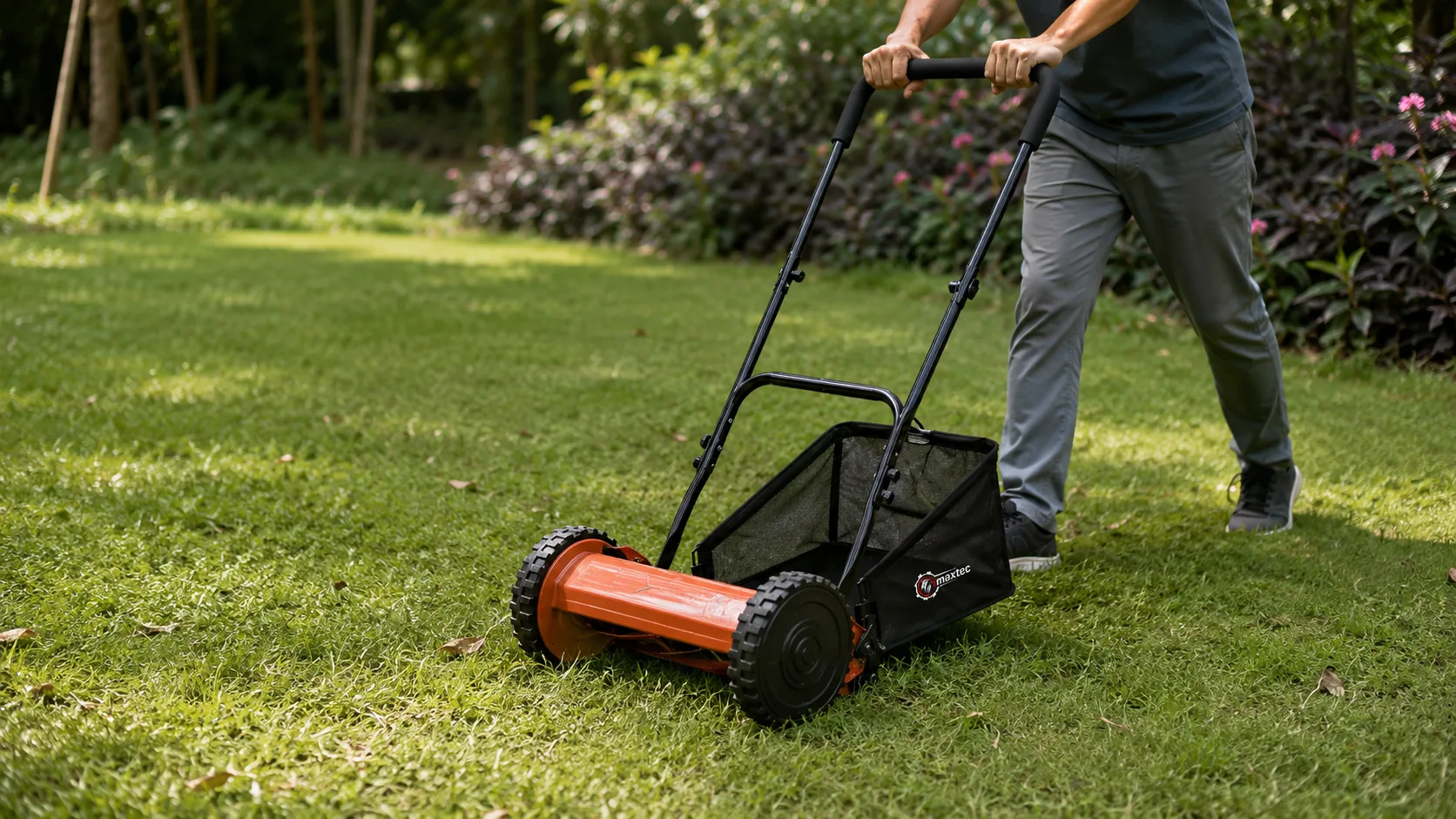
Manual Mower Troubleshooting
Manual Reel Mower Hard to Push? Causes, Checks, and Model Selection
A manual reel mower hard to push is usually reacting to excessive grass load, an unsuitable cutting-height setting, tight reel-to-bed-knife contact, trapped debris, or resistance in the wheels and metal gears. The first diagnostic step is not to loosen the blades. Move the mower away from tall grass and test it on a flat, firm surface.
This guide focuses specifically on excessive pushing resistance. It does not cover a mower that rolls normally but leaves uncut strips or misses individual grass stems. Those complaints may require a different review of blade sharpness, reel clearance, mowing direction, and lawn condition.
| 01 |
Quick answer: Test the mower on a path, workshop floor, or very short dry grass. If it rolls normally there but becomes heavy on the lawn, raise the cutting height and reduce the amount of grass entering the reel. If it remains difficult away from grass, inspect reel contact, wrapped material, wheel axles, metal gears, and frame alignment. Importers and dealers should also conduct a rolling test after assembly because an uneven handle, distorted frame, or excessively tight factory adjustment can feel like a cutting fault. |
Test the Mower Away From Tall Grass First
A manual reel mower naturally creates some pushing resistance because the forward movement of the wheels drives the cutting reel. That resistance should feel steady. The mower should not stop every few steps, require sudden extra force, or make one wheel drag significantly more than the other.
Place the mower on a flat path, workshop floor, or a short section of dry, recently maintained lawn. Push it forward slowly while watching the wheels and reel.
| Observed Condition | Likely Area | First Action |
| Moves freely on a path but becomes heavy in grass | Grass height, moisture, cutting height, or mowing speed | Test on shorter, dry grass and raise the mower one setting. |
| Remains difficult on a hard surface | Reel clearance, axle resistance, gears, or trapped debris | Lift the mower safely and compare both wheel sides. |
| One wheel turns while the other drags | Affected wheel, axle, cover, or gear side | Inspect for wrapped grass, rubbing, excessive side play, or misalignment. |
| Both wheels turn but the reel stops | Drive engagement or gear transmission | Stop forcing the mower and inspect the drive mechanism. |
Grass Height, Moisture, and Cutting Height Change Pushing Effort
Manual reel mowers work most comfortably when grass is cut regularly. Each forward movement rotates the reel and shears the grass against the stationary lower blade. Taller, denser, or folded grass places more material into this cutting area at once, increasing the force required from the operator.
Wet grass can create additional resistance even when the mower has no mechanical fault. Moist grass bends rather than standing upright, sticks to the reel, and collects around the lower blade and wheel areas. Mixed clumps of grass and soil can become firm enough to rub against moving parts.
Use a higher setting when:
|
Reduce cutting load by:
|
The lowest available cutting setting is not automatically the most suitable one. Local grass species, seasonal growth, lawn evenness, soil softness, and mowing frequency all affect the practical cutting height.
A hand-push reel mower should not be forced through neglected weeds as though it were a powered rotary mower. Long, fibrous, or folded growth can overload the reel, lower blade, metal gears, and wheel-drive components.
Check Reel-to-Bed-Knife Contact Before Replacing Parts
The rotating reel must work close to the fixed lower blade, commonly called the bed knife. Excessive contact between these two components creates constant drag, scraping noise, and tight spots during rotation.
A light, even cutting sound may be normal depending on the mower design and adjustment method. Heavy grinding, a reel that cannot complete a full rotation, or resistance occurring at the same position every turn requires inspection.
- Place the mower on a stable, level surface.
- Prevent it from rolling unexpectedly.
- Wear gloves and keep hands away from cutting edges.
- Turn the drive wheel slowly in the normal operating direction.
- Listen for even contact across the full cutting width.
- Note whether resistance increases on one side or at one point in every rotation.
If the reel is tight across its full width, the blade adjustment may be too close. If it binds mainly on one side, the adjustment may be uneven. If it binds at the same rotational point, inspect for a damaged reel blade, alignment problem, or foreign object.
Do not loosen both sides by a large amount simply to make the mower roll freely. Excessive clearance can reduce cutting quality even though pushing becomes easier. Adjust in small steps according to the mower structure and verify that cutting remains consistent across the reel width.
Inspect Debris, Wheel Axles, Metal Gears, and Drive Engagement
Material causing resistance is not always visible from above. Long grass, irrigation twine, plastic string, fibrous weeds, and compacted soil can wrap around the reel ends or collect behind the wheels.
After securing the mower, inspect both reel ends, the gaps behind the wheels, axle retaining points, gear covers, the space around the fixed blade, grass deflectors, and the underside of the frame. A brush or suitable blunt cleaning tool is safer than reaching into the cutting area by hand.
| Mechanical Symptom | Possible Cause | Inspection Priority |
| One wheel requires more force | Wrapped grass, dirty axle, rubbing cover, or misalignment | Compare both sides before removing gears. |
| Wheel moves sideways excessively | Loose retaining point, wear, or incorrect assembly | Inspect axle fit and wheel-to-frame clearance. |
| Gear clicks or drives intermittently | Poor engagement, debris, damaged teeth, or incorrect fitting | Stop forcing the mower and inspect the drive side. |
| Wheel touches frame or cover | Frame distortion, cover position, or assembly error | Check transport condition and frame alignment. |
| Reel remains tight after correct adjustment | Axle resistance, reel damage, or wheel-drive problem | Separate cutting-system resistance from wheel resistance. |
Do not apply lubricant directly to the reel or fixed cutting blade. Lubrication points and lubricant type depend on the mower construction. Excess oil in exposed areas can collect dust, soil, and grass particles.
A difficult wheel does not automatically require gear replacement. The real cause may be wrapped debris, fasteners installed too tightly, an incorrectly fitted cover, or frame misalignment after transport.
Assembly and Transport Problems Can Feel Like Cutting Resistance
Manual lawn mowers are commonly packed with the handle removed or partially disassembled. Incorrect handle installation can change the pushing angle, pull the frame unevenly, or cause one side of the mower to track differently.
After Assembly
|
Rolling Test
|
A frame compressed during transport may allow one wheel to rub against a cover or prevent both wheels from remaining parallel. This can make the mower feel heavy even when the reel-to-bed-knife adjustment is acceptable.
Dealers should perform a short rolling test after final assembly and before placing the mower on display. This small inspection can identify handle errors, wheel interference, transport distortion, and unusually tight reel adjustment before the machine reaches the end user.
TM-ML350 vs TM-ML400: Which Width Is Easier to Push?
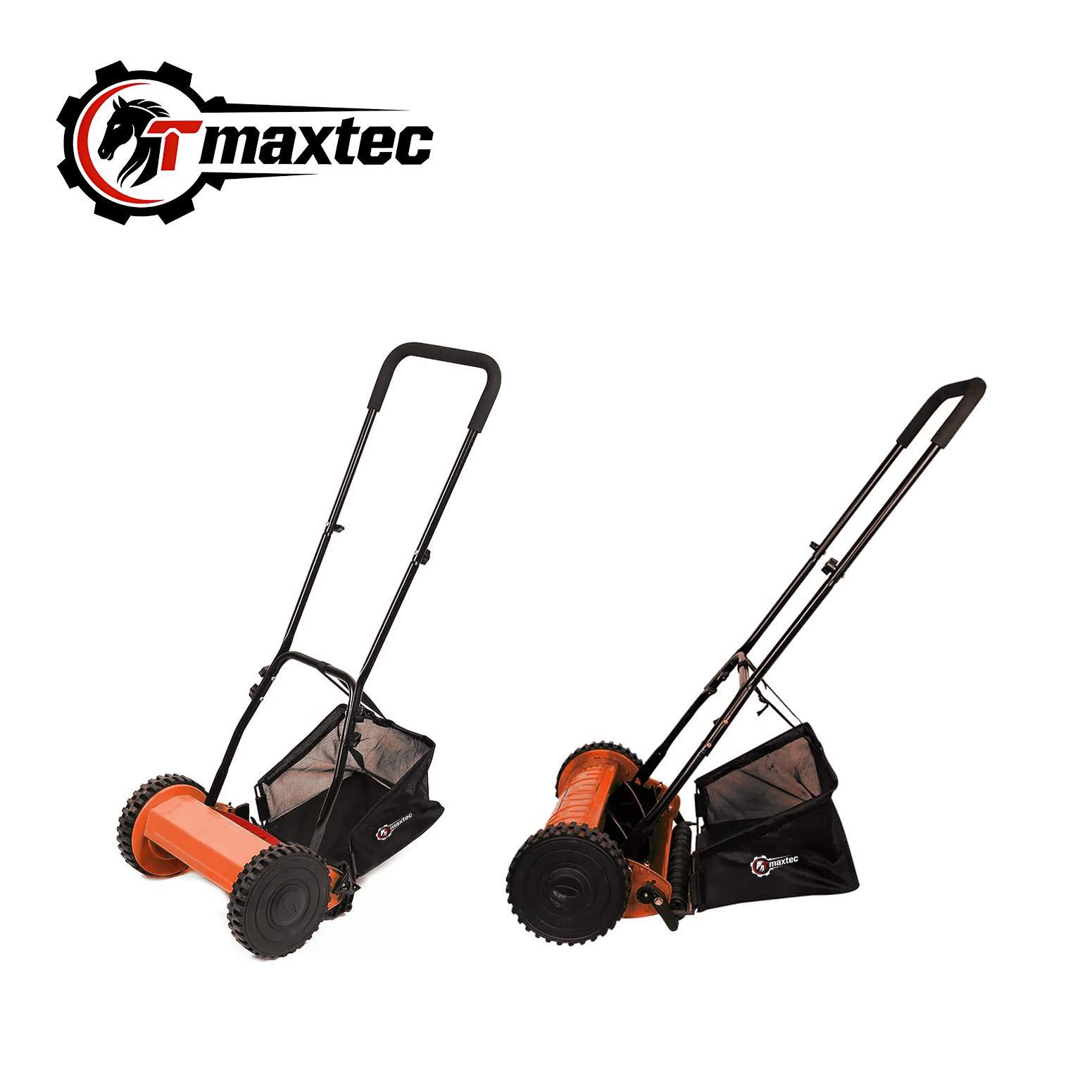
The TM-ML350 and TM-ML400 are hand-push reel mowers with aluminium wheels, metal gears, and metal blades. The main listed differences relevant to pushing effort are cutting width and machine weight.
| Model | Cutting Width | Listed Net Weight | More Relevant Application |
| TM-ML350 | 350 mm / 14 inches | 9.5 kg | Compact lawns, narrow sections, frequent turns, and users prioritizing manoeuvrability |
| TM-ML400 | 405 mm / 16 inches | 10 kg | Wider, open residential lawns maintained on a regular schedule |
A narrower reel places less grass into the cutting area during each pass. This may make the mower easier to control in dense grass, small yards, narrow paths, or areas with frequent direction changes. A wider reel covers more ground per pass, but it can also encounter more cutting load when the lawn is dense or overgrown.
| TM-ML350 Manual Lawn Mower
The 14-inch cutting width is worth comparing for smaller residential lawns, narrow garden sections, and users who value easier turning and repositioning.
|
TM-ML400 Manual Reel Mower
The 16-inch cutting width may reduce the number of passes on open lawns, provided the grass is maintained regularly and the reel is correctly adjusted.
|
The listed net-weight difference is only 0.5 kg, so machine weight alone does not explain operating effort. Grass condition, cutting width, reel clearance, wheel resistance, cutting-height selection, and lawn evenness can have a greater effect on how heavy the mower feels.
When to Stop Pushing and Inspect the Mower
Stop using the mower when resistance increases suddenly, one wheel locks, the reel strikes a hard object, or metal grinding becomes noticeable. Continuing to force the machine can damage cutting edges, metal gears, axle points, or frame alignment.
- The reel cannot complete a full rotation.
- Resistance occurs at the same point every turn.
- One side of the reel contacts the fixed blade heavily.
- A wheel visibly tilts or rubs against the frame.
- The mower became difficult immediately after assembly.
- The problem appeared after transport or impact.
- Blade adjustment cannot produce even resistance across the width.
Cleaning may solve wrapped debris, a small equal adjustment may correct excessive reel contact, and wheel servicing may remove axle resistance. Replacement should only be considered after the affected component has been identified.
Importer and Dealer Checklist for Manual Reel Mowers
For wholesale orders, the cutting width should match the lawn types common in the target market. Dealers should also verify assembly, rolling resistance, parts support, and repeat-order consistency before approving a shipment.
|
Before Ordering
|
Before Shipment or Delivery
|
Specifications and included parts should be confirmed according to the final order configuration. A properly selected, assembled, cleaned, and adjusted manual reel mower should roll with steady cutting resistance rather than feeling locked or excessively heavy.
Frequently Asked Questions
Why is my manual reel mower suddenly hard to push?
A sudden increase in resistance may come from wrapped grass, string around an axle, a wheel rubbing the frame, a hard object in the reel, or a blade section binding at one rotational point. Stop pushing and inspect before continuing.
Is some scraping noise normal on a manual reel mower?
A light and even cutting sound may be normal depending on the mower design. Heavy grinding, uneven contact, or a reel that stops at the same point every rotation indicates excessive contact, damage, or misalignment.
Does lowering the cutting height make a reel mower harder to push?
Yes. A low setting increases the amount of grass entering the reel and may cause the lower mower section to contact uneven ground, exposed roots, dense thatch, or soft soil.
Should I loosen the reel blades to make the mower easier to push?
Only after confirming that excessive reel-to-bed-knife contact is the cause. Make small, even adjustments. Loosening too far may improve rolling effort but reduce cutting consistency.
Is a 14-inch manual mower easier to push than a 16-inch mower?
A 14-inch model may feel easier in dense grass, small lawns, and areas with frequent turns because less grass enters the reel during each pass. A 16-inch model may be efficient on open, regularly maintained lawns.
What manual mower checks should a dealer perform before delivery?
Confirm handle assembly, frame level, wheel alignment, full reel rotation, even blade contact, smooth gear engagement, and the absence of packaging material or transport interference around the wheels and cutting assembly.
| Compare Manual Reel Mower Widths Before Ordering
Select the TM-ML350 or TM-ML400 according to lawn size, grass condition, turning space, cutting frequency, parts support, and local customer expectations. |
|