
Why Does a Chainsaw Stall Only When the Chain Enters Wood?
A chainsaw that stalls in wood may have a dull chain, excess chain tension, poor fuel delivery, clutch drag, or a cutting setup that overloads the engine.
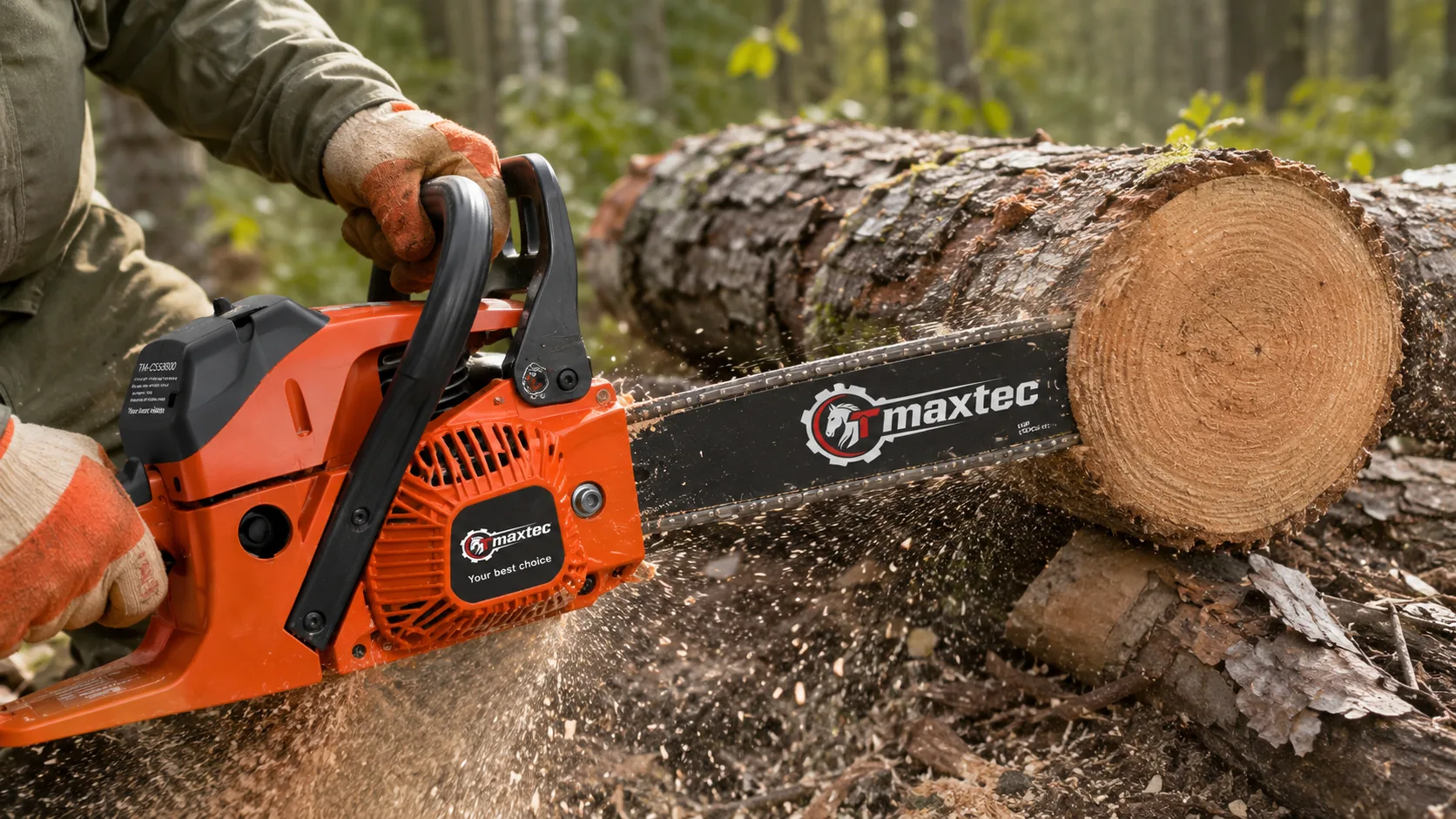
| SERVICE GUIDE |
Chainsaw Stalls When Cutting Wood: Causes and Troubleshooting |
A chainsaw that revs normally without load but stalls when the chain enters wood is usually facing excessive cutting resistance or insufficient fuel delivery under working demand. The first checks should be chain sharpness, chain tension, guide-bar condition, lubrication, chain-brake release, and cutting technique—not immediate carburetor adjustment.
This symptom must be separated from a drive-system fault. If the engine continues running at high speed while the chain slows or stops, inspect the clutch, drive sprocket, guide bar, chain, and brake mechanism. The troubleshooting sequence below applies when engine speed also drops during the cut.
| 1 | Quick answer: Confirm that the chain is sharp, correctly tensioned, properly lubricated, and able to move freely around the bar. |
| 2 | Clean the bar groove and oil holes, check the nose sprocket and chain brake, and reduce excessive operator pressure. |
| 3 | Inspect the air filter, exhaust outlet, fuel filter, fuel lines, and tank vent only after cutting-system drag has been eliminated. Importers should include a controlled cutting test rather than relying only on free-revving inspection. |
Identify Whether the Engine or Chain Is Losing Speed
Observe what happens at the moment the cutters enter the timber. This distinction prevents unnecessary engine work and helps dealers decide whether the problem belongs to the cutting system, drive system, or fuel-air system.
| Observed Behaviour | More Likely Area | First Inspection |
| Engine and chain both slow in the cut | Cutting resistance, fuel delivery, airflow, compression | Chain, tension, bar, oil supply, fuel flow |
| Engine remains fast but chain slows | Clutch, drive sprocket, brake, chain binding | Clutch engagement and drive components |
| Cuts briefly, then gradually loses speed | Tank vent, fuel filter, fuel line, carburetor diaphragm | Sustained fuel delivery under load |
| Bar becomes hot and produces fine dust | Dull chain, poor lubrication, excessive tension | Sharpening, oil delivery, bar friction |
If the saw cannot maintain controlled chain speed, stop cutting rather than forcing the bar deeper into the wood. Continued operation can overheat the clutch, bar, chain, sprocket, cylinder, and fuel system.
Check Chain Sharpness Before Testing the Engine
A dull chain is one of the most common reasons a chainsaw appears strong in the air but weak inside wood. Rounded cutters rub against the timber instead of removing chips, forcing the operator to apply more pressure and increasing load on the engine.
Signs of an Effective Chain
|
Signs of a Dull or Uneven Chain
|
Inspect the cutters on both sides. Unequal cutter length, inconsistent filing angle, damaged cutting edges, or incorrect depth-gauge height can create heavy and uneven resistance. Depth gauges that remain too high prevent the cutters from taking an effective bite. Gauges filed too low can make the chain grab aggressively and increase kickback risk.
Sharpen according to the chain specification and maintain similar cutter length on both sides. Replace the chain if cutters are cracked, severely damaged, or too short for safe sharpening.
Remove Friction From the Chain, Bar and Brake System
A sharp chain can still overload the engine if it is overtightened, poorly lubricated, pinched by the guide-bar rails, or restricted by a partially engaged chain brake.
- Release the chain brake and check movement. With the engine stopped and cool, wear gloves and pull the chain around the bar. It should move smoothly without tight points.
- Confirm correct chain tension. The drive links should remain engaged in the bar groove, but the chain should not be clamped tightly against the underside of the bar.
- Recheck tension after warm-up. Chain and bar temperature changes can alter tension during use.
- Clean the guide-bar groove. Remove compacted sawdust and oil residue that can restrict drive-link movement.
- Inspect the bar rails. Burrs, uneven wear, and deformation may pinch or tilt the chain.
- Check the nose sprocket. Where fitted, it should turn freely without roughness or seizure.
- Verify full brake release. A dragging chain brake may allow free acceleration but create severe resistance during cutting.
Do not compensate by leaving the chain excessively loose. A loose chain can leave the bar, damage the drive links, strike the operator, and cause further damage to the guide bar and sprocket.
Confirm Bar-Oil Delivery and Reduce Cutting Load
Insufficient lubrication increases heat and friction between the chain, guide-bar rails, and nose sprocket. The saw may accelerate normally without touching timber but lose engine speed when cutting pressure is added.
Fill the chain-oil tank with suitable bar and chain oil. Clean the oil holes in the guide bar and the outlet area on the saw body. A full oil tank does not guarantee that oil is reaching the chain if sawdust blocks the delivery passages.
| Oil Tank | Oil Passage | Chain Condition |
| Check oil level, cap sealing, pickup condition, and tank venting. | Clear the guide-bar oil hole and the outlet on the saw body. | Look for dryness, discoloration, overheating, smoke, or rapid rail wear. |
A brief lubrication test can be performed by running the saw at a safe distance over a clean, light-coloured surface. A functioning system should normally leave a light line of oil. Keep the bar pointed away from people and surrounding objects.
Cut with chain speed rather than body weight. Let a sharp chain feed itself into the timber. Where bumper spikes are fitted, use them as a controlled pivot instead of forcing the full guide bar into the cut.
- Avoid burying the complete bar in wide timber unless necessary.
- Remove soil and abrasive contamination from bark where practical.
- Plan the cut so the timber does not close and pinch the guide bar.
- Avoid uncontrolled cutting with the upper tip area of the bar.
- Use a bar length suited to the timber rather than automatically selecting the longest option.
Check Airflow, Exhaust and Fuel Delivery Under Load
Once cutting-system resistance has been eliminated, inspect the engine systems that must support sustained working speed.
| A | Air filter: Fine sawdust, oil, damage, or incorrect seating can restrict airflow at high engine speed. Clean or replace the filter using the appropriate method for its material. |
| B | Exhaust outlet: Carbon in the muffler outlet or spark-arresting screen can limit engine speed under load. Inspect only after the muffler has cooled completely. |
| C | Fuel filter and pipes: A partially restricted filter, hardened hose, loose connection, or air leak may supply enough fuel for free acceleration but not for a sustained cut. |
| D | Tank vent and carburetor: If the saw cuts normally for a short period and then fades, tank vacuum or a weak carburetor diaphragm may be restricting fuel delivery. |
Use fresh fuel mixed according to the confirmed model requirement. Running better with partial choke may suggest a lean condition, but the choke should not be used as a permanent operating solution.
Avoid changing carburetor screws before chain drag, lubrication, bar condition, air filtration, exhaust flow, and fuel quality have been checked. Incorrect adjustment may hide the original fault and create overheating, plug fouling, or excessive fuel consumption.
TM-CS5800 Bar-Length and Load Considerations
TM-CS5800 Gasoline ChainsawA 55 cc chainsaw offered with 20-inch or 22-inch guide-bar options. Bar selection should reflect typical timber diameter, chain maintenance capacity, and local operator habits. |
||||||||||
|
||||||||||
|
A 22-inch bar carries a longer chain and may place more cutters in contact with the timber during a full-width cut. It can suit larger material, but chain sharpness, oil delivery, operator pressure, and fuel-system condition become more noticeable when the saw is heavily loaded. A 20-inch configuration may be easier to keep within an effective chain-speed range when typical timber does not require the additional reach. Chain pitch alone is not sufficient for spare-parts ordering; chain gauge, drive-link count, guide-bar mount, and sprocket compatibility must also be confirmed.
|
Importer and Dealer Cutting-Test Checklist
| No. | Inspection Point | Acceptance Check |
| 1 | Cold starting | Normal choke operation, starting effort, and stable initial running |
| 2 | Warm restart | Restarts after reaching normal working temperature |
| 3 | Chain sharpness | Produces chips and enters suitable timber without excessive pressure |
| 4 | Chain tension | Moves freely while remaining engaged in the guide-bar groove |
| 5 | Oil delivery | Chain receives oil and does not show dry running or abnormal heat |
| 6 | Chain-brake operation | Engages and releases fully without remaining drag |
| 7 | Controlled cutting test | Engine maintains useful speed in suitable timber |
| 8 | Post-test inspection | No abnormal bar heat, chain tightening, leakage, vibration, or dry running |
| 9 | Bar configuration | 20-inch or 22-inch option matches the intended market and timber size |
| 10 | Spare-parts matching | Chains, bars, sprockets, filters, starter parts, and carburetor kits match the ordered configuration |
A no-load acceleration test cannot reproduce the resistance created by timber, chain friction, and bar contact. Controlled cutting inspection is therefore more useful for identifying dull chains, poor oil delivery, incorrect tension, fuel starvation, and clutch problems before delivery.
Frequently Asked Questions
| Q1 |
Why does my chainsaw rev but stop when it touches wood?The chain may be dull, overtightened, dry, or restricted by the guide bar or brake. If the cutting system moves freely, inspect fuel delivery, airflow, exhaust restriction, and compression. |
| Q2 |
Can an overtightened chain make the engine stall?Yes. Excessive tension creates continuous friction around the bar. The added resistance becomes much more noticeable when the cutters enter timber. |
| Q3 |
How can I tell whether the chain is too dull?A dull chain commonly produces fine dust, cuts slowly, creates bar heat, and requires strong downward pressure. A sharp chain normally produces visible chips and feeds into the timber more easily. |
| Q4 |
Why does the chainsaw cut for a minute and then lose power?A restricted fuel-tank vent, partially blocked fuel filter, deteriorated fuel pipe, weak carburetor diaphragm, or heat-related ignition problem may appear only after sustained operation. |
| Q5 |
Should I adjust the carburetor when a chainsaw stalls in wood?Not as the first step. Confirm chain sharpness, tension, lubrication, bar condition, brake release, air filtration, exhaust flow, and fuel quality before changing mixture settings. |
| Q6 |
Is a 22-inch guide bar more likely to overload a chainsaw?A longer bar does not automatically cause stalling, but it carries a longer chain and may place more cutters in the timber during a full-width cut. Maintenance, lubrication, timber diameter, and operator pressure become more important. |
Match the TM-CS5800 to Local Cutting WorkConfirm the 20-inch or 22-inch bar option, chain gauge, drive-link count, sprocket, carburetor configuration, supplied accessories, packing, and dealer spare-parts package before placing a bulk order. A controlled cutting test should be included in sample and pre-delivery inspection. |
|
Source draft: :contentReference[oaicite:0]{index=0}