
Why Is a 52cc Brush Cutter Using More Fuel Than Expected?
A 52cc brush cutter may use too much fuel because of a rich mix, closed choke, leakage, airflow restriction or excessive cutting load. Check it in order.
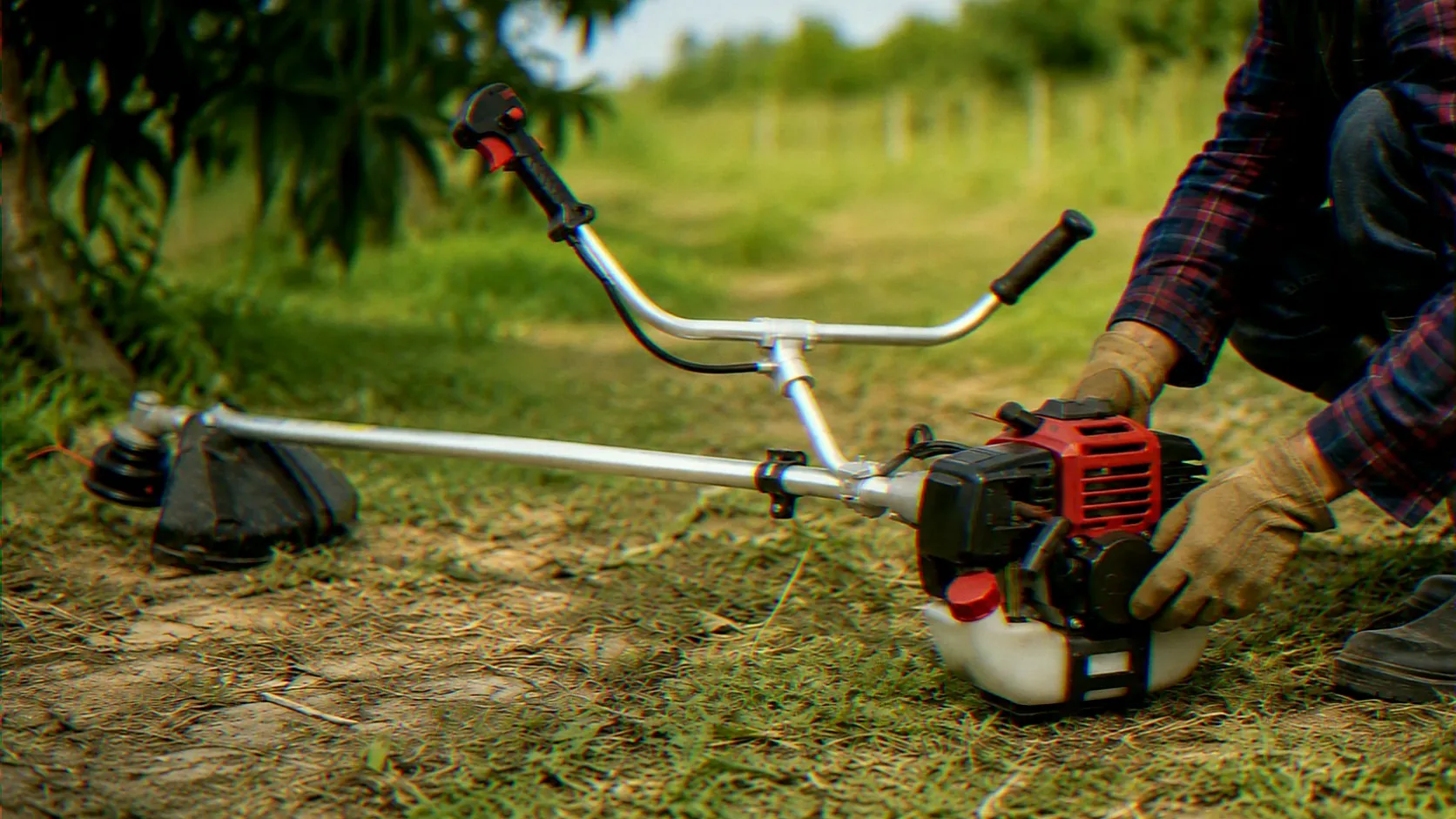
Fuel Consumption Troubleshooting
52cc Brush Cutter Using Too Much Fuel: Causes and Dealer Checks
A 52cc brush cutter using too much fuel may still start, accelerate and cut normally. The problem is often caused by a choke that does not open completely, an incorrectly measured two-stroke fuel mix, fuel escaping from the tank system, restricted airflow or a cutting attachment that keeps the engine under unnecessary load.
This guide is limited to a machine that operates but empties its tank faster than expected. It does not cover fuel dripping directly from the carburetor, an engine that dies when the throttle is opened, a cutting blade that stops under load or a cutting attachment that rotates at idle. Those symptoms require separate troubleshooting.
1. Measure Fuel Use Before Diagnosing a Fault
A large two-stroke brush cutter will not use the same amount of fuel in every application. Continuous cutting in thick weeds, repeated acceleration, a heavy metal blade and long periods at full throttle all increase fuel demand. One tank that appears to finish quickly is not enough evidence unless the working conditions are known.
Use a measured comparison rather than relying on operator impressions. Record the starting fuel level, actual cutting time, vegetation type, attachment and time spent at full throttle. Test the same machine on similar material with the same blade or trimmer head. A sudden increase under an unchanged workload is more meaningful than comparing two operators working in different fields.
| Comparison Point | Normal Influence | Reason to Continue Inspection |
| Vegetation | Dense weeds and woody stems increase load. | Consumption rises on the same grass previously cut with lower fuel use. |
| Attachment | A heavy blade generally requires more engine output than light trimming line. | Fuel use changes without changing the attachment or work. |
| Throttle Time | Continuous full throttle empties the tank faster. | The engine needs more throttle than before to maintain the same cutting speed. |
| Operator Technique | Repeated acceleration and aggressive pushing increase consumption. | Different operators obtain sharply different running times on the same task. |
2. Check Fuel Preparation, Choke Position and Airflow
Confirm the mixed-fuel requirement before touching the carburetor. An inaccurately measured mixture changes combustion behavior and makes later diagnosis unreliable. Excess oil may produce heavier smoke and deposits, while using a ratio intended for another engine may create lubrication or running problems.
Use a graduated container instead of estimating oil by eye. Prepare only a practical quantity, close the container securely, shake it before refilling and avoid fuel that has been stored for an uncertain period. For dealer deliveries, the same ratio should appear in the manual, fuel label and operator handover instructions.
Choke InspectionAfter warm-up, place the control in the normal running position. With the engine stopped, remove the air-filter cover and verify that the choke plate actually opens. A loose lever, restricted linkage or cover interference can leave the plate partly closed even when the external marking appears correct. |
Air-Filter InspectionLook for dust, oil saturation, torn material or heavy blockage. A restricted filter reduces airflow and can create rich-running symptoms similar to a partly closed choke. Clean it according to its material and replace damaged elements. Do not test the engine without filtration in a dusty work area. |
Brush cutters used beside roads, in dry fields or in dusty agricultural areas may require filter service more frequently than machines used for occasional garden trimming. Maintenance intervals should reflect the actual environment rather than a single universal schedule.
3. Separate Fuel Loss From Fuel Being Burned
Fuel leaving the tank is not necessarily passing through the combustion chamber. Small leaks can spread across the tank, hose or carburetor area and evaporate before a clear puddle forms. This can make the machine appear inefficient even when the engine itself is operating normally.
Place the brush cutter on a clean, dry surface and inspect the tank-cap seal, cap threads, fuel lines, tank grommet, primer bulb and carburetor joints. Look for surface wetness, softened hoses, staining or a persistent fuel smell after the machine has been parked.
Repeat the inspection in the normal cutting and transport positions. A damaged cap seal, incorrect replacement cap or overfilled tank may leak only when the machine is tilted. Stop using the machine if fuel reaches the cylinder, muffler or ignition area. Allow it to cool and keep the inspection area away from flames, sparks and smoking materials.
4. Remove Unnecessary Cutting Load
Fuel use increases when the engine repeatedly recovers from excessive cutting resistance. The vegetation may be demanding, but an unsuitable or poorly maintained attachment can add load without increasing the amount of work completed.
| Attachment Area | Observable Problem | Fuel-Use Consequence |
| Trimmer Line | Line is too long, too heavy or not cut by the guard blade. | Excess aerodynamic drag keeps engine demand high. |
| Metal Blade | Blade is blunt, bent, installed incorrectly or unsuitable for the vegetation. | The operator holds more throttle while productive cutting speed falls. |
| Gearbox Area | Grass is wrapped around the blade flange or gearbox output. | Rotational resistance increases throughout each cutting pass. |
| Guard Clearance | Blade or attachment contacts the guard. | Continuous friction wastes engine output and may create a safety risk. |
A 52cc engine is commonly selected for heavier field maintenance, but displacement does not eliminate the need to match the blade, technique and vegetation. Forcing the attachment into dense material can leave the throttle fully open while engine speed collapses and less area is cleared.
Use controlled sweeping passes and allow cut vegetation to clear. Release the throttle while repositioning instead of holding maximum speed between cutting areas. When several operators share one machine, compare line length, blade condition, cutting height and work pattern before concluding that the carburetor is responsible.
5. Check Throttle Return Before Adjusting the Carburetor
Release the trigger and confirm that it returns freely. Inspect the cable for tight routing, kinks or incorrect adjustment. The carburetor throttle lever should return fully to its stop instead of remaining partly open during pauses.
An unnecessarily high idle setting uses extra fuel whenever the operator stops cutting. However, do not lower idle speed only to improve tank duration if the engine then stalls. If the blade or trimmer head rotates at idle, investigate that separate safety symptom because clutch engagement, cable tension or incorrect idle adjustment may be involved.
Carburetor adjustment should come after checking the choke, air filter, fuel lines and attachment load. Turning mixture screws too early may hide the original fault or create a dangerously lean condition. Carburetor inspection becomes more reasonable when heavy smoke, a wet spark plug, poor throttle response or repeated carbon fouling remains after the external checks.
- Inspection priority 1: Confirm workload and measured running time.
- Inspection priority 2: Verify the specified mixed-fuel ratio and fuel condition.
- Inspection priority 3: Open the choke fully and restore normal airflow.
- Inspection priority 4: Check for fuel escaping from the tank and hose system.
- Inspection priority 5: Investigate carburetor, muffler, ignition or compression only when external causes have been excluded.
6. TM-CG520 Configuration Reference
7. Importer and Dealer Fuel-Consumption Checklist
High-fuel-use complaints are easier to handle when the machine configuration and operator instructions are recorded before shipment. The following checks help distinguish assembly, documentation, application and service-parts issues.
| 01 | Confirm the exact engine model rather than identifying service parts only by the 52cc description. |
| 02 | Match the fuel-ratio label, manual and carton documents to the confirmed engine configuration. |
| 03 | Check full choke travel after the air-filter cover and control parts are assembled. |
| 04 | Inspect throttle return and cable routing so the carburetor lever closes correctly during pauses. |
| 05 | Verify the supplied blade, trimmer head and guard are appropriate for the ordered application. |
| 06 | Check tank caps, seals, fuel lines, primer bulbs and grommets for correct fit before packing. |
| 07 | Prepare compatible service parts for the selected model instead of ordering generic parts only by displacement. |
| 08 | Record the attachment and operating conditions when a dealer reports unusually short tank duration. |
| 09 | Keep repeat-order instructions consistent when engine, carburetor, tank or accessory configurations are changed. |
8. Frequently Asked Questions
How can I tell whether a 52cc brush cutter is really using too much fuel?
Measure running time under the same vegetation, attachment and throttle pattern. A comparison made between light trimming and dense field cutting is not reliable. Investigate further when tank duration becomes noticeably shorter without a change in workload.
Can a partly closed choke increase brush cutter fuel consumption?
Yes. The engine may continue running and cutting while receiving a richer mixture. Common accompanying signs include heavier smoke, dull throttle response and a spark plug that becomes wet or carbon-fouled.
Does a 1:30 fuel ratio apply to every 52cc two-stroke brush cutter?
No. The 1:30 ratio is listed for the referenced TM-CG520 configuration. Another 52cc engine may require a different ratio depending on its confirmed specification. Always follow the model documentation supplied for the actual engine.
Can an unsuitable trimmer line or blade cause high fuel use?
Yes. Overlong or excessively heavy line increases drag. A blunt, bent or incorrectly selected metal blade can also force the engine to remain at high throttle while cutting progress slows.
Should the carburetor be adjusted first when fuel consumption increases?
No. Check the fuel mix, choke, air filter, fuel leakage, throttle return and cutting load first. Premature adjustment can hide an external problem or leave the engine running too lean.
Which spare parts are useful for dealers handling fuel-consumption complaints?
Depending on the confirmed configuration, commonly checked items include the air filter, tank cap and seal, fuel lines, tank grommet and primer bulb. Parts should be matched to the selected model rather than purchased only by engine displacement.
Correct the Cause Instead of Restricting the Engine
A 52cc brush cutter using too much fuel should be inspected in a practical order: compare identical working conditions, confirm the mixed-fuel ratio, open the choke fully, look for fuel loss, restore airflow and remove unnecessary attachment load. Carburetor or internal engine diagnosis should follow only when those checks do not explain the change.
For wholesale evaluation, confirm the engine, fuel instructions, blade or trimmer-head configuration and service parts together. This gives importers and dealers a clearer basis for assembly checks, operator guidance, warranty screening and repeat-order consistency.
Review the TM-CG520 for Wholesale SupplyCheck the listed engine, tank and fuel-ratio information before confirming the cutting attachment, packing and service-parts package for your market. |
|