
Why Does a 4-Stroke Brush Cutter Only Run With the Choke On?
A 4-stroke brush cutter that only runs with the choke on usually has restricted fuel flow or excess air. Follow a safe check order before carburetor repair.
Field Service and Dealer Support
4-Stroke Brush Cutter Only Runs With the Choke On: Dealer Troubleshooting Guide
A 4-stroke brush cutter that only runs with the choke on is usually receiving too little fuel, too much unmetered air, or a combination of both. Closing the choke restricts incoming air and temporarily enriches the mixture, allowing the engine to continue running even though the underlying fuel-delivery or intake problem remains.
This troubleshooting guide covers an engine that starts with the choke but stalls, surges or gradually fades when the control is moved to the normal RUN position. It does not cover the brief choke use required during a normal cold start, an engine that loses speed only in heavy grass, or a cutting attachment that stops while the engine remains at normal speed.
1. Confirm the Symptom Boundary Before Repair Work
A cold engine may require the choke for several seconds after starting. As the engine begins to warm, the choke should be moved progressively toward the fully open RUN position. The abnormal condition begins when the engine has warmed but still stalls, surges or loses speed whenever the choke is opened.
Do not confuse this symptom with a machine that runs correctly without choke but loses power only when the blade enters dense vegetation. That separate complaint may involve cutting load, blade condition, working speed, airflow or exhaust restriction rather than a basic lean-mixture condition.
Do not continue cutting with the choke closed
Keeping the choke closed is not a repair. An excessively rich mixture can cause smoke, carbon deposits, spark-plug fouling and unstable throttle response. Repeated flooding may also allow gasoline to contaminate the engine oil.
Stop the engine before opening the fuel tank or touching the fuel line, carburetor or intake components. Allow the engine to cool, work away from flames and clean spilled gasoline before restarting.
During testing, keep the blade or trimmer head away from people, walls and loose objects. Do not hold the machine at high speed while inspecting fuel-system components.
2. Use the Running Pattern to Choose the First Check
The point at which the engine begins to fail helps separate a tank-vent problem from an immediate fuel restriction, carburetor fault or intake leak. Use the following diagnostic priorities before dismantling the machine.
| Observed behavior | More likely area | First inspection | Avoid |
| Needs choke immediately after starting | Fuel filter, fuel line, carburetor metering or intake leak | Check fuel condition, line routing and visible intake joints | Random mixture-screw adjustment |
| Runs normally, then fades after several minutes | Restricted fuel-cap vent or declining fuel supply | Inspect the cap vent, filter and pickup line | Drilling the cap or operating with it loose |
| Runs without choke at medium speed but stops at idle | Idle setting or low-speed carburetor circuit | Compare idle and part-throttle behavior | Raising idle until the attachment rotates |
| Runs better after being stopped for a while | Tank vacuum or intermittent fuel restriction | Check whether the symptom returns on a controlled warm test | Assuming the spark plug is the only cause |
| Engine races or speed changes unpredictably | Intake leak, loose mounting or control problem | Stop use and inspect the carburetor mounting area | Continued high-speed testing |
3. Verify the Choke Control and Correct 4-Stroke Fuel
A 4-stroke brush cutter normally uses straight gasoline in the fuel tank and engine oil in a separate lubrication system. Do not pour a 2-stroke gasoline-oil mixture into the fuel tank unless the instructions for the actual engine specifically require it.
Incorrect fuel can make the engine difficult to start, produce smoke and leave deposits in small carburetor passages. Old gasoline may also contain moisture or gum that interferes with consistent fuel metering.
Drain questionable fuel into an approved container and refill the tank with clean gasoline of the grade specified for the machine. Check the engine-oil level separately and place the engine in the correct inspection position before reading the level.
4. Inspect the Tank Vent, Fuel Filter and Fuel Line
Check whether the fuel tank can vent
As gasoline leaves the tank, air must enter to replace it. A blocked fuel-cap vent can create vacuum inside the tank and gradually reduce the amount of gasoline reaching the carburetor.
A vent restriction often produces a delayed pattern:
- The engine starts and initially runs normally.
- Operation becomes uneven after several minutes.
- Applying partial choke temporarily improves running.
- The machine works again after being stopped for a period.
Stop the engine and inspect the cap vent for dirt, dried fuel residue or damaged components. Do not drill the cap and do not operate the brush cutter with the cap loose. Gasoline can spill when the machine is tilted, transported or carried between working areas.
Inspect the filter and tubing
A partly blocked in-tank filter may pass enough gasoline for starting but not enough for stable running with the choke open. A damaged fuel line can cause the same complaint by restricting flow or allowing air to enter.
- Fine debris covering the in-tank fuel filter.
- Hardened, softened or swollen fuel tubing.
- Cracks that admit air without creating an obvious external leak.
- A sharply bent or collapsing line that restricts gasoline flow.
- Loose connections at the tank or carburetor.
- A pickup line that cannot remain submerged as the machine changes angle.
Replace damaged parts with fuel-compatible components of the correct size. Tubing that is too large may not seal around its connection, while tubing that is too small may split or restrict flow.
Complete these external checks before changing carburetor settings. Mixture adjustment cannot reliably compensate for a blocked filter, collapsing hose or leaking connection.
5. Inspect the Diaphragm Carburetor and Intake Joint
A diaphragm carburetor meters fuel while a handheld machine operates at different angles. Flexible internal diaphragms respond to pressure changes and control the amount of gasoline entering the engine.
If a diaphragm becomes stiff, the internal screen is contaminated or a small passage is restricted, the carburetor may deliver a mixture that is too lean with the choke open. Closing the choke reduces incoming air and temporarily hides the shortage. This running pattern suggests a fuel-metering problem, but it does not prove that the complete carburetor must be replaced.
| 1 | Clear the external fuel path first. Confirm the tank vent, filter and fuel line before opening the carburetor. |
| 2 | Record the assembly order. Note the position of each gasket and diaphragm during disassembly. |
| 3 | Match the actual carburetor version. Do not assume every 139F engine uses an identical diaphragm kit. |
| 4 | Avoid random screw adjustment. Where adjustment is permitted, record the original position and follow the relevant service specification. |
Installing a diaphragm on the wrong side of a gasket can change fuel metering. An excessively lean adjustment may increase engine temperature, while an overly rich setting can cause smoke and plug deposits.
Look for unmetered air after the carburetor
Air entering between the carburetor and engine can make the mixture too lean even when fuel is reaching the carburetor normally. Closing the choke may partly compensate, but carburetor cleaning alone will not repair an intake leak.
Inspect the carburetor mounting area, intake insulator, gaskets and visible rubber connections. Look for loose fasteners, split components, distorted gaskets or signs that the carburetor shifted after the machine was dropped.
Do not spray flammable cleaner around a running hot engine to search for a leak. Stop the machine and inspect the joint directly. Pressure or leak testing should be performed by a technician with suitable equipment.
6. Separate Fuel Starvation From an Idle-Speed Complaint
The TM-CG139 lists a reference idle speed of 3000 ±200 rpm. However, the way the engine behaves at different throttle positions is more useful than the reference number alone.
Stops only when the throttle is releasedIf the engine runs normally with the choke open at medium speed but stops only at idle, the fault may be limited to the idle setting or low-speed carburetor circuit. |
Needs choke at idle and higher speedInvestigate fuel restriction, diaphragm metering and intake leakage instead of simply increasing the idle-speed setting. |
Do not raise idle speed until the cutting attachment begins rotating continuously. The clutch should remain disengaged at normal idle. Correct the fuel or intake problem before making a final idle adjustment.
Use the spark plug as supporting evidence
The spark plug can show the result of the running condition, although it may not identify the original cause. A dry or unusually pale firing end after the engine stalls may support a lean-mixture diagnosis. A wet or blackened plug may result from repeated starting attempts or continued operation with the choke closed.
Inspect the plug type, condition and gap. Clean or replace it where appropriate, then test the engine again with the choke fully open. A new spark plug may improve starting, but it will not correct a blocked filter, stiff diaphragm or leaking intake gasket.
7. TM-CG139 Product and After-Sales Relevance
|
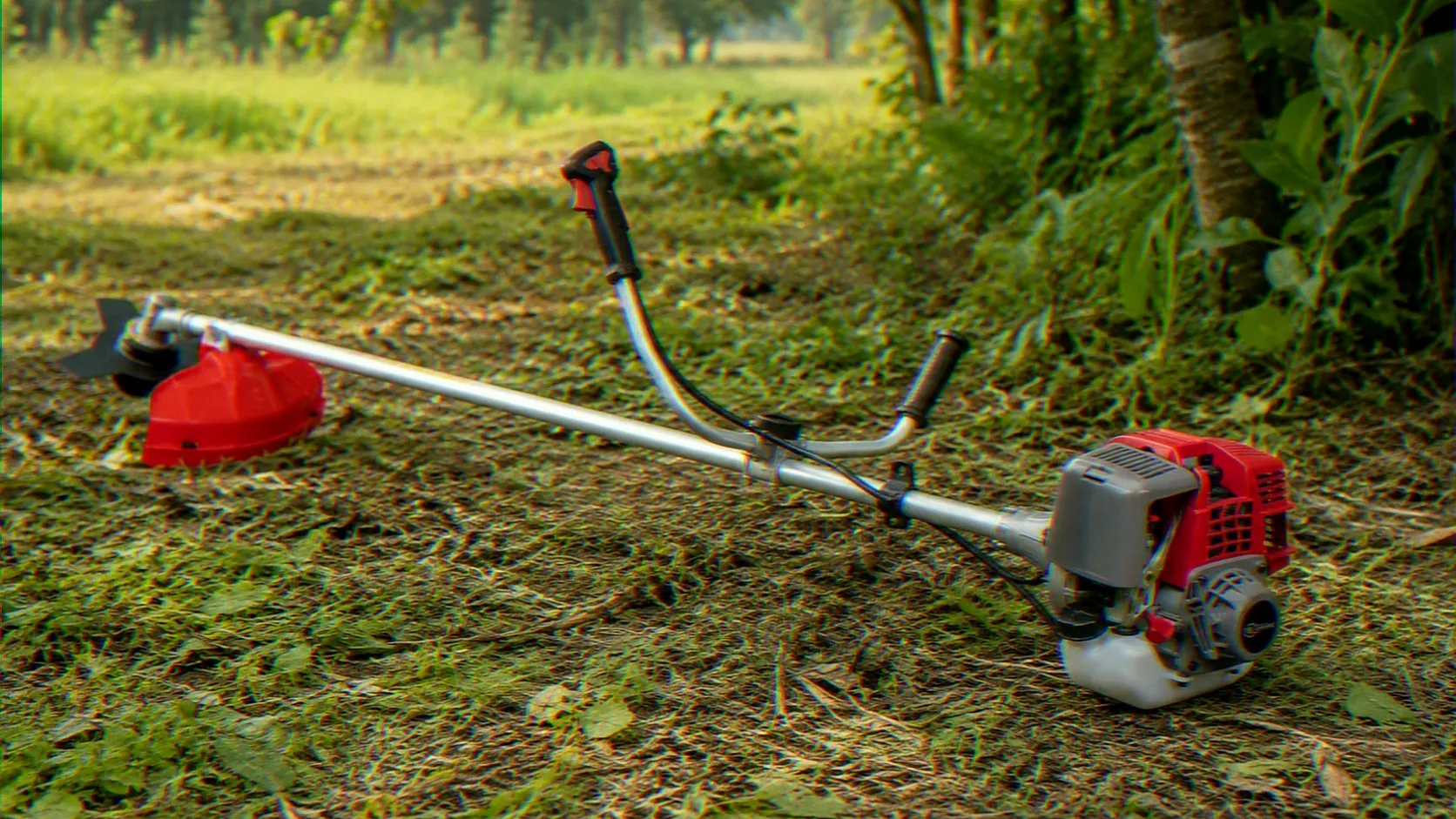
DEALER MODEL REFERENCE TM-CG139 4-Stroke Gasoline Brush CutterThe TM-CG139 uses a 139F, 31cc air-cooled four-stroke engine, a diaphragm carburetor and a 630 ml fuel tank. These specifications make the fuel path, diaphragm metering system and tank ventilation more relevant to this complaint than a two-stroke premix adjustment. It is a relevant reference model for dealers handling customers who prefer separate engine lubrication instead of mixing oil with gasoline. Final engine, accessories, branding and packing details should be confirmed in the quotation or proforma invoice. |
Useful pre-delivery checks:
|
Spare-parts planning may include the appropriate carburetor diaphragm set, fuel filter, fuel line, intake gasket and spark plug. Compatibility should be checked against the selected engine and carburetor configuration rather than the broad product category alone.
8. Stop-Use Conditions and Importer/Dealer Checklist
Stop testing the brush cutter when:
Fuel leaks near hot engine parts, the engine races unpredictably, the oil level rises after repeated flooding, the engine oil smells strongly of gasoline, or the machine cannot be tested without keeping the choke closed.
Professional inspection is appropriate when the fuel cap, filter and fuel line are clear, no visible intake damage can be found, the carburetor requires internal calibration, correct diaphragm replacement does not restore normal operation, or the engine cannot remain running long enough for a controlled warm test.
Frequently Asked Questions
Why does my 4-stroke brush cutter only run with the choke on?
The engine is commonly running too lean because of restricted fuel flow, a carburetor metering problem or air entering through the intake joint. Closing the choke enriches the mixture temporarily but does not remove the cause.
Is it safe to keep using a brush cutter with partial choke?
No. Continued operation can cause smoke, carbon deposits, plug fouling and unstable throttle response. Repeated flooding may also contaminate the engine oil with gasoline.
Can a blocked fuel-cap vent make the engine need choke?
Yes. A blocked vent can create vacuum as fuel leaves the tank. The engine may run correctly at first, become uneven after several minutes and improve temporarily when partial choke is applied.
Should a 4-stroke brush cutter use premixed fuel?
A typical 4-stroke brush cutter uses straight gasoline in the fuel tank and engine oil in a separate system. Follow the instructions for the actual engine and do not add two-stroke premix unless that specific engine requires it.
Does this symptom mean the complete carburetor must be replaced?
Not necessarily. A blocked filter, damaged line, contaminated internal screen, stiff diaphragm, restricted passage or leaking intake gasket can produce similar symptoms. External checks should be completed before replacing the carburetor.
What spare parts should dealers prepare for this complaint?
Relevant service stock may include the correct diaphragm set, fuel filter, fuel-compatible tubing, intake gasket and spark plug. The carburetor version should be confirmed before ordering diaphragm components.
Prepare the Right 139F Configuration and Service PartsA warm engine should run with the choke fully open. For wholesale orders, confirm the actual engine, carburetor, accessories, branding and packing arrangement so that pre-delivery testing and after-sales parts match the supplied configuration. |
|