
Why Does a 2-Stroke Brush Cutter Backfire While Running?
A 2-stroke brush cutter backfire can come from fuel mixture, choke, ignition or intake/exhaust faults. Use these checks to locate the cause safely.
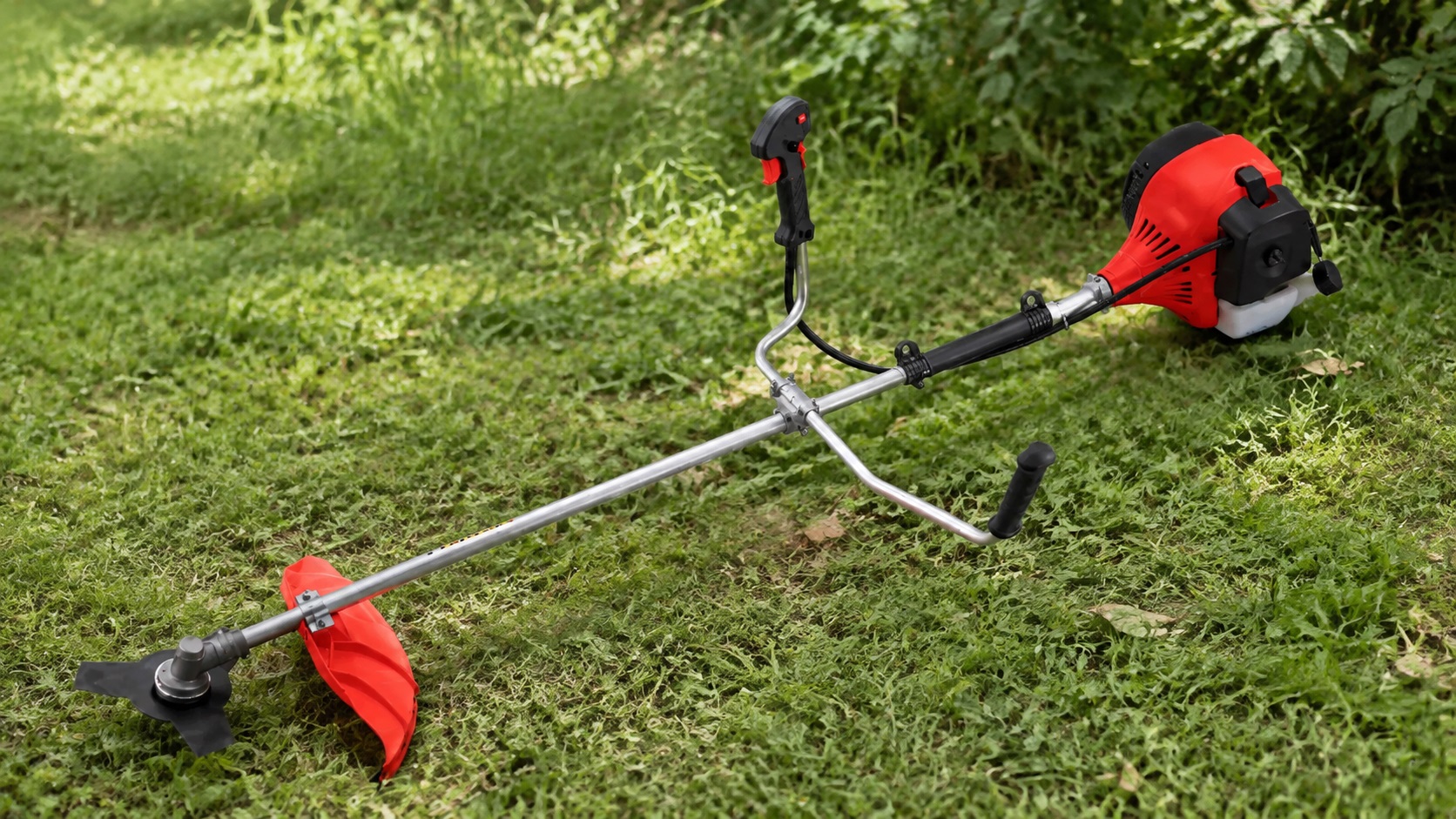
2-Stroke Brush Cutter Backfire: Causes, Checks and Dealer Troubleshooting
A 2-stroke brush cutter backfire, popping sound or intake-side spit usually points to unstable combustion rather than a fault in the blade or cutting attachment. The useful clues are where the sound comes from, when it appears, and whether the problem started after refueling, servicing or a change in operating condition.
This troubleshooting guide covers a brush cutter that can start and continue running but produces abnormal popping during acceleration, steady operation or throttle release. It does not cover an engine that simply dies when the throttle is opened, loses speed only in thick grass, or continues running while the cutting head stops.
Quick answer: First determine whether the pop comes from the muffler or back through the carburetor and whether it occurs during acceleration, steady running or throttle release. Then verify the two-stroke fuel mixture, make sure the choke is fully open, and inspect the spark plug, air filter, fuel supply and exhaust path. For dealers, recording exactly when the symptom occurs is more useful than immediately adjusting the carburetor. If backfiring began after carburetor, ignition or flywheel work, inspect the serviced area before replacing unrelated parts.
1. Identify the Backfire Before Changing Any Settings
Do not treat every popping sound as the same fault. Run the machine only outdoors in a clear area and keep the cutting attachment safely away from people and surrounding objects. Listen from a normal operating position without placing your face or hands near the carburetor, muffler or rotating attachment.
A pop from the muffler or exhaust side is different from a cough or spit coming back through the carburetor and air-filter side. The operating stage is equally useful. Note whether the noise appears immediately when accelerating, repeats at steady engine speed, occurs mainly as the throttle is released, began after refueling, or started directly after engine service.
| Observed Condition | First Area to Check | Why It Matters |
| Pops immediately after refueling | Fuel mixture and contamination | The symptom may be linked directly to the new fuel batch. |
| Pops while accelerating | Choke, fuel delivery, plug and intake | The combustion condition is changing as engine speed rises. |
| Pops mainly on throttle release | Exhaust-side condition and combustion behavior | The timing of the noise helps separate it from a general power-loss complaint. |
| Spits through carburetor side | Intake, carburetor mounting and ignition-related inspection | Persistent intake-side spitting may require deeper diagnosis. |
| Problem started after repair | Recently serviced components | A newly introduced installation or adjustment issue should be ruled out first. |
Persistent backfiring together with fuel leakage, flames, severe vibration or unusually high engine temperature is a reason to stop using the brush cutter and inspect it before further operation.
2. Check Fuel Mixture and Choke Position First
On a two-stroke brush cutter, gasoline and two-stroke oil are part of the combustion system. Incorrectly mixed, deteriorated or contaminated fuel can make a backfire complaint difficult to diagnose. If the problem appeared directly after refueling, testing with correctly prepared fuel is more informative than trying to compensate by turning carburetor adjustment screws.
Confirm the following before moving deeper into the machine:
- The correct gasoline and two-stroke oil were used.
- The components were measured according to the specified ratio.
- The mixture was thoroughly combined before use.
- The container did not contain water, dirt or deteriorated fuel.
- An unknown previous fuel batch was not mixed with the new batch.
Next check the choke. The choke is intended to enrich the mixture during cold starting. Once the engine has fired and is ready to warm up, it should not remain in the full-choke position. A partly closed choke restricts airflow and can contribute to an excessively rich, uneven-running condition.
Make sure the control travels fully from the starting position to the normal running position. Repeated starting attempts with full choke can also introduce excessive fuel into a small gasoline engine, so continuing to prime and pull the starter is not useful if the engine is already heavily flooded.
3. Use the Spark Plug, Airflow and Exhaust as Diagnostic Evidence
After fuel and choke checks, inspect the components that can reveal whether combustion and mixture delivery are becoming irregular. Switch off the engine, let it cool and disconnect the spark-plug cap before carrying out these checks.
| Inspection Point | What to Look For | Diagnostic Meaning |
| Spark plug | Wet fuel, oily or dark deposits, damaged insulator, worn electrodes or loose installation | A wet plug can mean fuel is entering the cylinder without being burned consistently; it does not automatically prove the plug itself is defective. |
| Plug cap and lead | Loose connection or visible external damage | An intermittent ignition connection may produce irregular combustion as engine speed changes. |
| Air filter | Heavy contamination or wet condition | Restricted airflow can alter the running mixture. |
| Fuel supply | Cracked lines, loose connections, sharp bends, leakage, filter restriction or tank-vent problems | Irregular fuel supply can become more visible as throttle demand changes. |
| Muffler | Loose mounting, damage, heavy contamination or a restricted serviceable spark-arresting screen | Especially relevant when the abnormal sound is clearly from the exhaust side. |
ECHO brush cutter support information includes plug gap, carbon contamination and fuel fouling among spark-plug inspection points. Use the plug type and gap specified for the actual engine configuration rather than copying a setting from another machine merely because it is also described as a 52cc brush cutter.
For the exhaust side, wait until the muffler has completely cooled. Do not scrape deeply into the exhaust port while the muffler remains installed, and do not allow loosened deposits to enter the cylinder. Any removal should follow the appropriate engine service procedure.
4. Backfiring After Repair Requires a Different Check Order
A brush cutter that ran normally before service but started popping immediately afterward should not be diagnosed in the same way as a machine that gradually developed the problem. Start with the components that were disturbed during repair.
- Review what was changed. Identify whether the carburetor, hoses, ignition parts, flywheel area or another engine component was serviced.
- Recheck carburetor installation. Confirm mounting, gaskets, hoses and control connections were returned to their intended positions.
- Inspect recently serviced ignition areas. Persistent popping after ignition or flywheel work may require an inspection of installation and timing-related components by someone familiar with the engine.
- Avoid several adjustments at once. Changing multiple carburetor settings can hide the original fault and make later diagnosis less efficient.
STIHL guidance also notes that carburetor adjustment is not automatically the answer to acceleration problems and that settings should follow the requirements of the particular machine. A symptom appearing directly after repair is therefore a useful diagnostic clue, not proof that the carburetor, ignition coil or flywheel must be replaced.
5. TM-CG520TN Reference for 52cc Brush Cutter Troubleshooting
For importers and service dealers handling 52cc-class machines, troubleshooting should be tied to the actual engine and confirmed specification rather than to a generic “52cc brush cutter” description. The TM-CG520TN is relevant here because its published engine, displacement and fuel information provide clear reference points for this type of complaint.
| Model | TM-CG520TN |
| Engine | 1E44F-5N, two-stroke air-cooled |
| Displacement | 51.7cc |
| Rated output | 1.8 kW at 6500 rpm |
| Idle-speed reference | 3000 ±200 rpm |
| Mixed-fuel ratio | 1:30 |
The 1.8 kW at 6500 rpm and 3000 ±200 rpm figures are product reference specifications, not an instruction to tune the engine only by sound. For diagnosis, it is more useful to observe whether the machine idles steadily, transitions through acceleration normally, starts popping only after warming up, or produces the symptom repeatedly at the same part of the operating range.
|
TM-CG520TN 52cc Gasoline Brush Cutter Suitable as a specification reference for dealers who need a confirmed 51.7cc two-stroke engine configuration and a clearly stated 1:30 fuel requirement when diagnosing fuel, ignition and running complaints. |
|
6. Importer and Dealer Backfire Inspection Checklist
A dealer does not need to dismantle every machine to reduce after-sales complaints. A consistent receiving or pre-delivery check can establish whether the engine starts, warms and accelerates normally and whether the supplied fuel instructions match the engine configuration.
| No. | Importer / Dealer Check | Practical Purpose |
| 1 | Confirm the actual engine model and two-stroke configuration. | Prevents parts and fuel guidance from being based only on displacement. |
| 2 | Verify the specified gasoline-to-oil mixing ratio. | Reduces complaints caused by transferring fuel instructions from another model. |
| 3 | Check that the choke moves fully into the normal running position. | Rules out a simple rich-running condition before carburetor work. |
| 4 | Perform a short warm-up and acceleration check. | Identifies persistent popping or intake-side spitting before delivery. |
| 5 | Record whether the noise occurs during acceleration, steady running or throttle release. | Gives the service team a useful symptom boundary instead of a vague “engine problem” report. |
| 6 | Inspect spark-plug condition and plug-cap connection when a complaint appears. | Provides evidence about combustion and ignition connection. |
| 7 | Check air filter, visible fuel lines, fuel filter and tank ventilation. | Covers external airflow and fuel-delivery causes before internal adjustment. |
| 8 | Match carburetor, spark-plug, fuel-line and filter spare parts to the supplied configuration. | Avoids ordering replacement parts only by the description “52cc brush cutter.” |
| 9 | Recheck recently serviced components if the complaint started after repair. | Prevents unnecessary replacement of unrelated parts. |
For a TM-CG520TN dealer, the 1E44F-5N engine and 1:30 fuel requirement should be clearly understood by service staff. Instructions intended for a four-stroke machine or another two-stroke mixing ratio should not be substituted.
7. When to Stop External Troubleshooting
If fresh correctly mixed fuel, correct choke operation, a serviceable spark plug, clear airflow, normal fuel delivery and an unobstructed exhaust do not change the backfiring, continuing to replace external parts is unlikely to be efficient.
Stop operation when repeated backfires are accompanied by flames, fuel leakage, severe vibration or abnormal engine temperature. Persistent intake-side spitting, violent backfires or a problem that appeared after internal engine or ignition repair should also move to qualified internal diagnosis rather than repeated trial adjustments.
Service priority: Preserve the original symptom. Document where the pop occurs, the throttle condition, fuel used and any recent repair work before changing several settings or components. This makes dealer troubleshooting faster and reduces the chance of creating a second fault while looking for the first one.
Frequently Asked Questions About 2-Stroke Brush Cutter Backfire
Can the wrong fuel mix make a 2-stroke brush cutter backfire?
Incorrectly mixed, contaminated or deteriorated fuel can produce unstable engine behavior and should be checked early in a backfire diagnosis. Use the ratio specified for the actual model. The TM-CG520TN specification, for example, lists a 1:30 mixed-fuel ratio.
Why does my brush cutter backfire when accelerating?
Check whether the choke is completely open, then inspect the fuel condition, spark plug, air filter, fuel lines, fuel filter and tank ventilation. Recording whether the engine pops at the same point during acceleration can also help a technician distinguish mixture-delivery behavior from an ignition-related problem.
Does a wet spark plug mean the spark plug is defective?
Not necessarily. A wet plug can also show that fuel is entering the cylinder but is not being burned consistently. Inspect the plug condition, correct specification, plug cap and ignition lead before treating the plug itself as the only cause.
Why did the brush cutter start backfiring after carburetor repair?
If the machine ran normally before repair, first confirm carburetor mounting, gaskets, hoses and control connections. A fault that begins immediately after service should lead the inspection back to the serviced area before unrelated components are replaced.
Should I adjust the carburetor as soon as the brush cutter starts popping?
No. First confirm the fuel mixture, choke position, spark-plug condition, airflow, fuel delivery and exhaust path. Changing several carburetor settings before these checks can hide the original cause and complicate later troubleshooting.
What should dealers stock for 52cc brush cutter backfire complaints?
Fuel-system and ignition service parts such as compatible spark plugs, carburetors, fuel lines and filters may be relevant, but they should be matched to the selected engine and confirmed order configuration rather than ordered solely by the general “52cc” description.
|
Need a Confirmed 52cc Brush Cutter Configuration? For wholesale or dealer evaluation of a 2-stroke brush cutter backfire issue, compare the actual engine, fuel requirement and service-parts configuration before placing a bulk order. Review the TM-CG520TN specification when you need a 51.7cc, 1E44F-5N two-stroke model for comparison. |
|